Woven vs Knit Fabric: The Ultimate Difference Guide Every Sewist Needs
📅 Last Updated: May 2025 — Expert Review by SewingBible Editorial Team
The Woven vs Knit Fabric Difference at a Glance
If you’ve ever picked up a piece of fabric and wondered why one feels stiff and structured while another drapes and stretches like a second skin, you’ve already stumbled onto one of the most foundational questions in textile science: is this fabric woven or knit? Understanding the difference between woven and knit fabric isn’t just a passing curiosity for sewists — it’s the single most important concept you can master to transform your sewing from frustrating to flawless.
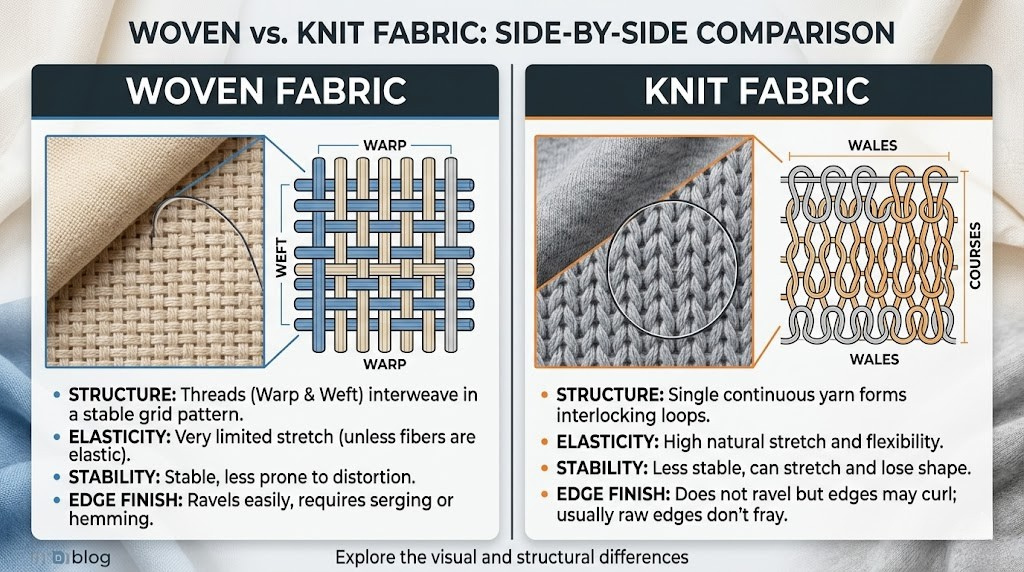
Walk into any fabric store and you’ll be surrounded by hundreds of choices: crisp cotton broadcloth, buttery jersey, sturdy denim, silky charmeuse, cozy fleece, airy chiffon. Despite their seemingly infinite variety, almost every fabric in that store can be classified into one of two fundamental categories. Woven fabrics are made by interlacing two sets of threads at right angles. Knit fabrics are made by interloping a single yarn into loops. That structural difference — the way those individual threads are assembled — dictates virtually everything about how a fabric behaves: how it stretches, how it drapes, how it wears, how it should be cut, and how it should be sewn.
This guide goes far beyond a surface-level overview. We’re going to dig into the physics of thread construction, explore the dozens of sub-types within each category, compare stretch percentages and durability ratings, walk through the specific sewing techniques each fabric type demands, and give you a foolproof decision framework for every project you’ll ever tackle. Whether you’re brand new to fabric and just learning how to use a sewing machine or you’re an experienced sewist working to deepen your textile knowledge, this is the definitive resource you’ve been looking for.
Let’s start with a rapid-fire comparison before we go deep. Here’s what separates woven from knit fabric at the most fundamental level:
🧵 Woven Fabric
- Two sets of threads (warp & weft)
- Threads interlace at 90° angles
- Little to no natural stretch
- Holds its shape firmly
- Clean, crisp edges when cut
- Ravels and frays at raw edges
- Usually requires seam finishing
- Best for structured garments
- Examples: cotton, linen, denim
🧶 Knit Fabric
- Single yarn formed into loops
- Loops interlock horizontally/vertically
- Natural stretch in one or both directions
- Stretches with the body’s movement
- Edges curl when cut
- Does not typically fray
- Often sewn with zigzag or serger
- Best for fitted, body-skimming designs
- Examples: jersey, fleece, rib knit
🔑 Key Insight
The difference between woven and knit is not about the fiber content (cotton, polyester, silk) — it’s entirely about how those fibers are assembled into cloth. You can have a woven cotton fabric and a knit cotton fabric, and they will behave completely differently despite containing the exact same raw material.
What Is Woven Fabric?
Woven fabric is the oldest form of cloth construction known to humanity. Archaeological evidence places the earliest woven textiles at roughly 27,000 years ago in what is now the Czech Republic, where archaeologists found impressions of woven plant fibers pressed into fired clay. The basic principle hasn’t changed in all that time: two perpendicular sets of threads are interlaced to create a stable, flat cloth. What has changed, over millennia of refinement, is the extraordinary diversity of patterns, textures, and performance characteristics that skilled weavers can achieve within that fundamental structure.
How the Weaving Process Works
To understand woven fabric deeply, you need to understand the loom — even if you’ve never sat behind one. All weaving, from a backstrap loom in a Guatemalan village to a multi-ton industrial Jacquard loom producing complex damask patterns, follows the same basic mechanical logic.
The two sets of threads in a woven fabric have specific names. The warp threads run lengthwise — from the top of the loom to the bottom, parallel to the fabric’s selvedge (finished edge). These threads are wound tightly onto a beam and held under constant tension throughout the weaving process. Because they bear the mechanical stress of weaving, warp threads are typically the strongest, most tightly twisted threads in the fabric. The weft threads (also called filling threads) run crosswise, perpendicular to the warp. The weft is carried back and forth across the loom by a shuttle, needle, or rapier, passing alternately over and under the warp threads to create the interlaced structure.
The pattern by which the weft passes over and under the warp threads is called the weave structure, and it’s one of the most powerful determinants of a woven fabric’s visual and physical properties. Change the weave structure, and you can transform the same cotton thread from a crisp, matte fabric (plain weave) into a shimmering, smooth-surfaced fabric (satin weave) or a strong, diagonal-patterned fabric (twill weave) — all without changing the fiber content at all.
The selvedge edges of a woven fabric — those narrow, tightly woven edges running along both long sides of the fabric — are an important diagnostic feature. They prevent the fabric from raveling at the edges that were locked in by the loom. However, when you cut into a woven fabric anywhere else, the raw cut edge will begin to fray and ravel as the weft threads are no longer held in place. This is why seam finishing is almost universally recommended for woven fabrics — and it’s one of the most fundamental behavioral differences from knit fabric.
Key Characteristics of Woven Fabric
The interlaced structure of woven fabric gives it a distinctive set of physical properties that set it apart from every other fabric category:
Minimal stretch on the straight grain: When you pull a woven fabric along the warp (lengthwise) or weft (crosswise) direction, you’ll find very little give. The interlaced threads are locked against each other, preventing elongation in those directions. This is often described as the fabric being stable “on the grain.” Pull a woven on the true bias — at a 45-degree angle to both the warp and weft — and you’ll find surprising elasticity. This bias stretch is a fundamental property exploited in bias-cut garments like slip dresses and binding tape.
Shape retention: Because woven fabrics resist stretch on the straight grain, they excel at holding a defined silhouette. A woven blazer keeps its structured lapels. Woven trousers hold their crease. Woven curtains drape in straight, architectural folds. This structural integrity makes wovens the go-to choice for tailored garments, structured home goods, and anything that needs to maintain a specific shape through wear and repeated laundering.
Fraying at cut edges: Cut a piece of woven fabric, and the freed weft threads will begin to work their way loose from the warp threads, creating a fuzzy fringe of loose fiber along the cut edge. The rate and severity of fraying varies enormously by weave structure and fiber content — a loosely woven linen will fray aggressively within minutes of cutting, while a tightly woven polyester microfiber may take much longer. This tendency to fray means that raw seam allowances in woven garments almost always need to be finished with a serger, zigzag stitch, or bound seam to prevent the seams from deteriorating in the wash.
Distinct grain lines: Because the warp and weft run in perfectly perpendicular directions, woven fabrics have clearly defined grain lines. The straight grain runs parallel to the warp (selvedge edge). The crossgrain runs perpendicular to the warp, parallel to the weft. The bias runs at 45 degrees to both. Reading sewing pattern symbols for grainline is essential when cutting wovens — placing a pattern piece off-grain even slightly can cause a finished garment to twist, pull, or hang unevenly.
Crisp drape profile: Woven fabrics generally drape in a crisper, more architectural manner than knits. The degree of crispness varies by fiber content, thread count, and finish — a stiff organza is radically different from a fluid silk charmeuse — but even the softest woven tends to have more defined fold lines and a less fluid, body-hugging quality than comparable knit fabrics.
⚠️ Common Mistake
Many beginners attempt to sew woven fabric patterns in knit fabric and wonder why the finished garment doesn’t fit correctly. A pattern designed for a non-stretch woven relies on seams, darts, and ease for fit. Use a knit, and the fabric’s stretch makes all that shaping redundant — and the garment will likely be too large and shapeless. Always match pattern type to fabric type.
Types of Woven Fabrics: A Comprehensive Guide
The world of woven fabrics is staggeringly diverse, but all woven fabrics derive from three foundational weave structures. Every woven fabric you’ll encounter in a fabric store — from the most basic muslin to the most elaborate brocade — is either a plain weave, a twill weave, a satin weave, or a variation or combination of these three structures. Understanding these structures gives you a mental framework for predicting how any unfamiliar woven fabric will behave.
Plain Weave Fabrics
The plain weave is the simplest and most common of all weave structures. In a plain weave, each weft thread passes over exactly one warp thread, then under the next, alternating consistently across the entire width of the fabric. On the following row, this pattern reverses: threads that were previously on top are now underneath. The result is a stable, symmetrical, checkerboard-like interlacing.
Because each individual thread crosses over and under threads on both sides of it, the plain weave produces the maximum possible number of interlacing points per unit area. This makes plain weave fabrics inherently strong, stable, and resistant to snagging. However, it also limits the length of each thread float (the portion of a thread that passes over multiple opposing threads without interlacing), which means plain weave fabrics tend to be matte and somewhat coarse in surface texture compared to other weave structures.
Plain weave fabrics span an enormous range:
Muslin & Calico
Unbleached or bleached plain-weave cotton. The workhorse of the sewing room, used for toiles (test garments), quilting, and lightweight garments.
Chiffon
Ultra-fine, sheer plain weave from silk, polyester, or nylon. Extremely lightweight with a flowing drape; notoriously slippery to sew.
Organza
Crisp, stiff, transparent plain weave, traditionally silk but now largely polyester. Used for bridal wear, structured overlays, and evening gowns.
Broadcloth / Poplin
Fine, tightly woven plain weave cotton or cotton-poly blend with a slight horizontal rib. Ideal for shirts, blouses, and quilting.
Linen
Woven from flax fiber, with characteristic slub texture. Breathable, strong, and gets softer with washing. Wrinkles prominently.
Taffeta
Crisp, smooth plain weave with a distinctive rustle. Traditionally silk, now often polyester; used in formalwear and linings.
Voile
Lightweight, slightly translucent plain weave made from fine, highly twisted yarns. Softer and less stiff than organza; used for floaty blouses and curtains.
Burlap / Hessian
Coarse, open-weave plain weave from jute fiber. Used for bags, home décor, and crafts. Frays aggressively.
Twill Weave Fabrics
In a twill weave, the weft threads pass over two or more warp threads, then under one (or vice versa), and each successive weft row is offset by one warp thread. This offset creates the twill’s signature visual hallmark: a series of diagonal ridges called twill lines that run at a 45-degree angle across the fabric surface.
The offset interlacing pattern reduces the total number of interlacing points compared to a plain weave, which has important consequences. With fewer points where threads cross, each thread has more freedom to lie flat against its neighbors, which makes twill fabrics smoother and denser than comparable plain weaves. Twills also tend to be softer to the touch, more resistant to wrinkles, and more able to conform to body contours — properties that make twill weaves enormously popular for clothing and workwear.
Major twill weave fabrics include:
Denim: The iconic 3×1 twill weave (weft passes under three warp threads, over one) made traditionally from indigo-dyed warp threads and undyed weft threads, creating the characteristic blue-face, white-back appearance. Denim is famously strong and durable — a direct result of the twill structure’s dense, close-packed threads. If you regularly sew denim, understanding twill weave helps explain why it’s so resistant to needle penetration and why strong motor torque matters so much.
Tweed: A rough-surfaced, heavyweight woolen twill, traditionally hand-woven on the Scottish island of Harris. The twill structure contributes significantly to tweed’s legendary durability and its characteristic nubby surface texture.
Gabardine: A tightly woven, fine twill weave from wool or wool-blend yarns with a smooth, hard surface and clear diagonal lines. Used for suits, trousers, and overcoats. Gabardine resists wrinkles beautifully and holds a sharp crease.
Flannel: A plain or twill weave fabric (usually cotton or wool) that has been napped — brushed to raise the surface fibers into a soft, fuzzy layer. The underlying structure may be a twill, but it’s hidden beneath the fluffy surface.
Herringbone: A variation of the twill weave in which the direction of the diagonal reverses at regular intervals, creating a V-shaped or chevron pattern that resembles the skeleton of a herring fish. Used for suiting and outerwear.
Khaki / Chino: A medium-weight cotton or cotton-blend twill weave, originally in khaki (sandy beige) color. Now refers to the weave structure as much as the color.
Satin Weave Fabrics
The satin weave takes the principle of the twill weave one step further: the weft threads pass over four or more warp threads before going under one (or vice versa), and the interlacing points are spread as far apart as possible to prevent them from forming a visible diagonal line. The result is a fabric surface dominated by long, parallel thread floats — sections of thread that lie on the fabric surface for a long stretch before interlacing.
These long floats have a profound effect on appearance: they allow the threads to catch and reflect light from a consistent angle, producing the satin weave’s characteristic high-gloss, luminous surface. The trade-off is that long floats are more easily snagged and abraded than tightly interlaced structures, which is why satin weave fabrics require more careful handling.
It’s crucial to understand that satin is a weave structure, not a fiber content. When the satin weave structure is used with silk threads, the result is traditional silk satin. When used with polyester threads (which have excellent light-reflecting properties), the result is polyester satin. When used with cotton threads, the result is cotton sateen (a slightly less glossy surface than true satin because cotton’s natural fiber surface is less smooth than silk or polyester).
Key satin weave fabrics:
- Silk Satin: The most luxurious and expensive satin weave fabric, with an incomparable liquid drape and luminous sheen. Used for bridal wear, lingerie, and luxury evening wear.
- Polyester Satin / Bridal Satin: The most widely available satin weave fabric in craft stores, with a bright, slightly plasticky sheen compared to silk. Very affordable and available in a huge color range.
- Charmeuse: A lightweight satin weave with a matte reverse side and satin-sheen right side. Drapes extraordinarily fluidly. Can be silk or polyester; often used for lingerie, blouses, and dresses.
- Sateen: Cotton or cotton-blend satin weave. Less slippery than silk satin, with a soft sheen and smooth hand. Used for bedsheets, quilt backing, and garments. Very popular among quilters.
- Duchess Satin: A heavy, stiff satin weave fabric, usually polyester, with a bright surface. Used for structured bridal gowns and formal wear where the fabric needs to hold a defined shape.
Beyond the Three Basics: Specialty Woven Structures
While virtually every woven fabric traces its DNA to the plain, twill, or satin weave, textile manufacturers have developed countless elaborations and combinations:
Jacquard weave: Not a single weave structure but a category of complex figured weaves created on a Jacquard loom (which uses punched cards or digital programming to control individual warp threads). Brocade, damask, tapestry, and matelassé are all Jacquard-weave fabrics. Their rich, complex patterns are woven directly into the cloth, not printed or embroidered on afterward.
Pile weave: Fabrics in which extra threads are woven into the base structure and then cut or left as loops to create a raised, fuzzy surface. Velvet (cut pile), corduroy (cut pile in ridged strips), and terrycloth/terry toweling (looped pile) are all pile woven fabrics. Despite their soft, textured surfaces, they are fundamentally woven structures.
Dobby weave: Small, geometric patterns woven into the fabric using a dobby attachment on the loom. Piqué (waffle-like texture), bird’s-eye fabric, and some waffle-weave fabrics are dobby weaves.

Premium 100% Cotton Woven Fabric Bundle
High-quality plain weave quilting cotton — ideal for learning grain lines, pressing techniques, and all the fundamentals of working with woven fabric.
Shop on AmazonWhat Is Knit Fabric?
If woven fabric is defined by its right angles and geometric precision, knit fabric is defined by its curves, its flexibility, and its intimate relationship with the human body. Knit fabric is constructed not by interlacing two sets of threads, but by forming a single yarn into a series of interconnected loops. Each loop is pulled through the loop before it, creating a chain of interlocked stitches that — in fabric form — allows the structure to stretch and recover in ways that are physically impossible for woven construction.
The history of knitting is younger than weaving, with the earliest definitive evidence of knit fabric dating to around the 11th century CE in Egypt — though some scholars argue for earlier origins. What knitting lacked in ancient precedent, it made up for in rapid advancement once its advantages were recognized. By the 16th century, hand-knitted silk stockings were coveted luxury items across Europe. By the 19th century, Englishman William Lee had invented the first knitting frame, beginning the industrialization of knit fabric production that would ultimately make knitted fabrics the dominant category in modern apparel.
How the Knitting Process Works
At its most fundamental level, knit fabric is formed by interloping: creating loops and pulling each new loop through the previous one. In hand knitting, needles manipulate the yarn to create this looped structure one row at a time. In industrial knitting, high-speed machines accomplish the same basic action thousands of times per minute.
Knit fabrics can be constructed in two primary ways:
Weft knitting is the more common structure in consumer fabrics. In weft knitting, a single yarn runs horizontally across the fabric, forming loops that interlock with the loops of the row below. Pull the fabric crosswise and the loops can shift easily; pull lengthwise and the loops stack up against each other. This is why most weft-knit fabrics stretch more in the width than in the length. T-shirt fabric (jersey) is the classic weft-knit fabric — it stretches dramatically side-to-side and somewhat less dramatically up-and-down.
Warp knitting is a more complex industrial process in which multiple yarns run parallel in the lengthwise direction, each forming loops that are interlinked with the adjacent yarns. Warp knits are generally more stable than weft knits — they have less stretch and are less prone to runs — and are often used for lingerie fabrics, sportswear, and certain technical textiles. Tricot and raschel fabrics are common warp knits.
The key terminology for knit fabric structure mirrors that of knitting itself. A course is a horizontal row of loops — equivalent to a row of hand knitting. A wale is a vertical column of loops — equivalent to a column of stitches in hand knitting. The ratio of courses to wales per inch determines the fabric’s density and drape characteristics. A high course-to-wale ratio produces a fabric with more horizontal stretch; a high wale-to-course ratio produces more vertical stretch.
Key Characteristics of Knit Fabric
The looped structure of knit fabric produces a set of physical properties that are in many ways the polar opposite of woven fabric’s characteristics:
Inherent stretch in at least one direction: The most defining property of knit fabric is its ability to stretch without distortion. Because the loops can elongate and shift position relative to each other, knit fabric stretches with the body’s movements and returns to its original dimensions when the stress is released. The amount and direction of stretch varies significantly by knit type — some knits stretch only crosswise, others in both directions, and some (four-way stretch fabrics like spandex blends) stretch substantially in all directions and recover powerfully.
Comfort and freedom of movement: The same stretching properties that define knit fabric’s structure make it extraordinarily comfortable to wear. Athletic wear, undergarments, socks, and close-fitting casualwear are dominated by knit fabrics precisely because they move with the body rather than constraining it. If you’ve ever worn stiff, unyielding trousers on a long flight versus comfortable stretch pants, you’ve experienced the comfort differential between woven and knit firsthand.
No fraying at cut edges: While this seems like a minor convenience, it has major implications for both production efficiency and sewn garment longevity. When you cut a knit fabric, the loop structure at the cut edge remains intact. Without loose warp or weft threads to unravel, there is nothing to fray. (Some knit fabrics will curl at the cut edge due to internal thread tension, and some very loosely knit fabrics can develop runs, but fraying as it occurs in woven fabric simply doesn’t happen.)
Tendency to run: Many weft-knit fabrics are susceptible to runs — a cascade of loop failures that occurs when a single loop breaks and the connected loops above and below begin to unravel. This is the knit fabric equivalent of fraying, and it’s something the weave structure makes impossible. Run-resistant finishes and denser knit structures mitigate this tendency but rarely eliminate it entirely.
Curling at edges: A characteristic feature of weft-knit fabrics (especially single jersey) is the tendency of cut edges and raw hems to curl, typically with the right side rolling inward. This is caused by the imbalanced stress within the looped structure — the loops want to return to their natural curved state. While this can be managed with proper pressing and finishing techniques, it makes raw-edge finishes impractical for most jersey knit projects.
Recovery properties: The ability of a knit fabric to return to its original dimensions after being stretched is called its recovery. Good recovery is essential for garments that must maintain their shape through wear — athletic leggings that develop “baggy knees” have poor recovery. Recovery is largely determined by fiber content: spandex/elastane blends provide exceptional recovery, while 100% cotton knits have relatively poor recovery and tend to stretch out over time.
Types of Knit Fabrics: From Jersey to Technical Textiles
The diversity of knit fabrics in the modern marketplace is staggering. From the humble cotton jersey of a basic T-shirt to the complex high-compression knits engineered for elite athletic performance, knit fabrics represent perhaps the most rapidly evolving segment of the textile industry. Here’s a comprehensive guide to the major knit fabric categories every sewist should know:
Single Jersey (Standard Jersey)
Single jersey is the most widely produced knit fabric in the world, and for good reason — it’s versatile, comfortable, affordable, and available in every conceivable fiber content and color. In terms of structure, single jersey is a basic weft-knit fabric in which each loop is formed in the same direction, creating a distinct visual difference between the two sides of the fabric: the right side (technical face) shows neat, V-shaped columns of stitches, while the wrong side shows horizontal arcs and bumps.
This structural asymmetry has practical implications: single jersey has more horizontal stretch than vertical stretch, the right side and wrong side look and behave differently, and cut edges tend to curl toward the right side. Most T-shirts, casual dresses, skirts, and lightweight tops are made from single jersey in cotton, cotton-modal blends, viscose, bamboo, or polyester.
When sewing single jersey, use a ballpoint or stretch needle to avoid shredding the loops, and use a narrow zigzag or serger to sew seams that can stretch with the fabric. For more guidance on needle selection, see our detailed guide to sewing machine needle types.
Double Knit
Double knit (also called ponte, interlock, and by several other trade names depending on exact construction) is produced on a circular knitting machine with two sets of needles, creating a fabric that is essentially two single jerseys knitted simultaneously and interlocked to produce a single, stable, double-layered fabric. The result is:
- Identical appearance on both sides (no distinct right/wrong side)
- Less tendency to curl at cut edges compared to single jersey
- More stable and less stretchy than single jersey
- Heavier and firmer in hand
- More resistant to snagging and runs
Ponte (from “ponte di Roma,” meaning “Rome bridge”) is a specific type of double knit with excellent recovery and a smooth, professional surface. It’s favored for structured yet comfortable dresses, blazers, trousers, and skirts — garments that need to look polished while providing the comfort of knit construction. Ponte behaves more like a thick, stable single jersey than like a woven, and it’s often recommended as a good starting fabric for sewists transitioning from wovens to knits.
Rib Knit
Rib knit is characterized by alternating columns of knit stitches and purl stitches, creating a fabric with pronounced vertical ribs (the raised columns are knit stitches; the recessed channels are purl stitches). The most common rib constructions are designated by ratios: 1×1 rib alternates one knit with one purl; 2×2 rib alternates two knit with two purl; and wider ribs (3×3, 4×4) create bolder vertical stripes.
Rib knit fabrics are exceptionally elastic in the crosswise direction — more so than single jersey — because the interplay between knit and purl columns creates a powerful spring-and-recover mechanism. This makes rib knit ideal for:
- Cuffs and waistbands (where the fabric must stretch to go over hands or hips, then recover to hug the wrist or waist)
- Neckbands and collars
- Body-hugging sweater bodies
- Leggings and fitted tops
- Ankle cuffs and hem finishes on hoodies and sweatshirts
Fleece
Fleece fabric has a fascinating construction: it starts as a basic knit base (often plain single jersey) and is then subjected to a finishing process called napping (or raising), in which wire brushes or similar machinery tease out the fibers on one or both sides of the fabric to create a soft, plush surface. Despite its dramatically different appearance from other knit fabrics, fleece is fundamentally a knit — and retains all the basic structural properties of knits, including stretch and no-fray cut edges.
Modern polyester fleece (pioneered by Malden Mills’ Polartec brand in the 1980s) became iconic for outdoor and athletic wear because it provides excellent thermal insulation even when wet, dries rapidly, is lightweight, and is extremely easy to care for. It’s also one of the most forgiving knit fabrics to sew, making it an excellent choice for beginners exploring knit sewing.
Interlock
Interlock is similar to double knit in that it’s produced on a two-needle machine, but its specific construction creates a fabric with a very smooth, stable surface, minimal stretch (compared to single jersey), and excellent drape. Both sides of interlock look identical — like the smooth face of single jersey — and the fabric has almost no tendency to curl at cut edges. Cotton interlock is used for high-quality T-shirts, children’s wear, and baby clothing because it’s smooth, stable, and soft.
Velour and Velvet Knit
Knit velour has a cut pile surface (similar to woven velvet in appearance) over a knit base. It stretches and behaves like other knit fabrics but has a directional nap that must be accounted for when cutting. Used for casual loungewear, fitted activewear, and garment accessories. Distinguished from woven velvet by its stretch properties.
Scuba Knit
Scuba is a relatively modern knit fabric that has become hugely popular for formal and structured garments. It’s a double knit with a smooth, matte surface, excellent weight (typically 200–300 gsm), and a firm, stable structure that holds its shape exceptionally well. The tight knit structure makes it nearly run-proof, and despite being a knit fabric, it has minimal stretch and behaves somewhat like a structured woven — yet still requires stretch-appropriate sewing techniques. Ideal for fitted dresses, skirts, and structured bodices where you want the clean drape of a woven with the comfort of a knit.
Power Mesh and Technical Stretch Knits
Power mesh is a lightweight, four-way stretch knit with an open grid structure, used extensively in lingerie and swimwear as a lining or shaping layer. At the opposite performance extreme, high-compression athletic knits containing significant percentages of spandex/elastane are engineered with specific stretch-to-recovery ratios for different muscle groups. These technical knits represent the cutting edge of knit fabric technology and require specialized sewing equipment and techniques, often including a serger or coverstitch machine for professional results.
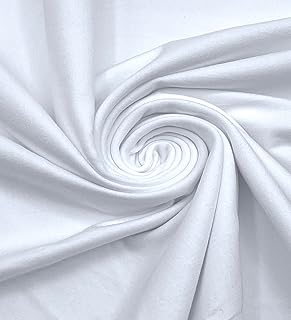
Soft 95/5 Cotton Spandex Jersey Knit Fabric
Perfect stretch and recovery ratio for T-shirts, dresses, and fitted tops. Sold by the yard in dozens of colors — ideal for practicing knit sewing techniques.
Shop on AmazonThe Fundamental Difference: Interlacing vs Interloping
We’ve established the basic construction methods, but it’s worth going deeper into why the difference between interlacing (weaving) and interloping (knitting) produces such dramatically different fabric behaviors. This is the physics underlying everything you’ve learned so far.
Thread Geometry and Load Distribution
In a woven fabric, threads are locked into a grid. When you apply a stretching force to a plain-weave cotton fabric along its length (the warp direction), what you’re doing mechanically is trying to straighten the already-nearly-straight warp threads — threads that are locked in place by the weft threads crossing them. Because the threads are already close to straight, there is almost nowhere for them to go. The fabric resists the force. Result: minimal stretch.
The exception is the bias direction: here, pulling at 45° to the grid causes the square grid to deform into a rhombus shape — the threads can rotate relative to each other at the intersection points, allowing the fabric to stretch. This explains why the bias direction is the only direction in which woven fabric has significant stretch, and why bias-cut garments have that distinctive fluid, clinging drape.
In a knit fabric, the situation is fundamentally different. The yarn is not arranged in straight lines but in a series of curved loops. When you apply a stretching force, the loops can straighten out — uncurling from their rounded shape into a more elongated form — before the actual yarn fiber is stressed at all. This gives knit fabrics their extraordinary extensibility: most of the stretch you observe comes from changes in loop geometry, not from stretching the fiber itself.
This is also why knit fabrics recover: once the stretching force is removed, the fiber’s natural crimp and elasticity (along with the mechanical spring of the loop structure) cause the loops to return to their curved resting state, pulling the fabric back to its original dimensions.
The Anisotropy Difference
Both woven and knit fabrics are anisotropic — their properties differ depending on the direction you’re measuring. But they’re anisotropic in fundamentally different ways:
| Direction | Woven Fabric Behavior | Knit Fabric Behavior |
|---|---|---|
| Lengthwise (warp / wale) | Very strong; virtually no stretch; most stable direction | Moderate stretch (less than crosswise in most weft knits) |
| Crosswise (weft / course) | Some minor mechanical stretch due to crimp; more than lengthwise but still minimal | Maximum stretch; loops elongate freely in this direction |
| Bias (45°) | Significant stretch due to grid rotation; most flexible direction | Variable; four-way stretch knits have high stretch in all directions |
| Overall stability | Extremely stable; holds shape under load | Variable; depends on fiber content and stitch density |
Why This Difference Matters for Pattern Drafting
The difference in anisotropy has enormous practical consequences for how garments are designed and patterned. A woven fabric garment must be shaped through structural means: darts, seams, pleats, gathers, and ease. All of these add three-dimensional form to what is essentially a flat, inextensible material. A knit fabric garment can rely partly on the fabric’s own stretch to conform to the body’s curves — meaning simpler pattern shapes can produce well-fitting garments.
This is why many knit patterns have far fewer pattern pieces and seams than equivalent woven patterns. A woven blouse might have a complex construction with darts, side seams, front and back pieces, curved armholes, and a separate yoke. A jersey top might achieve a similar fit with just two pattern pieces — a front and a back — because the fabric itself handles the fitting in three dimensions.
Understanding seam allowances also differs between the two: woven fabric patterns typically use 5/8-inch (1.5 cm) seam allowances as a standard, while knit fabric patterns often use narrower allowances because the fabric won’t fray, and bulkier seam allowances can interfere with the fabric’s stretch and drape.
💡 Pro Tip
When converting a woven pattern to a knit fabric, you generally need to reduce the ease in the pattern pieces, because the knit’s stretch will provide the extra room. Conversely, if you attempt to use a knit pattern in a woven fabric, the garment will be too small unless you add significant ease back into the pattern. This is why pattern instructions always specify whether the pattern is designed for woven or knit fabric — it’s not a minor detail, it fundamentally affects the fit of the finished garment.
Stretch & Elasticity: A Deep Dive into Fabric Recovery
Of all the properties that distinguish woven from knit fabric, stretch is the most impactful for everyday sewing. Not only does stretch fundamentally change how a fabric behaves when worn, it changes virtually every aspect of how you should work with it: how you cut, how you sew, which stitches you use, which notions you need, and which projects it’s suited for. Let’s break down stretch comprehensively.
Measuring Stretch: The Stretch Gauge
Stretch in fabric is typically measured as a percentage: the amount a 10-inch (25 cm) section of fabric can extend beyond its resting length, expressed as a fraction of the original measurement. A fabric that stretches from 10 inches to 14 inches has 40% stretch. Most knit sewing patterns indicate a minimum required stretch percentage on the pattern envelope — sewing a pattern designed for 50% stretch fabric with a fabric that only has 25% stretch will produce a garment that is too tight and won’t pull on comfortably.
| Stretch Category | Stretch Percentage | Typical Fabric Examples | Best Used For |
|---|---|---|---|
| Stable Knit | 0–25% | Ponte, double knit, some interlocks, scuba | Structured dresses, blazers, trousers |
| Moderate Stretch | 25–50% | Most jersey, interlock, some sweatshirt fleece | T-shirts, casual tops, dresses, children’s wear |
| Stretchy | 50–75% | Rib knit, cotton spandex jersey (5–8% spandex) | Fitted bodices, leggings, waistbands, cuffs |
| Super Stretch | 75–100%+ | Swimwear fabric, athletic compression knit, spandex blends (15–20% elastane) | Swimwear, activewear, compression garments |
| Four-Way Stretch | 50–100%+ in all directions | Power mesh, swimwear with elastane, technical sportswear | Activewear, swimwear, dance costumes |
| Woven — On Grain | 0–5% | All woven fabrics (plain, twill, satin) | Structured garments, tailoring |
| Woven — On Bias | 25–45% | All woven fabrics cut at 45° | Bias-cut dresses, bindings, cowl necks |
Two-Way vs Four-Way Stretch
Many sewists encounter the terms “two-way stretch” and “four-way stretch” without a clear explanation. Here’s the precise definition:
Two-way stretch (also called one-way stretch) means the fabric stretches significantly in one direction only — almost always crosswise (from selvedge to selvedge). Standard single jersey is a two-way stretch fabric: pull it side to side and it stretches easily; pull it top to bottom and it has much less give. The vast majority of knit fabrics for casual garments are two-way stretch.
Four-way stretch means the fabric stretches significantly in both the crosswise and lengthwise directions. This requires the incorporation of elastane (spandex/Lycra) into the fabric’s construction, or the use of a two-way stretch base fabric knitted on a machine with movement in both needle beds. Four-way stretch is essential for activewear and swimwear, where the garment must move freely with the body in all planes of motion simultaneously.
Elastane and Recovery: The Role of Spandex
Pure natural fibers — cotton, wool, linen, silk — have limited stretch and recovery properties on their own. The textile revolution that produced modern athletic wear and fitted casualwear was largely driven by the development of synthetic elastomeric fibers, particularly spandex (the generic term; Lycra and Elastane are brand and regional terms for the same material).
Spandex is remarkable: it can be stretched to 500–800% of its resting length and still recover fully. Even small additions of spandex (2–5% by weight) dramatically improve a fabric’s stretch and recovery. A 95/5 cotton-spandex jersey will recover from stretching far better than a 100% cotton jersey, which tends to bag out at the knees and elbows with repeated wearing. As the spandex percentage increases, the fabric becomes progressively more compressive and recovery-focused — the 80/20 nylon-spandex used in yoga pants provides strong muscle support and near-perfect shape retention.
What “No Stretch” Woven Fabric Means for Fit
When we say woven fabric has no stretch on the grain, we’re making an important statement about garment construction strategy. A fitted woven garment — say, a button-front shirt — must be designed so that it fits the body without relying on the fabric to stretch into place. Every bit of three-dimensional shaping must come from the pattern pieces themselves: the dart in the back shoulder, the slight curve of the side seam, the shaped armhole, the slight flare of the hem.
The ease built into a woven garment pattern is the amount by which the pattern’s measurements exceed the wearer’s body measurements. Standard ease for a woven shirt might add 2–4 inches to the chest measurement so the wearer can breathe and move their arms. A knit T-shirt pattern might have zero ease — or even negative ease (the pattern is actually smaller than the body measurement), because the fabric’s stretch will provide the room needed.
Understanding ease, stretch, and recovery together is fundamental to achieving well-fitting garments. For more on how different stitch settings interact with fabric stretch, see our guide on stitch width vs stitch length.
✅ Woven — Stretch Advantages
- Predictable, stable dimensions
- Bias stretch enables elegant drape
- Pattern fitting is precise
- No risk of garment growing over time
- Consistent fit across many wearings
❌ Woven — Stretch Disadvantages
- Constrains movement unless properly eased
- Complex patterns needed for fitted looks
- Can feel restrictive in active use
- No built-in size flexibility
✅ Knit — Stretch Advantages
- Moves freely with the body
- Forgiving of minor fit issues
- Works for a range of body sizes
- Ideal for active and casual wear
- Simpler pattern shapes possible
❌ Knit — Stretch Disadvantages
- Can stretch out with wear if poor recovery
- Harder to control during cutting/sewing
- May distort with careless pressing
- Edge curling complicates finishing
Durability, Strength, and Longevity: Which Lasts Longer?
One of the most frequently asked questions when comparing woven and knit fabric is simply: which one is more durable? The answer, characteristically, is: it depends — but the factors that influence the answer are highly predictable once you understand the structural logic.
Tensile Strength: Wovens Win on the Grain
Pure tensile strength — the ability to resist being pulled apart — typically favors woven fabric, particularly along the warp direction. Warp threads in a woven fabric are selected for strength (because they must bear the mechanical stress of the weaving process) and are locked in place by the weft threads crossing them. A high-quality woven canvas, denim, or ripstop nylon is extraordinarily difficult to tear along the grain.
By contrast, knit fabrics must balance strength with stretch — a yarn that is too stiff or too tightly twisted can’t form the smooth loops that give knit fabrics their properties. This means the individual yarn strands in a knit are generally less strong under direct tensile load than comparable woven warp threads.
Abrasion Resistance: Structure Matters
Abrasion resistance — the ability to withstand repeated rubbing contact without wearing through — is also generally higher in woven fabrics, particularly tightly woven ones. The tight interlacing means there are few exposed fiber ends or loose yarns that can be caught and pulled by abrasive surfaces. Dense twill-weave fabrics like denim are legendary for their abrasion resistance — hence their dominance in workwear and jeans.
Knit fabrics, with their looped structure, often have more exposed fiber surface area and are more prone to pilling (the formation of small fiber balls on the surface from abrasion) and snagging (where a sharp object catches a single loop and pulls it out of the fabric structure, creating a run).
Tear Resistance: Knits Often Surprise
Interestingly, knit fabrics can outperform wovens when it comes to tear resistance. Because knit loops can shift and elongate rather than transmitting stress directly to adjacent fibers, knit fabrics often distribute the force of a tearing load across a broader area before any fiber breaks. Many technical outdoor and athletic garments use knit constructions partly for this reason.
Durability in Practice: Wear and Washing
In real-world garment use, durability is significantly affected by how the fabric is sewn and finished. A woven fabric sewn with unfinished seam allowances will eventually fail at the seams as the raw edges fray through the seam stitching — a durability issue that has nothing to do with the fabric itself but with the construction. Similarly, a knit garment sewn with standard straight stitches (rather than stretch-appropriate zigzag or serger stitches) will fail when the seam stitching breaks under the knit’s natural stretch — again, a construction issue rather than a fabric issue. For common sewing machine issues that affect seam quality, our sewing machine troubleshooting guide covers the most important fixes.
Woven fabrics can be significantly weakened by improper washing — particularly high-temperature laundering and aggressive agitation, which can break down the sizing (finish) that maintains the fabric’s hand and cause the threads to shift and lose alignment. Knit fabrics, especially those containing spandex, can be degraded by high heat, chlorine bleach, and oil-based products, all of which can degrade the elastomeric fibers and cause permanent loss of recovery.
Thread Count, Weight, and Durability
Within each category, weight (measured in grams per square meter, or GSM) and thread count are major durability indicators. A 300 GSM twill denim will dramatically outlast a 100 GSM voile, even though both are woven. Similarly, a 280 GSM ponte knit will outlast a 120 GSM lightweight jersey in terms of wear life. When choosing fabric for a garment that will see heavy use — workwear, children’s clothes, frequently washed items — weight and density matter as much as the woven vs. knit distinction.
Breathability, Moisture Management, and Thermal Properties
While breathability is primarily determined by fiber content (natural fibers like cotton and linen are generally more breathable than synthetic fibers like polyester), fabric construction also plays a meaningful role. The structural openness of a fabric — how much air can flow through it — is affected by how tightly or loosely the threads are arranged.
Air Permeability in Wovens vs Knits
Open-weave woven fabrics (like linen, loose-weave cotton, gauze, and voile) can be extremely breathable because their relatively open grid structure allows substantial air flow. However, tightly woven fabrics (high thread count cottons, dense twills, most synthetic wovens) can be less breathable than a comparable knit because the tight interlacing leaves little open space between threads.
Knit fabrics, with their looped structure, tend to have somewhat more inherent air permeability than woven fabrics of equivalent weight. The loops create small spaces that allow moisture vapor and air to pass through — a key reason why cotton jersey T-shirts are comfortable in warm weather despite their snug fit. However, very dense, heavy knits (thick fleece, high-compression athletic knits) can be quite insulating despite their looped structure.
Moisture-Wicking in Technical Knits
Modern technical sportswear relies heavily on engineered knit fabrics for moisture management. The specific knit structure of athletic fabrics is carefully designed to promote capillary action — the ability of the fabric to draw moisture (sweat) away from the skin surface and spread it across a larger area where it can evaporate. This “wicking” behavior requires both the right fiber chemistry (hydrophobic polyester or nylon fibers that don’t absorb water themselves but transport it via capillary action) and the right knit structure (typically a fine, closely knitted fabric with excellent contact against the skin surface).
Woven fabrics are rarely used for close-to-skin athletic applications partly because they can’t provide the same degree of body contact, and partly because their structured nature makes them less comfortable for vigorous movement. The dominant use of knit fabrics in athletic wear is not a coincidence — it reflects a fundamental alignment between knit structure and the demands of active use.
Warmth and Insulation: The Role of Air Trapping
Thermal insulation in fabric is primarily about trapping a layer of still air close to the body. Tightly woven fabrics can provide wind resistance (blocking the movement of cold air against the skin) but don’t trap warm air particularly well on their own. Loosely knit fabrics like wool sweaters are excellent insulators precisely because their open loop structure traps substantial quantities of still air.
This is why “layering systems” in outdoor clothing often combine a close-fitting knit base layer (for moisture management and some insulation), a lofty knit or down-filled middle layer (for thermal insulation via air trapping), and a tightly woven outer shell (for wind and water resistance). Each layer is playing to its structural strengths.
Care and Washing: How to Treat Woven and Knit Fabrics
Proper care is one of the most practical aspects of understanding the woven vs knit distinction, and the differences go far beyond simply “cold wash vs warm wash.” The structural properties of each fabric type create specific vulnerabilities that proper laundering techniques can either protect against or inadvertently exploit.
Caring for Woven Fabrics
Woven fabrics’ primary laundering concerns relate to shrinkage, color stability, and the disruption of the weave structure through agitation:
Shrinkage and pre-washing: Many woven fabrics, particularly those made from natural fibers like cotton, linen, and wool, will shrink significantly when first washed in warm or hot water. The mechanisms differ: cotton shrinks because moisture causes the fibers to swell and the thread crimp to increase, pulling the weave tighter. Wool shrinks and felts because the fiber’s surface scales interlock under heat and agitation. Linen shrinks due to fiber relaxation. It is almost universally recommended to pre-wash fabric before cutting to prevent the finished garment from shrinking after construction. Failing to do this is one of the most common beginner mistakes.
Color stability: Many woven fabrics, particularly those dyed with direct or reactive dyes, will bleed color significantly in their first wash. Dark colors (deep indigo denim, rich navy cotton, vibrant red broadcloth) are particularly prone to bleeding. Washing new fabric separately or with a dye fixative in the first wash is strongly recommended.
Agitation and weave distortion: Strong agitation in a washing machine can cause loosely woven fabrics to shift and distort — threads can be pushed out of alignment, producing a “boardy” or rippled texture. Delicate wovens (silk chiffon, loosely woven linen, organza) are best hand-washed or washed on a very gentle cycle in a mesh laundry bag.
Pressing woven fabrics: Woven fabrics generally respond excellently to pressing. The heat and steam of a good iron can smooth wrinkles, set creases, re-block a slightly distorted weave, and help set seam allowances firmly. Using a pressing cloth over delicate surfaces (silk satin, velvet, polished cotton) prevents shine marks. A high-quality steam iron is one of the most valuable tools in a sewist’s arsenal.
Caring for Knit Fabrics
Knit fabrics have their own set of care requirements, driven largely by their looped structure and the presence of elastomeric fibers:
Stretching when wet: A saturated knit fabric is significantly heavier than a dry one, and if hung to dry in a traditional manner (by the shoulders or on a regular clothes hanger), the weight of the wet fabric can stretch the garment permanently. Knit garments — particularly sweaters and heavier jersey pieces — should be dried flat on a clean, dry towel to prevent this stretching. Lightweight cotton jersey T-shirts are generally resilient enough to tumble dry or hang dry without significant distortion, but heavier knits are vulnerable.
Heat and spandex degradation: Fabrics containing spandex/elastane should be washed in cool water (never hot) and dried on a low-heat setting or flat-dried. High temperatures — both from hot water and from a hot dryer — break down the spandex fibers over time, causing progressive loss of recovery and the development of saggy, stretched-out areas. This is why athletic leggings can lose their figure-hugging properties after repeated high-heat laundering.
Pilling prevention: Knit fabrics (especially those containing short natural fibers like cotton or wool) are more prone to pilling than woven fabrics. Turning garments inside-out before washing, using a gentle cycle, and washing in a mesh laundry bag all significantly reduce pilling by limiting the amount of surface abrasion the fabric experiences during washing.
Pressing knit fabrics: Knit fabrics require significantly more care during pressing than woven fabrics. The heat and weight of an iron can crush the looped structure and cause the fabric to stretch or shine. Always use a pressing cloth or damp pressing cloth over knit fabrics, use a lower temperature than for equivalent wovens, and use a lifting (lift-and-press) motion rather than sliding the iron across the fabric surface, which can stretch and distort the knit. Steam pressing rather than direct contact pressing is recommended for most knits.
🔑 Key Care Distinction
Woven fabrics need protection from agitation and heat-induced shrinkage. Knit fabrics need protection from heat-induced elastane degradation and gravity-induced wet stretching. Pre-washing is important for both, but the risks are different — wovens primarily shrink, while knits may stretch or lose shape.

Premium Mesh Laundry Bags (Set of 6)
Protect both woven and knit garments in the wash. Fine-mesh bags prevent snagging, stretching, and pilling for delicate wovens and loop-structure knits alike.
Shop on AmazonSewing Woven Fabrics: Techniques, Tools, and Best Practices
Sewing woven fabrics is often described as “traditional sewing” because for most of sewing’s history, virtually all sewn garments were made from woven cloth. The standard practices taught in sewing education — seam finishes, grain-line placement, interfacing, pressing — are almost entirely oriented around the properties of woven fabric. This is simultaneously a strength and a limitation: if you’ve learned to sew using woven fabrics, you have an excellent foundation; if you then try to apply those same techniques to knit fabrics without adjustment, you’ll run into trouble.
Essential Tools for Woven Fabric Sewing
The right tools make an enormous difference when working with woven fabrics. Here’s what experienced sewists rely on:
- Sharp universal needles: Woven fabrics require clean needle penetration between threads rather than pushing threads aside. A dull needle will snag and break fibers. See our complete guide to sewing machine needle sizes for specifics by fabric weight.
- Good fabric scissors or rotary cutter: Woven fabrics cut cleanly with sharp scissors or a rotary cutter along the grain. The best sewing scissors make a significant difference in cutting precision, especially with slippery wovens like silk and chiffon. A quality rotary cutter with a cutting mat is indispensable for quilting cottons and straight-grain cuts.
- Seam gauge and quilting rulers: Accurate seam allowances are critical with wovens. Good quilting rulers ensure consistent cutting.
- Iron and pressing mat: Of all the tools in a sewist’s kit, the iron may matter most for woven fabrics. Pressing seams open or to one side, pressing darts, and blocking shaped pieces requires a reliable steam iron and a firm pressing surface. One of the best ironing boards for sewists is a worthwhile investment.
- Seam ripper: Correcting mistakes in woven fabric is more straightforward than in knits because woven fabric doesn’t run when you rip stitches. A sharp seam ripper is essential.
- Sewing clips or pins: Sewing clips or pins hold woven fabric layers together precisely during sewing. Pins parallel to the seam line (removed before the needle reaches them) are standard practice.
Grain Line Mastery
Working with woven fabric requires a thorough understanding of grain lines. Every pattern piece must be positioned correctly relative to the fabric’s grain — the direction in which the warp threads run. Placing a bodice front piece off-grain by even a few degrees can cause the finished garment to twist to one side, pull across the chest, or hang unevenly at the hem — problems that no amount of fitting can fix after the fact.
The standard process for graining pattern pieces on woven fabric:
- Find the fabric’s selvedge edges — these run parallel to the warp and define the straight grain (lengthwise grain).
- Fold the fabric so the selvedges are parallel, creating a clean folded edge perpendicular to the grain (the crossgrain).
- Smooth the fabric on a flat cutting surface, ensuring no diagonal wrinkles (diagonal wrinkles indicate the fabric is off-grain).
- Align each pattern piece’s grain line marking parallel to the selvedge, measuring from both ends of the grain line arrow to ensure it’s equidistant from the selvedge.
- Pin or weight the pattern pieces before cutting.
For loosely woven fabrics that have shifted off-grain (a common issue with washed cotton and linen), you may need to pull the fabric on the true bias to realign the grain before cutting. This technique — grasping opposite bias corners and giving a firm but controlled tug — can restore a distorted woven fabric to grain alignment.
Seam Finishing for Woven Fabrics
Because woven fabrics fray at cut edges, finishing the raw edges of seam allowances is generally necessary for garments that will be laundered. The appropriate seam finishing method depends on the fabric’s weight, weave tightness, and the garment’s intended use:
Serged/overlocked seam allowances: The fastest and most professional seam finish for most woven fabrics. An overlocker (serger) trims the seam allowance and encases the raw edge in a thread chain simultaneously, producing a clean, durable, professional finish. Learn more about serger vs coverstitch machines to choose the right tool.
Zigzag stitch finish: Using a zigzag stitch close to the raw edge of the seam allowance prevents fraying without a serger. Slightly less professional than serging but perfectly effective for most woven garments.
French seam: An elegant finish for sheer wovens (chiffon, voile, organza, silk) in which the raw edges are completely enclosed inside a double-sewn seam. No raw edges are exposed anywhere in the garment. Requires careful pressing and narrow initial seam allowances.
Flat fell seam: Used in quality denim jeans and workshirts. The seam allowance is folded and topstitched flat to the garment body, completely encasing the raw edge and creating a strong, highly visible seam line. Understanding the basics of machine vs hand sewing techniques helps here.
Pinking: Using pinking shears to cut a zigzag edge on seam allowances. Adequate for tightly woven fabrics that don’t fray aggressively; not reliable for loosely woven fabrics in garments that will be washed repeatedly.
Interfacing: Adding Structure to Woven Fabrics
Interfacing is a crucial part of woven garment construction that has no equivalent in most knit sewing. Interfacing is a fusible or sew-in backing material applied to select areas of a woven garment to add stiffness, stability, and body. It prevents areas that would otherwise fray or stretch out of shape (collar stands, button bands, cuffs, waistbands, facings, pockets) from losing their structure through wear.
Fusible interfacing is by far the most common type — it has a heat-activated adhesive on one side that bonds to the fabric when pressed with a damp cloth and iron. The weight of interfacing you choose should match the weight of your fabric: a lightweight shirt needs lightweight interfacing; a heavy coat wool needs medium or heavy interfacing. Selecting the wrong weight produces problems: too heavy an interfacing makes the fabric stiff and boardy; too light an interfacing fails to provide adequate support and may eventually separate from the fabric.
The Importance of Pressing While Sewing Wovens
Experienced sewists will tell you that sewing woven fabric is as much about pressing as it is about stitching. The mantra “press as you sew” refers to the practice of pressing each seam and structural element as you complete it, before moving on to the next step. This technique:
- Sets the seam stitching permanently into the fabric
- Opens or directs seam allowances precisely as designed
- Creates flat, crisp seam lines that are easy to sew into
- Establishes the three-dimensional shape of darts and curved seams
- Makes the finished garment look professionally made rather than homemade
An unpressed woven garment — even one sewn with perfect technique — will look sloppy and unfinished. A well-pressed woven garment looks nearly professional regardless of construction technique. The investment in a good iron pays for itself immediately in the quality of finished woven garments.

Gingher 8-Inch Knife Edge Dressmaker’s Shears
The gold standard for cutting woven fabrics precisely. Micro-serrated lower blade grips fabric to prevent slipping on slick wovens like satin, chiffon, and silk.
Shop on AmazonSewing Knit Fabrics: The Complete Technique Guide
If woven fabric sewing is the “classical” curriculum of textile construction, knit fabric sewing is the “jazz” — it requires a different set of tools, a different mindset, and a willingness to let go of some of the rigidities of traditional technique. Many sewists who have mastered wovens find their first attempts at knit sewing deeply frustrating: the fabric stretches when it shouldn’t, curls at the edges, breaks seam threads, and generally refuses to behave like the woven fabric they know. The key is understanding that knit fabric isn’t broken woven fabric — it’s a fundamentally different material that plays by different rules.
The Most Common Knit Sewing Mistake: Standard Straight Stitch
The single most common mistake when sewing knit fabric for the first time is using a standard straight stitch on a regular sewing machine. The result is almost always broken seam thread: you complete what looks like a perfect seam, put on the garment, stretch the fabric — and hear the threads snapping as the seam rips open. Why? Because a standard straight stitch is completely inextensible. When the knit fabric stretches, the locked stitches cannot stretch with it, so they break.
The solution is to use stitches that have built-in stretch:
Zigzag stitch: The most basic stretch stitch available on virtually all sewing machines. The needle moves from side to side as it stitches, creating a zigzag path that can stretch without breaking. A narrow zigzag (stitch width 1.5–2.0, stitch length 2.0–2.5) is suitable for most knit seams. A wider zigzag is needed for very stretchy fabrics.
Lightning bolt stitch / three-step zigzag: Many machines have a “lightning bolt” or multi-step zigzag option. This creates multiple small zigzags in the space of one large one, producing a stitch that is both stretchier and stronger than a simple zigzag while using less thread and creating less bulk.
Stretch stitch (twin-needle): A twin needle on a conventional machine produces two parallel rows of stitching on the right side and a single zigzag on the wrong side. This creates a professional hem finish with two visible parallel stitch rows (like a bought T-shirt hem) and good stretch. Understanding your machine’s stitch types is essential before working with knits.
Overlock/serger stitch: A serger (overlocker) simultaneously stitches, trims, and encases the seam allowance in a thread chain, producing a seam that stretches, is incredibly strong, and has a professional finish all in one step. For regular knit sewing, a serger is arguably the single most valuable tool you can own. Troubleshoot common issues in our machine jamming guide if you experience seam problems.
Needles for Knit Fabric
Using the correct needle is critical for knit fabric. A standard universal needle has a slightly sharp tip that parts woven fabric threads cleanly — but applied to a knit fabric, this sharpness can pierce through the loops rather than sliding between them, causing holes, runs, and skipped stitches.
The correct needle for most knit fabrics is a ballpoint needle (also called a “jersey needle”). The ballpoint tip is rounded rather than sharp, designed to slide between the loops rather than pierce them. For very stretchy fabrics with high spandex content, a stretch needle is recommended: it has both a specially designed ballpoint tip and a unique groove along the needle shaft that helps prevent the needle from deflecting as it penetrates thick, resilient elastomeric fabrics. See our comprehensive needle problems guide for skipped stitch diagnosis specific to knit sewing.
| Knit Fabric Type | Recommended Needle | Size Range | Notes |
|---|---|---|---|
| Lightweight jersey (cotton, viscose) | Ballpoint / Jersey | 70/10 – 80/12 | Most common choice; use for T-shirts and basic knit tops |
| Medium jersey, interlock | Ballpoint / Jersey | 80/12 – 90/14 | Good all-purpose knit needle |
| Ponte, double knit, scuba | Ballpoint or Stretch | 90/14 – 100/16 | Heavier needle for denser knit structures |
| Spandex/lycra blends (sportswear) | Stretch needle | 75/11 – 90/14 | Specifically designed for elastomeric fabrics; reduces skipped stitches |
| Fleece | Ballpoint | 90/14 – 100/16 | Heavier needle penetrates the napped surface; reduce pressure foot pressure |
| Rib knit | Ballpoint or Stretch | 75/11 – 90/14 | Highly elastic; stretch needle prevents skips |
Cutting Knit Fabrics
Cutting knit fabrics requires a different approach than cutting wovens, primarily because of the fabric’s tendency to stretch, curl, and shift while being handled:
- Use sharp, fine-toothed rotary cutter blades: A sharp rotary cutter cuts cleanly through knit fabric without the fabric stretching away from the blade. Serrated or skip-cut blades sometimes work well on slippery knits. A clean self-healing cutting mat is essential for flat, stable cutting.
- Use weights rather than pins where possible: Pushing pins through knit fabric can create permanent holes or distort the fabric around the pin. Pattern weights or smooth objects work better for most knit cutting tasks. Our comparison of sewing clips vs pins covers this in detail.
- Never let knit fabric hang off the cutting table: The weight of fabric hanging off the edge will stretch it in the direction of the hang, meaning you’ll be cutting a distorted piece that will spring back to a different shape once free. Always keep all portions of the fabric flat on the cutting surface.
- Lay fabric single-layer when possible: Especially with lighter, more slippery jerseys, cutting single layers gives more accurate, distortion-free results than cutting through doubled layers that can shift relative to each other.
- Identify the right side before cutting: With single jersey, the right side and wrong side behave differently in construction. Mark the wrong side of each cut piece with tailor’s chalk or a small safety pin before moving the pieces away from the cutting table.
Handling the Sewing Machine for Knits
Even with the correct stitch type and needle, knit fabrics can challenge standard sewing machine settings:
Reduce presser foot pressure: Most sewing machines allow you to adjust the downward pressure of the presser foot. Reducing this pressure for knit fabrics prevents the feed dogs from overgripping and stretching the fabric as it passes under the needle — a common cause of wavy, stretched seams in knit sewing. See our complete sewing machine features guide for how to find and adjust this setting.
Use a walking foot for heavy knits: A walking foot feeds both the top and bottom layers of fabric simultaneously, preventing the layers from shifting relative to each other. This is particularly valuable for thick, heavy knits (ponte, fleece, double knit) and for sewing hems where accurate alignment is critical.
Support the fabric weight: When sewing long seams on heavy knit fabric, the weight of the unsewn portion of the fabric can pull the sewn portion sideways, distorting the seam line. Support the fabric from beneath as you sew, or work on a machine with an extended table surface. Setting up a proper sewing table with good fabric support makes a huge difference.
Prevent thread nesting: Knit fabrics are particularly prone to thread jamming and nesting at the beginning of a seam. This occurs when the thread is pulled down into the machine at the start of stitching. To prevent it: always hold both thread tails behind the presser foot when starting to sew, backstitch only two or three stitches at the seam beginning (longer backstitching can stretch the fabric), and start sewing slightly in from the cut edge rather than right at the edge. For persistent thread nesting, check our detailed thread nesting fix guide.

Schmetz Ballpoint/Jersey Needle Variety Pack
Rounded ballpoint tip slides between knit loops without piercing them. Eliminates skipped stitches and runs. Works on all standard sewing machines. Sizes 70/10 to 100/16.
Shop on AmazonBest Uses and Applications: When to Choose Woven vs Knit
Understanding the properties of woven and knit fabrics is only half the equation — the other half is knowing how to translate that understanding into smart project-specific fabric choices. Here’s a comprehensive overview of which fabric type excels in each major application area:
Apparel: Structured Garments
Structured garments — those with defined silhouettes, sharp tailoring lines, and architectural shapes — are almost exclusively the domain of woven fabrics. The stability, shape retention, and pressing properties of wovens make them irreplaceable for:
- Tailored blazers, jackets, and suits (wool, wool blends, linen)
- Dress shirts and blouses with crisp collars and cuffs (cotton broadcloth, poplin, chambray)
- Trousers and slacks requiring a sharp crease (wool, gabardine, cotton twill)
- Formal dresses with structured bodices (duchess satin, taffeta, brocade)
- Skirts with A-line or flared silhouettes (linen, cotton, denim)
- Outerwear like trench coats and parkas (canvas, gabardine, tightly woven synthetics)
Apparel: Comfortable Casualwear
Body-conscious, comfortable, easy-movement casualwear is dominated by knit fabrics. The stretch and recovery of knits make them ideal for:
- T-shirts in all weights and silhouettes (cotton jersey, cotton-modal blends)
- Pullover dresses and skirts (jersey, ponte, interlock)
- Sweatshirts and hoodies (sweatshirt fleece, French terry)
- Loungewear and pajamas (soft cotton jersey, brushed fleece, ribbed knit)
- Children’s clothing (jersey, interlock — both comfortable and durable for active kids)
- Maternity wear (jersey, ponte — stretch accommodates a growing body)
Apparel: Athletic and Performance Wear
Performance athletic wear is almost entirely knit, typically incorporating elastane for stretch and recovery:
- Leggings and compression tights (high-spandex jersey or nylon/spandex knit)
- Sports bras and athletic tops (technical moisture-wicking knits)
- Swimwear (chlorine-resistant nylon/spandex four-way stretch knit)
- Dance costumes and skating wear (four-way stretch velvet knit, mesh)
- Workout shorts and shorts liners (light moisture-wicking knit)
Quilting and Patchwork
Quilting is almost exclusively a woven fabric domain, and for excellent reason. The stability, precise cutting, and predictable behavior of quilting cotton (a plain weave fabric) makes it ideal for patchwork, where pieces must align precisely at seam intersections. Knit fabrics, with their tendency to stretch and distort during cutting and sewing, are extremely challenging for patchwork. For best results with quilting cotton, pair it with a quality rotary cutter, accurate quilting rulers, and a stable cutting mat. For tips on maximizing efficiency, see our quilting hacks for faster fabric cutting.
Home Décor and Furnishings
Home décor applications overwhelmingly favor woven fabrics. The durability, dimensional stability, and design diversity of wovens make them ideal for:
- Drapery and curtains (the weight and structure of wovens produce proper drape)
- Upholstery (durability and abrasion resistance; heavy wovens like canvas, velvet, and tapestry)
- Cushion covers, pillow shams (stability prevents distortion over time)
- Table linens (linen, cotton damask, sateen)
- Quilts and bed covers (cotton quilting fabric, quilt batting)
Knit fabrics in home décor are limited primarily to fitted applications: stretch slipcovers, baby bedding, T-shirt quilts (which repurpose old jersey garments), and some accent cushions.
Woven vs Knit Fabric: Full Side-by-Side Comparison Tables
The following tables provide a comprehensive at-a-glance comparison across all major properties and considerations. These tables are designed to be used as a quick reference when evaluating fabric choices for specific projects.
Master Property Comparison
| Property | Woven Fabric | Knit Fabric | Winner |
|---|---|---|---|
| Construction method | Interlacing (two thread sets at 90°) | Interloping (single yarn in loops) | N/A |
| Natural stretch (grain) | Very low (0–5%) | High (25–100%+) | Knit (for stretch use) |
| Bias stretch | Moderate (25–45%) | Variable | Woven bias |
| Shape retention | Excellent | Variable; depends on elastane content | Woven |
| Fraying at cut edges | Yes — requires finishing | No (may curl or run) | Knit |
| Sewing difficulty (beginner) | Moderate | More challenging | Woven for beginners |
| Comfort/freedom of movement | Lower (unless bias-cut) | High | Knit |
| Tensile strength (on grain) | Very high | Moderate | Woven |
| Abrasion resistance | High (especially twills) | Moderate (prone to pilling) | Woven |
| Tear resistance | Moderate | Often higher (distributed stress) | Knit |
| Breathability | Variable (highest in open weaves) | Generally good; excellent in fine knits | Tie/depends |
| Moisture wicking | Limited | Excellent (technical knits) | Knit (for sportswear) |
| Pressing responsiveness | Excellent | Requires care; can stretch/shine | Woven |
| Interfacing need | Often required | Rarely needed | Knit (simpler) |
| Seam finishing required | Yes (fraying) | Not strictly required | Knit (simpler) |
| Grain line sensitivity | Very high | Moderate | Knit (more forgiving) |
| Pattern variety | Very large range | Large and growing range | Woven (currently) |
| Cost range | Wide ($1–$200+/yard) | Wide ($2–$80+/yard) | Comparable |
Sewing Machine Comparison: Woven vs Knit Requirements
| Sewing Requirement | Woven Fabric | Knit Fabric |
|---|---|---|
| Needle type | Universal or sharp (for precise penetration) | Ballpoint or stretch (slides between loops) |
| Needle size | 60/8–100/16 depending on weight | 70/10–100/16 depending on weight/spandex content |
| Stitch type for seams | Straight stitch (10–12 stitches/inch) | Zigzag, lightning bolt, or overlock stitch |
| Stitch type for hems | Straight stitch topstitch, blind hem stitch, hand hem | Twin needle, coverstitch, narrow zigzag, hand catchstitch |
| Presser foot | All-purpose / straight stitch foot | Walking foot, roller foot, or Teflon foot for sticky knits |
| Seam finish method | Serge, zigzag, French seam, flat fell, bound | Usually serge (seam + finish in one step) |
| Thread type | All-purpose polyester or cotton | All-purpose polyester (more stretch than cotton) |
| Tension adjustment | Standard tension usually fine | May need reduced tension to prevent tunneling |
| Fabric stabilizer | Cut-away interfacing for stretch prevention | Water-soluble or tear-away to prevent distortion at shoulder seams |
| Machine type needed | Basic mechanical machine adequate | Machine with zigzag essential; serger ideal |
Fiber Content Comparison Within Each Fabric Type
| Fiber | As Woven | As Knit | Sewing Considerations |
|---|---|---|---|
| Cotton | Broadcloth, muslin, denim, linen-cotton blends | Jersey, interlock, rib knit, French terry | Pre-wash both; cotton knit has poor recovery without spandex |
| Wool | Tweed, flannel, gabardine, coating wool | Wool jersey, boiled wool, wool rib | Both benefit from gentle washing; wool knits felt with heat/agitation |
| Silk | Charmeuse, chiffon, organza, dupioni | Silk jersey (rare and expensive) | Woven silks are slippery; silk knit is fluid and delicate |
| Polyester | Satin, chiffon, twill, taffeta, microfiber | Jersey, fleece, scuba, velour | Both resist wrinkles; heat-sensitive; check temperature before pressing |
| Nylon | Ripstop, taffeta, outerwear shells | Swimwear fabric, athletic knit | Nylon wovens are strong; nylon knits (with spandex) are the standard for swimwear |
| Linen | Linen suiting, linen voile, canvas | Linen jersey (rare) | Linen wovens wrinkle heavily; pre-wash essential for shrinkage control |
| Viscose/Rayon | Challis, crepe, rayon twill | Viscose jersey, bamboo jersey | Both extremely fluid and soft; viscose loses significant strength when wet — handle gently |

Brother 1034DX 3/4 Thread Serger Overlocker
The most popular beginner-to-intermediate serger for knit fabric sewing. Sews, trims, and overcasts in one step. Ideal for professional knit seam finishes on jerseys, ponte, and fleece.
Shop on AmazonHow to Tell Woven from Knit Without a Label
Identifying whether a fabric is woven or knit is a fundamental skill that becomes second nature with practice — but if you’re just starting out, here’s a set of reliable, no-equipment-required tests you can perform at the cutting table or in the fabric store:
The Stretch Test
The fastest and most reliable test. Hold a small section of the fabric and pull it firmly in both the crosswise direction (from selvedge to selvedge) and the lengthwise direction (parallel to the selvedge). A woven fabric will have very little give in either direction on the grain; a knit fabric will stretch noticeably — often dramatically — in at least the crosswise direction. If the fabric stretches and then springs back toward its original shape when you release it, you’re almost certainly holding a knit. If it resists stretching and doesn’t spring back, it’s a woven.
The Edge Inspection Test
Look at a cut edge of the fabric (or make a small test cut with scissors). A woven fabric will show individual thread ends at the cut edge, with some threads beginning to pull free and create a fuzzy fringe — this is fraying, and it’s a definitive indicator of woven construction. A knit fabric will show a cleaner cut edge (though it may curl), with loops visible if you look closely at the edge.
The Visual Structure Test
Hold the fabric up to good light and look at it closely — ideally with a hand lens or magnifying glass. A woven fabric will show a grid-like pattern of perpendicular threads crossing each other. A knit fabric will show a series of interlocking loops arranged in horizontal rows (courses), giving the fabric a subtly ridged or textured appearance. On many single jersey fabrics, you can clearly see the V-shaped stitches on the right side.
The Wrinkle Test
Squeeze a small handful of the fabric firmly in your fist for five seconds, then release and observe. Woven fabrics (particularly natural fiber wovens like cotton, linen, and silk) will typically hold visible creases after this treatment. Knit fabrics, with their looped structure, generally recover from this treatment without holding significant creases (though this varies by fiber content — woven polyester also resists wrinkling).
The Diagonal Pull Test
For a deeper test: pull the fabric at a 45-degree angle to both selvedges (the true bias). A woven fabric will stretch noticeably on the bias — sometimes dramatically. A knit fabric may also stretch on the bias, but typically the response will feel different — more of a uniform resistance rather than the characteristic “give-and-set” feel of woven bias stretch. With practice, this distinction becomes easy to feel.
The Curl Test
Cut a 4×4 inch square from the fabric. For single jersey (the most common knit fabric), the cut piece will begin to curl along its edges — typically with the long edges curling toward the right side and the cross-grain edges curling toward the wrong side. This characteristic edge curl is virtually diagnostic for single jersey. Double knits and more stable knits won’t curl as dramatically, but woven fabrics won’t curl at all — they’ll simply lay flat or fray at the edges.
Choose Your Fabric by Project Type
Still unsure which fabric to use? This practical selector breaks down the most common sewing projects and the fabric type that will give you the best results. Remember that within each category, your specific choice of woven or knit fabric should also take into account the weight, drape, and fiber content appropriate for the project’s function and desired aesthetic.
🧵 Use Woven
- Tailored blazer / jacket
- Dress shirt / blouse
- Structured skirt
- Quilt patchwork
- Curtains & drapes
- Table linen
- Upholstered cushions
- Tote bag / bag lining
- Denim jeans
- Formal gown bodice
- Trousers / slacks
- Shirt dress
🧶 Use Knit
- T-shirt / pullover top
- Leggings / yoga pants
- Athletic/swimwear
- Baby & children’s clothing
- Fitted dress
- Sweatshirt / hoodie
- Underwear / lingerie
- Pajamas / loungewear
- Wrap top / bodysuit
- Scarf / cowl neck
- Socks & leg warmers
- Maternity wear
✨ Either Works
- Maxi dress / skirt
- Wrap dress
- Simple A-line skirt
- Oversized top / tunic
- Jacket lining
- Sleep mask / eye cover
- Tote bag exterior
- Costume pieces
- Face covering / mask
- Pet accessories
Fabric Selection for Beginners: Where to Start
If you’re just starting to sew and wondering which fabric type is easiest to learn with, the consensus among experienced sewists is: start with woven fabric, specifically a medium-weight quilting cotton or cotton-linen blend.
Why woven for beginners? Woven fabrics are more forgiving of imperfect technique in several ways. They don’t stretch during cutting, so your pieces maintain their intended shape from table to machine. They press beautifully, making seams crisp and professional-looking even before you’ve mastered perfect stitching. They fray rather than running, which gives you time to finish edges properly. And the enormous variety of patterns, books, and online resources aimed at woven fabric sewing means you’ll never run out of learning material.
Once you’ve built confidence with wovens, transitioning to knit fabrics becomes much easier because you already understand the fundamentals of sewing, pressing, and fitting. Choosing a stable, manageable first knit fabric — ponte or a thick cotton jersey — will smooth that transition considerably. Explore the best sewing machines for intermediate sewers if you’re ready to upgrade equipment as your skills grow.
If you do want to start with knits, our recommendations are: ponte knit (stable, minimal curl, forgiving) or a medium-weight sweatshirt fleece (thick enough to handle easily, minimal stretch issues, forgiving of imperfect technique). Pair these with a machine that has at least a zigzag stitch option, the correct ballpoint needle, and follow our technique guide above for best results. Check the complete sewing machine buying guide for help choosing the right machine to start with.
Common Mistakes When Working With Woven and Knit Fabrics
Every sewist makes fabric-related mistakes — the experienced ones simply make them less often, and they know how to recover when they do. Here are the most common errors in each category and exactly how to prevent or fix them:
Common Woven Fabric Mistakes
-
Skipping pre-washing The most common (and most regretted) mistake. Cotton broadcloth can shrink 3–5% in length; linen can shrink 5–10%. Skip pre-washing and your finished garment may shrink significantly after the first wash. Fix: Always pre-wash and dry fabric using the same method you’ll use for the finished garment — before cutting a single pattern piece.
-
Cutting off grain Even a 2–3 degree off-grain cut can cause a finished garment to twist, pull, or hang unevenly. Fix: Take time to straighten the grain before cutting (a quick tug on the bias can restore alignment on cotton), and always measure from both ends of the pattern piece’s grain line arrow to the selvedge before cutting.
-
Not pressing as you sew Skipping pressing produces garments that look homemade regardless of stitch quality. Fix: Set up your iron near your machine and develop the habit of pressing every seam before crossing it with another seam. “Press as you sew” is the single most impactful technique improvement available to intermediate sewists.
-
Using the wrong stitch for the fabric weight Using too short a stitch length on loosely woven fabric perforates the threads and weakens the fabric along the seam line. Using too long a stitch on fine wovens produces loose, gappy seams. Fix: As a starting point, use 2.5mm stitch length for medium-weight wovens and adjust based on the fabric’s behavior. Our guide on stitch width vs length covers the details.
-
Not finishing seam allowances Unfinished seam allowances in laundered woven garments will eventually fray through the seam stitching, causing the garment to fall apart at the seams. Fix: Always finish seam allowances before or immediately after sewing — serge, zigzag, or use another appropriate method for the fabric weight.
Common Knit Fabric Mistakes
-
Using a straight stitch for knit seams The most universal knit sewing mistake, resulting in seams that pop open under stretch. Fix: Use a zigzag stitch (width 1.5–2.0, length 2.0–2.5), a stretch stitch, or a serger for all knit seams. Even if your machine only does straight stitch, stretching the fabric gently as you sew can introduce enough thread slack to prevent popping — though a proper stretch stitch is always preferable. See our guide on sewing machine troubleshooting if your machine is struggling with knit seams.
-
Using a universal needle instead of ballpoint A sharp universal needle pierces through knit loops, causing skipped stitches, holes, and runs. Fix: Always use a ballpoint or stretch needle for knit fabric. Change the needle frequently — a slightly blunt ballpoint causes the same problems as a universal. Our needle guide covers this in detail.
-
Stretching the fabric while cutting Letting fabric hang off the cutting table, pulling on it while laying out pattern pieces, or pressing pattern pieces into the fabric with too much force can all stretch the fabric before cutting, resulting in distorted cut pieces. Fix: Keep all fabric flat on a large cutting surface, use pattern weights, and let the rotary cutter do the work without pressing down.
-
Using the wrong knit fabric for a pattern A pattern designed for a fabric with 50% minimum stretch won’t fit correctly in a stable ponte knit with 20% stretch. Fix: Always test your fabric’s stretch percentage against the pattern’s requirement using the stretch gauge method: fold 10 inches of fabric and see how far it stretches.
-
Pressing too aggressively High iron heat and pressure can permanently stretch a knit, melt elastane fibers (particularly in spandex-rich athletic knits), and create shine marks on smooth surfaces. Fix: Use a pressing cloth always, set iron temperature to the lowest setting that smooths the fabric effectively, and press with a lifting motion rather than sliding.
💡 Pro Tip: Test Before You Commit
Before beginning any project in an unfamiliar fabric — whether woven or knit — sew a quick test seam on a scrap piece. Test your stitch type, needle, thread tension, and pressing method. This 5-minute test can save hours of frustration and wasted fabric. If you find your machine jamming during the test, our complete thread jam clearance guide covers the most common causes and fixes.

Ultimate Sewing Notions Kit — Needles, Clips & Gauges
Contains universal, ballpoint, and stretch needle assortments plus sewing clips, a seam gauge, tailor’s chalk, and a seam ripper — everything you need to confidently handle both woven and knit fabrics.
Shop on AmazonFrequently Asked Questions: Woven vs Knit Fabric
Here are answers to the most commonly asked questions about the difference between woven and knit fabric:
The fastest test is the stretch test: pull the fabric firmly in the crosswise direction (side to side). If it stretches easily and springs back, it’s almost certainly a knit. If it resists stretching with almost no give, it’s a woven. For a more definitive test, look at a cut or torn edge — woven fabrics fray (individual threads pull free from the edge), while knit fabrics show loops and may curl but won’t fray. You can also look at the fabric structure under good light: woven fabrics show a perpendicular grid of interlacing threads; knit fabrics show rows of interlocking loops.
Generally no, and this substitution is one of the most common fitting disasters in home sewing. Patterns designed for knit fabric are drafted with little or even negative ease, relying on the fabric’s stretch to provide a comfortable fit. If you make such a pattern in a non-stretchy woven fabric, the finished garment will be too tight to put on — or if you do manage to put it on, it will be uncomfortably restrictive. The only exception is if you significantly regrading the pattern to add substantial ease back into all dimensions, essentially redrafting it as a woven garment — a significant undertaking that requires solid pattern-making skills.
Yes, you can sew knit fabric on a regular sewing machine — as long as it has a zigzag stitch option. The key adjustments are: use a ballpoint or stretch needle (not a universal needle), use a zigzag or stretch stitch rather than a straight stitch, and consider reducing the presser foot pressure slightly. A serger produces the most professional results for knit sewing and is highly recommended if you sew knits regularly. However, a standard machine with zigzag capability is entirely adequate for learning and for many types of knit projects. For choosing the right machine, see our comprehensive sewing machine buying guide.
In the context of close-fitting casual garments, yes — knit fabrics are generally more comfortable for everyday wear because they stretch and move with the body. However, “comfort” in clothing is complex and context-dependent. A loose-fitting linen shirt (woven) in hot weather may actually feel more comfortable than a tight jersey top (knit) of the same fiber because of superior air circulation. Conversely, for athletic activity or any garment that must move with significant body movement, knit fabrics are almost invariably more comfortable. The fiber content also matters enormously: a 100% cotton knit jersey is much more comfortable against the skin for most people than a 100% polyester woven taffeta, regardless of the structure comparison.
Edge curling is characteristic of single jersey knit fabric and is caused by the internal stress within the looped structure. When the fabric is produced, the loops are formed in a state of tension. At the edge of the fabric, this tension is no longer balanced — the loops on one side of the cut edge want to return to their natural curved shape, causing the edge to roll. The long edges (parallel to the wale direction) typically curl toward the right side; the cross-grain edges tend to curl toward the wrong side. This curling can be minimized by starching or stabilizing the edges before sewing, and it usually relaxes significantly after the garment is washed and dried.
Jersey is a type of knit fabric — specifically, it refers to a weft-knit fabric constructed using a single set of needles, creating a fabric with a smooth face (showing V-shaped stitch columns) and a textured back (showing horizontal loops). The term “jersey” originally referred to wool knit fabric from the island of Jersey in the English Channel, but now refers to the construction method regardless of fiber content. So all jersey fabrics are knit fabrics, but not all knit fabrics are jersey — there are many other knit constructions including double knit, rib knit, warp knit, interlock, and others that are not jersey.
Not necessarily — shrinkage is primarily driven by fiber content rather than fabric construction. Cotton knit and cotton woven fabrics both shrink significantly when first washed in warm or hot water. However, knit fabrics have an additional vulnerability: they can stretch rather than shrink if laid flat to dry while heavy with water. A wet knit garment hung to dry in the wrong position may grow rather than shrink due to gravity pulling on the heavy, water-saturated loops. Pre-washing is essential for both fabric types to remove any residual shrinkage before cutting and constructing garments. For detailed guidance, see our article on pre-wash vs no pre-wash.
Knit fabric — specifically cotton jersey or a cotton-polyester blend jersey — is overwhelmingly the best choice for making T-shirts, and it’s what all commercially produced T-shirts are made from. The reasons are multiple: jersey stretches comfortably with body movement, allowing a close-fitting silhouette without restricting movement; it’s soft and comfortable against the skin; it doesn’t require the complex darts and shaping of a woven shirt pattern to achieve a good fit; and it’s easy to care for. That said, if you want to make a more structured, collared shirt rather than a classic T-shirt, woven broadcloth or poplin is the appropriate choice — the crispness of woven fabric is what allows collars and cuffs to hold their shape.
Traditional denim is a woven fabric — specifically a 3×1 twill weave, usually with indigo-dyed warp threads. However, “stretch denim” (the type used in form-fitting stretch jeans) is typically a woven fabric with a percentage of spandex/elastane yarn woven into the weft threads. This gives the fabric stretch properties while maintaining the woven structure. There is also “knit denim” — fabric designed to look like denim (usually through printing or special yarn treatment) but knitted rather than woven — though it’s much less common. When you buy stretch jeans, check the label: if it contains 2–5% spandex and the structure is still a twill weave, it’s a stretch woven; if it has significantly higher spandex content and a jersey-like structure, it may be a knit denim.
The correct needle choice for knit fabric depends on the specific knit and its spandex content. For most standard knit fabrics (cotton jersey, interlock, ponte, double knit, fleece), a ballpoint needle (also labeled “jersey needle”) in size 80/12 or 90/14 is the right choice. The rounded tip slides between the loops rather than piercing them, preventing holes, runs, and skipped stitches. For fabrics with high spandex/elastane content (swimwear fabric, athletic compression knit, stretch velvet), a stretch needle is better — it has a specifically designed ballpoint tip and groove to handle elastomeric fibers without deflecting. Change your needle frequently: a slightly blunt needle causes the same problems as the wrong type. Read our complete needle sizes explained guide for more detail.
The answer is: it can be either. “Silk” refers to the fiber content (the filament produced by silkworms), not the fabric structure. Most silk fabrics you’ll encounter — charmeuse, chiffon, organza, taffeta, dupioni, crepe de chine — are woven fabrics in which silk yarn is woven into cloth. However, silk jersey (a knit fabric using silk yarn) also exists, though it’s rarer and more expensive than silk wovens. Woven silk fabrics and knit silk fabrics behave very differently: woven charmeuse is slippery, fluid, and doesn’t stretch; silk jersey is soft, stretchy, and much easier to sew. When working with any silk fabric, the construction type (woven vs knit) is just as important as the fiber content when choosing your sewing approach.
Conclusion: Master Both, and Your Sewing Becomes Limitless
We’ve covered a remarkable amount of ground in this guide — from the fundamental physics of interlacing versus interloping, through the specific construction methods that produce dozens of woven and knit fabric types, through the stretch mechanics, durability profiles, care requirements, sewing techniques, and project applications that distinguish these two great fabric categories. If you’ve read this far, you now have a deeper understanding of fabric construction than the vast majority of sewists — and that knowledge will pay dividends on every project you ever tackle.
Let’s distill the essential wisdom:
Woven fabrics are the domain of structure, precision, and durability. They’re made by interlacing two sets of threads at right angles, resulting in stable, non-stretch cloth that holds its shape, tailors precisely, presses beautifully, and excels in any application requiring defined silhouette and dimensional stability. They require seam finishing, careful grain alignment, and the habit of pressing as you sew.
Knit fabrics are the domain of comfort, movement, and ease of wear. They’re made by interloping a single yarn into interconnected loops, resulting in stretchy, comfortable cloth that moves with the body, requires different sewing tools and techniques, and excels in any application requiring stretch, recovery, and body-hugging fit. They require stretch-capable stitches, ballpoint needles, and an understanding of stretch percentage.
The mistake that limits many sewists’ development is committing to one category and ignoring the other. The sewist who exclusively works in wovens has a treasure chest of quilting cottons and tailoring fabric but can’t make a comfortable T-shirt or athletic legging. The sewist who only works in knits makes beautiful, comfortable casual wear but struggles with the structured tailoring that would round out a complete wardrobe. Master both, and the entire range of human textile art becomes accessible.
Your next step? Pick up a piece of each fabric type, do the tests we’ve described, and start building your own hands-on knowledge. Nothing in this guide can substitute for the immediate feedback of fabric in your hands, under your needle, and pressed under your iron. The theory makes the practice make sense; the practice makes the theory real.
For more on building your sewing skills, explore our guides on how to use a sewing machine, understanding seam allowances, and mastering the sewing machine setup checklist. And when you’re ready to add more tools to your sewing room, the best sewing machines for intermediate sewers guide will help you find the right upgrade.
Ready to Start Sewing? Explore Our Complete Resource Library
From choosing the right machine to mastering complex techniques, SewingBible has expert guides for every step of your sewing journey — for both woven and knit fabric projects.
Explore the Sewing Machine Buying Guide →