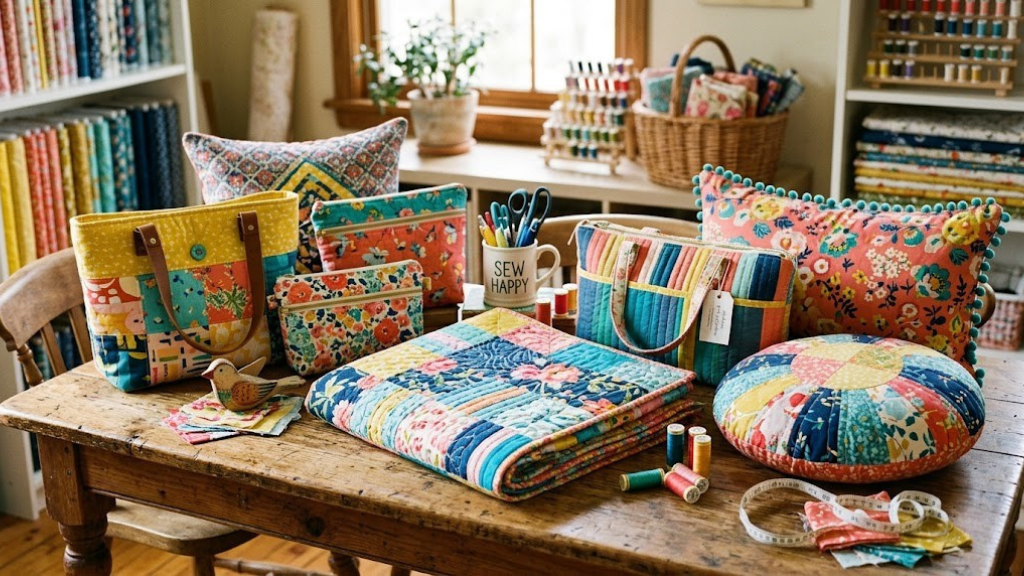
The Ultimate Collection of Sewing Ideas: From Scrap Busters to Statement Pieces
Ninety-five small, cute, and genuinely useful things to sew — with Pinterest-ready photos, skill tags, and patterns for every corner of your home.
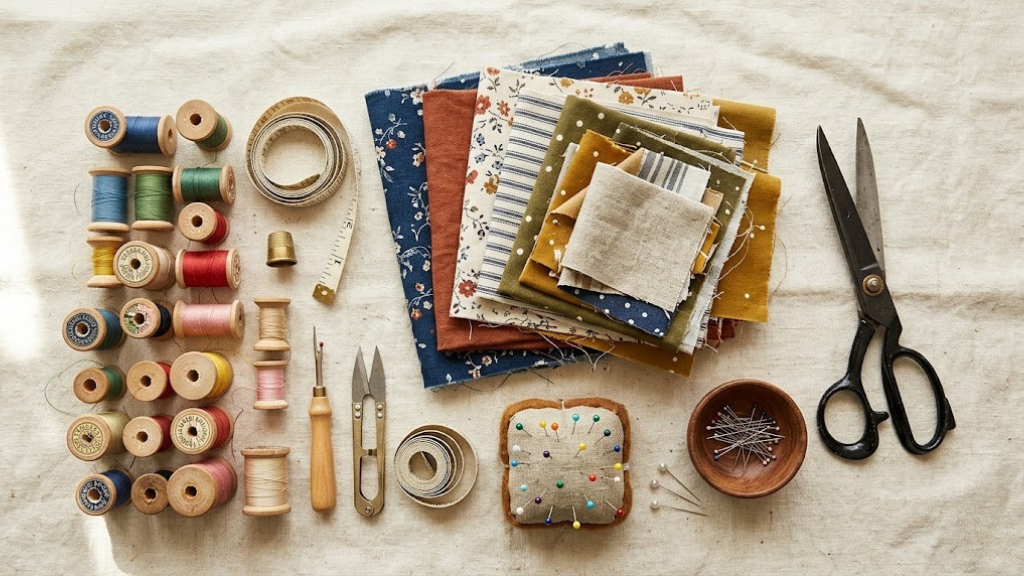
There’s a particular kind of satisfaction that only sewing can give you. It’s the feeling of finishing a project on a Sunday afternoon and thinking, I made that — something real, something useful, something that didn’t exist in the world until you threaded a needle and decided it should. Whether you’re brand new to the machine or you’ve been stitching for decades, the hunt for fresh sewing ideas never really ends. There’s always one more zippered pouch to try, one more scrap-buster quilt block, one more little gift that’ll make someone’s whole week.
This guide is built around that hunt. We’ve pulled together ninety-five sewing ideas that range from fifteen-minute quick wins to weekend-long statement pieces, all organized by purpose and mood so you can find exactly what fits the time you have. Every idea comes with a Pinterest-friendly photo you can pin for later, a difficulty tag so you know what you’re getting into, and an honest estimate of how long it’ll actually take (not the wildly optimistic number you sometimes see online).
You’ll find small sewing ideas for stash-busting, cute things to sew as gifts for friends who “can’t believe you made this,” useful household projects that earn their place in daily life, and a good stack of sewing patterns worth bookmarking for later. Some are classic — the pincushion, the tote bag, the apron — and some are a little unexpected, like the reusable snack sleeve or the no-pattern kimono cardigan that takes one rectangle of fabric and an afternoon. Start at the top, skip to what you need, or pin the whole thing for your next crafty Saturday. Either way, there’s something here worth sewing.
Quick Wins: Sewing Ideas You Can Finish in an Afternoon
Sometimes you just want to sit down, stitch something, and hold the finished thing in your hands before dinner. These fast-finish sewing ideas are built for exactly that — no marathon sessions, no complicated construction, just satisfying little projects that look far harder than they are.
There’s a reason experienced sewists always come back to small, quick projects even after years of making complex quilts and tailored garments. Fast wins recharge your creative battery. They remind you why you fell in love with the craft in the first place — that little hit of “oh, I actually made this” that comes at the end of a one-hour project. If you’re new to sewing, these are also the best possible starting point because they forgive mistakes and teach real skills without demanding hours of perseverance before you see results.
Most of the projects below can be finished with fabric you already have in your stash. They rely on basic straight stitching, simple seams, and minimal pattern pieces — often just a rectangle or two. If you’re still getting comfortable with your machine, take a few minutes to skim our quick refresher on how to use a sewing machine before you start. A well-set-up machine turns a forty-minute project into a fifteen-minute one.
01. Classic Patchwork Pincushion
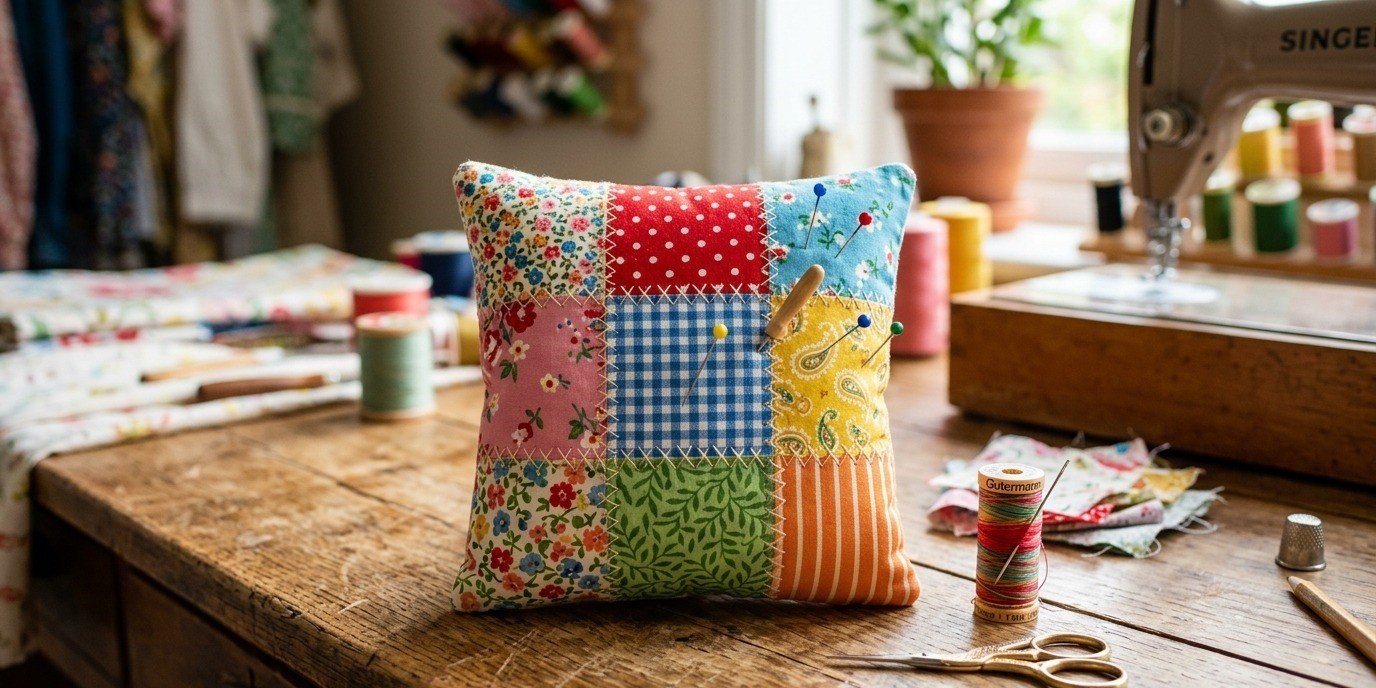
The pincushion is the sewist’s rite of passage. You’ll use nine small fabric squares — two inches each — stitched together in a three-by-three grid, then sewn into a little pillow and stuffed with poly-fill or crushed walnut shells for weight. What makes this a perfect quick-win is that the entire project fits in the palm of your hand, so any imperfections genuinely look like character. Pick nine fabrics that don’t match (really — clashing is the point) for that classic scrap-quilt look that’s all over Pinterest right now. A weighted walnut-shell filling also doubles as a gentle needle-sharpener, which is a small detail sewists often forget exists.
02. Fifteen-Minute Lined Drawstring Bag
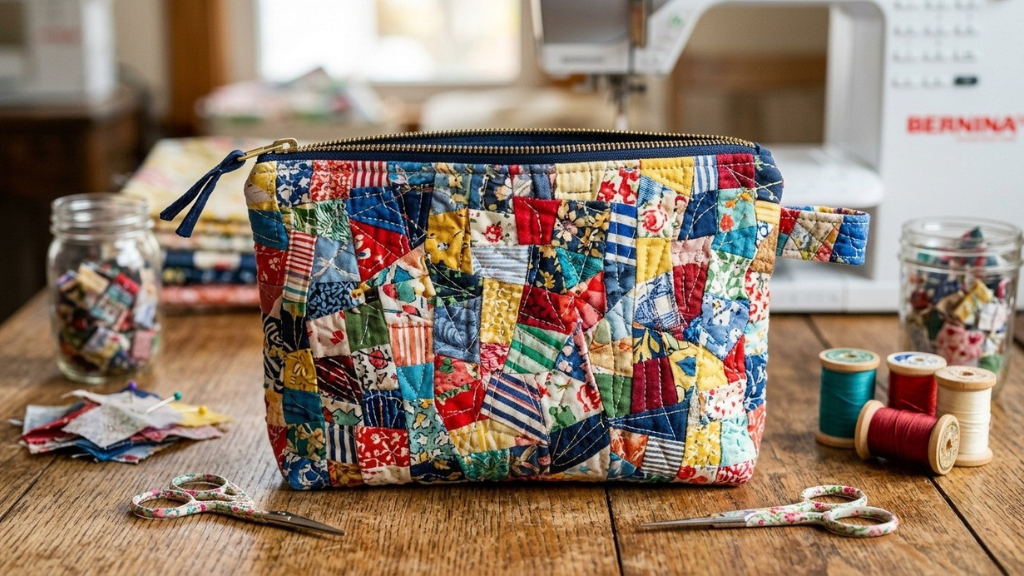
A lined drawstring bag is the project I recommend to every single beginner who asks what they should sew first. It teaches straight stitching, a basic casing, and how to turn a tube right-side-out — three skills that unlock dozens of future projects. Cut two matching rectangles of outer fabric and two of lining, stitch up the sides leaving a gap for the drawstring, and thread a cord through the casing. Use these for gift wrapping, travel jewelry, or organizing small items inside a larger bag. The first one takes twenty minutes; your third will genuinely take fifteen.
03. Reversible Cotton Headband
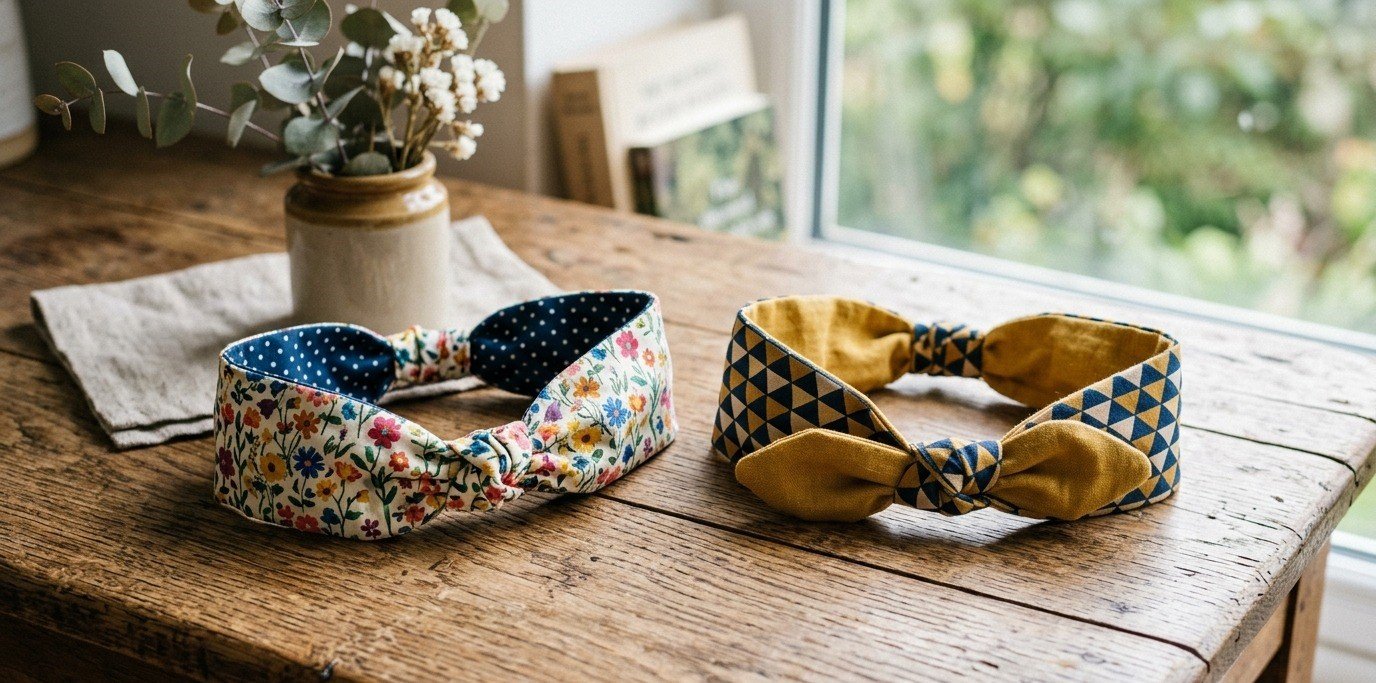
A reversible fabric headband uses two coordinating prints (one cotton, one slightly stretchier knit works best) plus a small piece of elastic. You’ll sew two long tubes, turn them right-side-out, attach the elastic, and finish with a hand stitch or a neat topstitch. Make a set of five in an evening — one for each day of the week — and suddenly you have a whole mini wardrobe of accessories. Headbands are also the ideal use for those precious scraps of fabric you’ve been saving for “something special,” because two reversible headbands only need about a quarter yard total.
04. Simple Fabric Bookmark Set
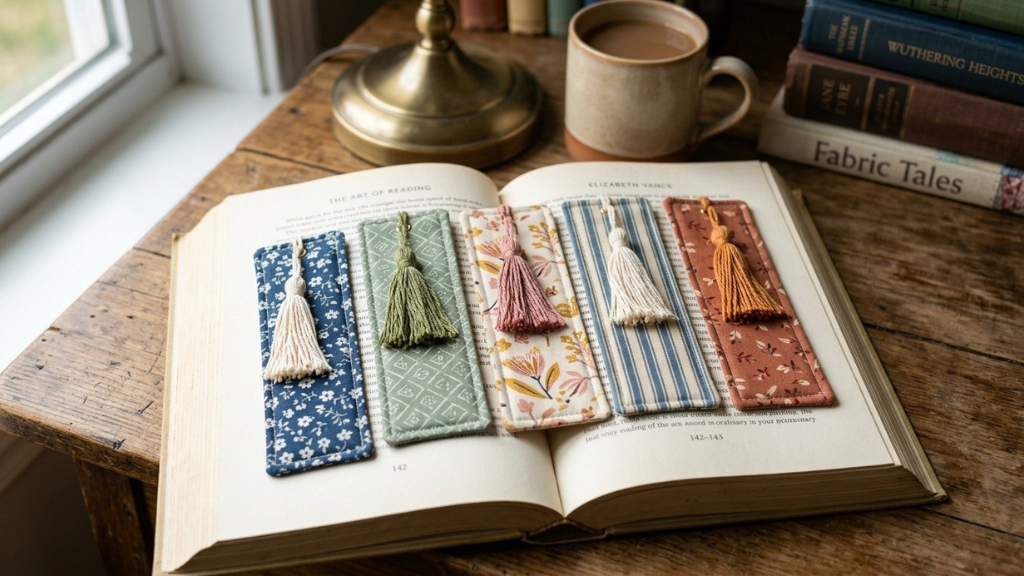
Fabric bookmarks are as close to a no-fail project as sewing gets. You need a two-inch by eight-inch rectangle of outer fabric, a matching piece of lining (or interfacing for body), and ten minutes. Sew around three sides with the right sides together, turn, topstitch, and attach a small tassel. Bookish friends adore these because most commercial bookmarks are either flimsy or ugly, and a fabric one you made genuinely looks like it came from a boutique. Make them in coordinating sets of five so you have gifts ready for the whole year from one afternoon’s work.
05. Microwave Bowl Cozy
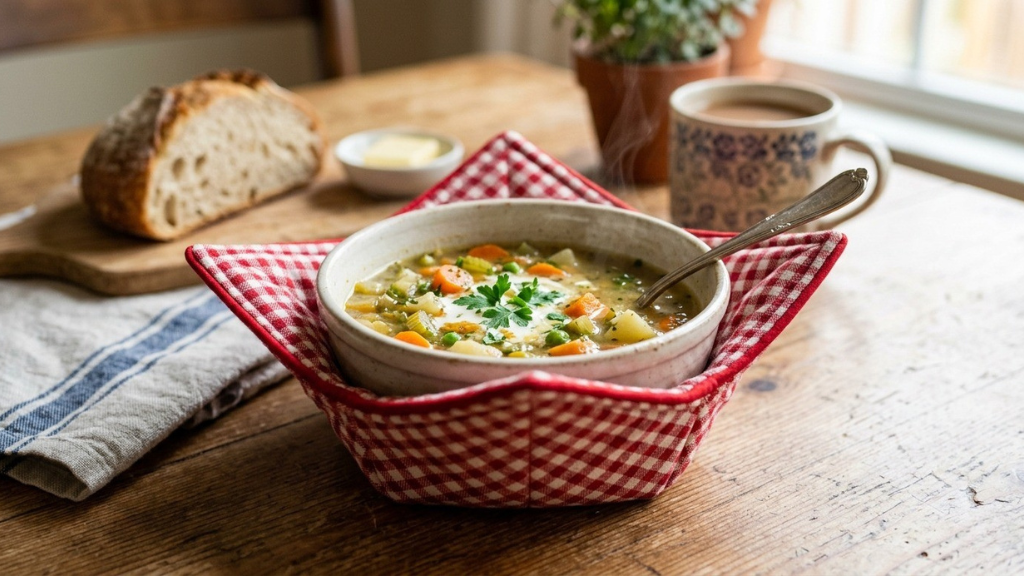
Microwave bowl cozies are the unsung heroes of small sewing ideas. You make a quilted fabric sleeve shaped like a gentle bowl that cradles a hot ceramic dish when it comes out of the microwave, protecting your hands and your kitchen counter. Use only 100% cotton fabric and 100% cotton batting for microwave safety — no polyester fillers or fusible fleece — and you’ve got a kitchen gift that’s actually used daily. Most sewists who make one end up making five more for family by the end of the year because everyone who receives one immediately asks where they got it.
06. Quick Fabric Coasters (Set of Four)
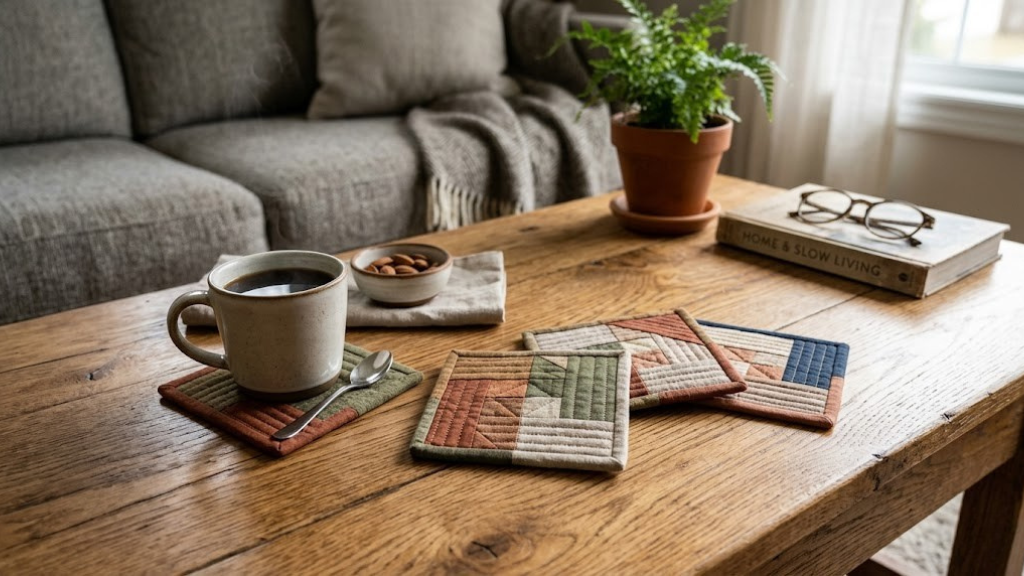
A matched set of fabric coasters is one of those projects that feels high-end but comes together in under an hour. Cut four-inch squares of outer fabric, four-inch squares of batting, and four-inch squares of backing fabric. Layer them, quilt a simple crosshatch pattern, then bind the edges. Set of four, done. The secret to making these look boutique-quality rather than homemade is picking fabrics with texture contrast — a linen paired with a printed cotton, or a solid paired with a small-scale geometric — so the stack reads “collection” instead of “random.”
07. Infinity Scarf (One-Seam Version)
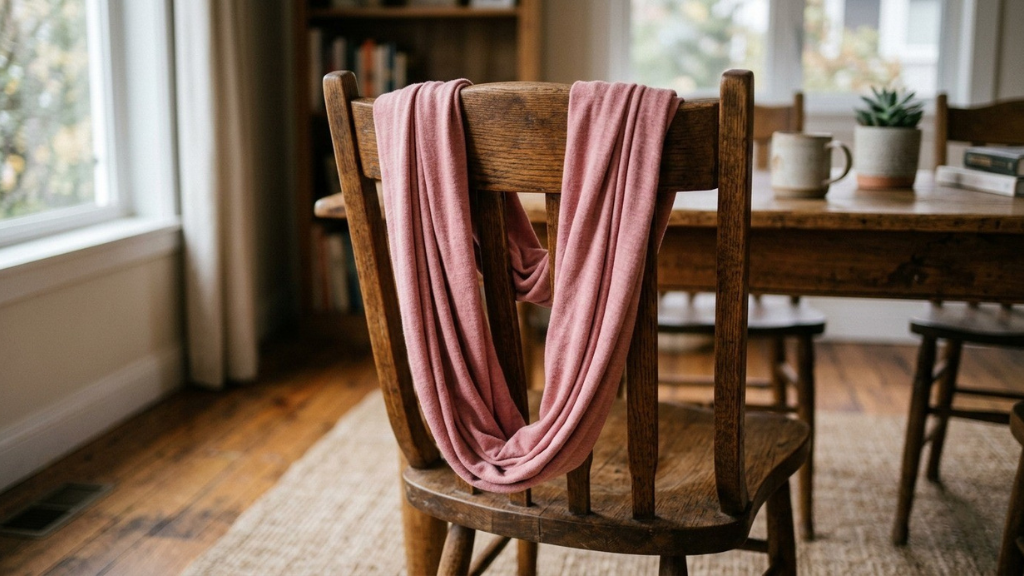
The one-seam infinity scarf is genuinely the fastest wearable sewing idea on the planet. Take a two-yard length of jersey knit, fold it in half lengthwise with right sides together, sew the long edge, turn it right-side-out, and join the two short ends into a loop. Done. The entire project has a single real seam. Jersey knit doesn’t need hemming because it doesn’t fray, which means you skip the fiddliest step of most sewing projects. Make one for yourself in your favorite color and three more as gifts — you’ll wrap up the lot inside an hour.
08. Fabric Gift Bag (Upcycled)
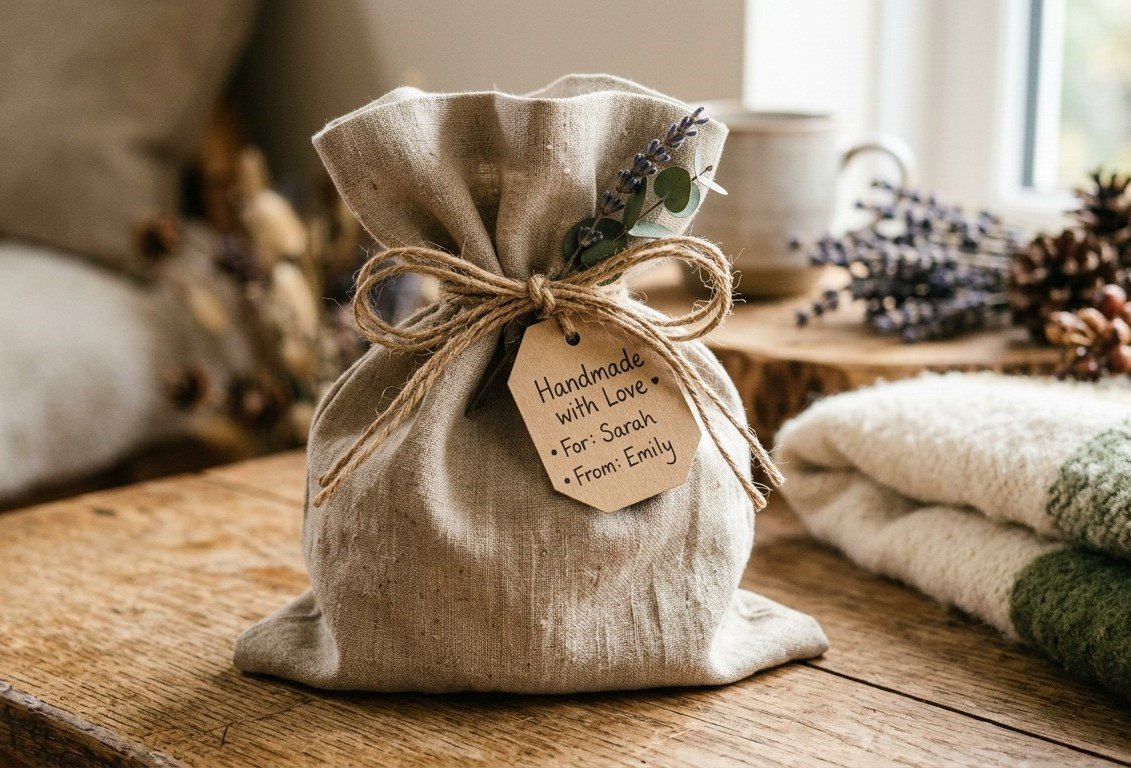
Furoshiki-inspired fabric gift bags replace wrapping paper and they’re reusable for decades. You can sew a basic version from two rectangles of fabric with a casing at the top for a drawstring or a ribbon tie. Use linen or cotton scraps, old curtains, even an old tablecloth — the charm is in the patchwork-of-materials look. A stack of five or six of these in varied sizes gets used for every birthday and holiday in your household, and they become the “gift that keeps giving” because recipients return them the following year filled with their own presents.

The Sewing Scissors Every Quick Project Deserves
Sharp, well-balanced fabric shears turn a frustrating twenty-minute project into a smooth ten-minute one. See our top picks.
See Top Scissors →Every one of the eight ideas above teaches you a reusable skill that carries forward into bigger projects. The lined drawstring bag becomes a tote, the pincushion technique becomes a small quilt, the reversible headband teaches you how to handle stretchy fabrics. Quick wins aren’t just instant gratification — they’re the quiet curriculum of sewing.
Scrap-Buster Ideas: Turn Fabric Leftovers into Treasures
Every sewist has the bin. That growing hoard of beautiful fabric pieces too small to save for “real” projects but far too pretty to throw out. These scrap-busting sewing ideas are designed to empty the bin and fill your home with color at the same time.
Scrap-friendly sewing is having a major moment right now, partly because fabric prices have climbed and partly because we’ve all collectively rediscovered that slow, intentional crafting feels better than buying new. The projects in this section are specifically designed around pieces smaller than a fat quarter — some use literal one-inch strips and half-inch squares. What they all share is a generous attitude: there’s no such thing as a useless scrap, only scraps waiting for the right project.
If you’ve never tried intentional scrap-sewing before, start by sorting your bin. Pull out all the whites and creams into one pile, the blues and greens into another, the warm tones into a third. Suddenly your chaotic scrap bin becomes three curated palettes, and palette-matched scrap projects always look intentional rather than random. A pull from one color family will make the finished piece look like a boutique buy, not a salvage job.
09. Scrappy Log Cabin Mug Rug
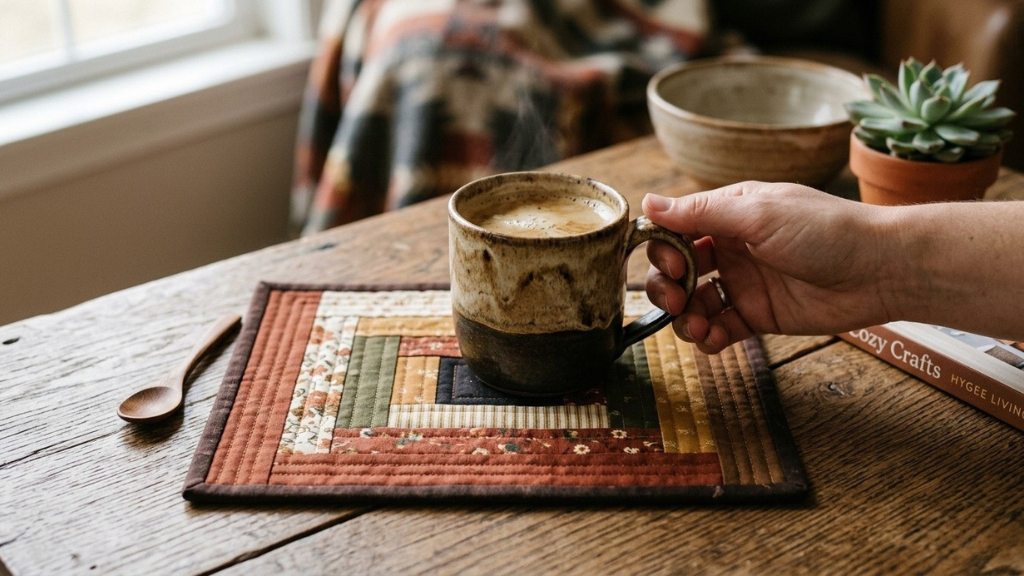
The log cabin mug rug teaches you the most iconic quilt block in American quilting while using up scraps smaller than your palm. Start with a one-inch red square at the center (traditionally representing the hearth), then build outward with strips of increasing size in a spiral pattern. Light fabrics go on two adjacent sides, dark fabrics go on the other two — that’s what gives the finished block its signature half-light, half-dark diagonal. Finish with batting and backing, bind the edges, and you have a mug rug that belongs in a farmhouse catalog.
10. Crumb-Quilt Zipper Pouch
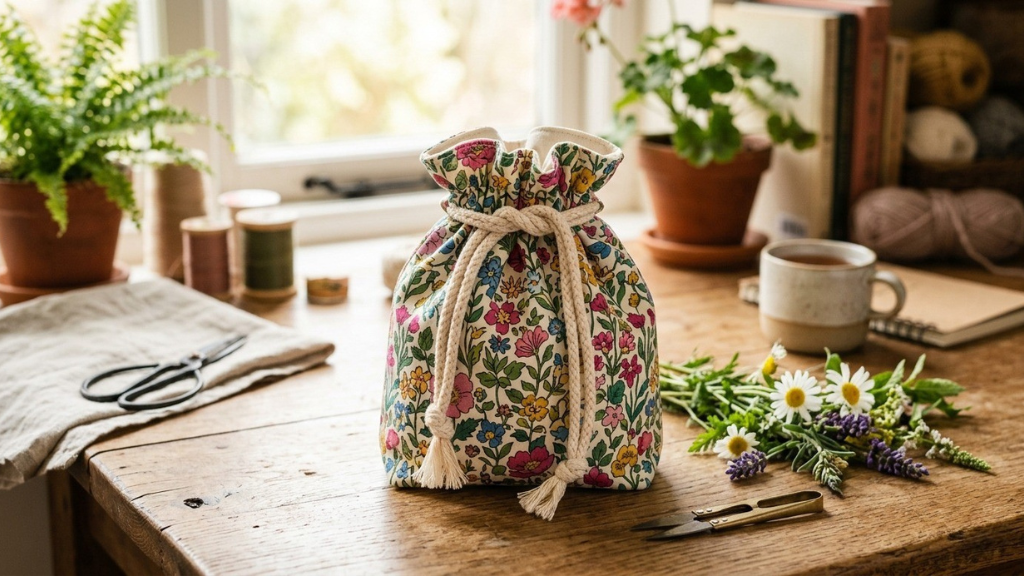
Crumb quilting is the wildly freeing technique where you sew tiny, random fabric scraps together to create new fabric, then cut pattern pieces from the resulting patchwork. Make two panels of crumb-quilted fabric about six by nine inches each, add a zipper, line it with a contrasting fabric, and you have a pouch so textural and unique that no one else in the world owns anything quite like it. Crumb-quilting is the ultimate scrap use because literally no piece is too small — anything over one inch square is fair game.
11. Patchwork Keychain Wristlet
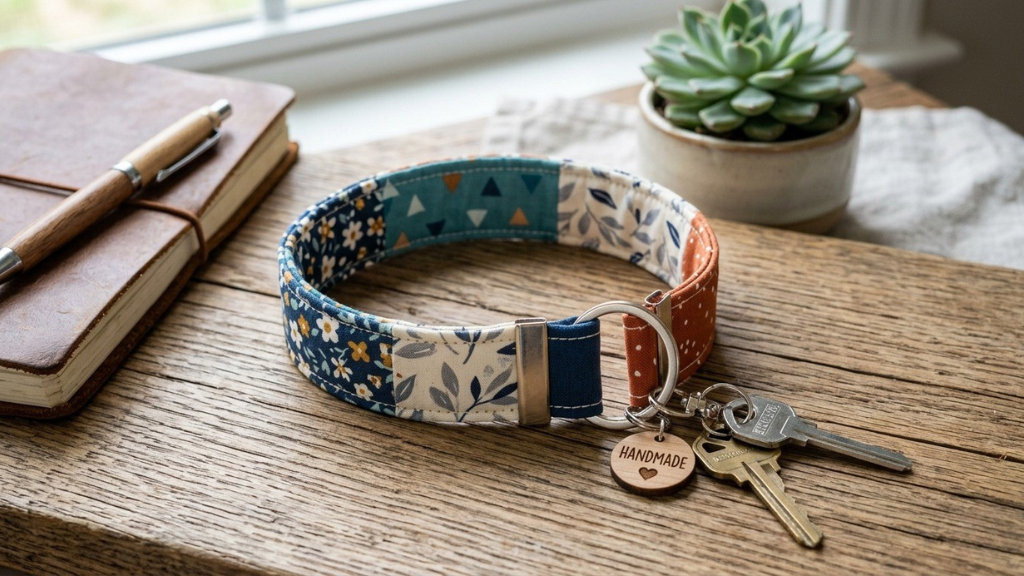
Keychain wristlets are the small sewing idea that turned into a cottage industry for half of Etsy. Join four small patchwork squares into a one-by-ten-inch strip, add a split ring hardware at one end, and stitch the whole strip into a loop large enough to slide over your wrist. The hardware costs under a dollar, the fabric uses genuine scraps, and the finished product sells for fifteen dollars at craft fairs. Even if you’re not selling, a stack of these in the gift drawer is the single most reliable “I need a small gift today” solution.
12. Fabric Scrap Garland
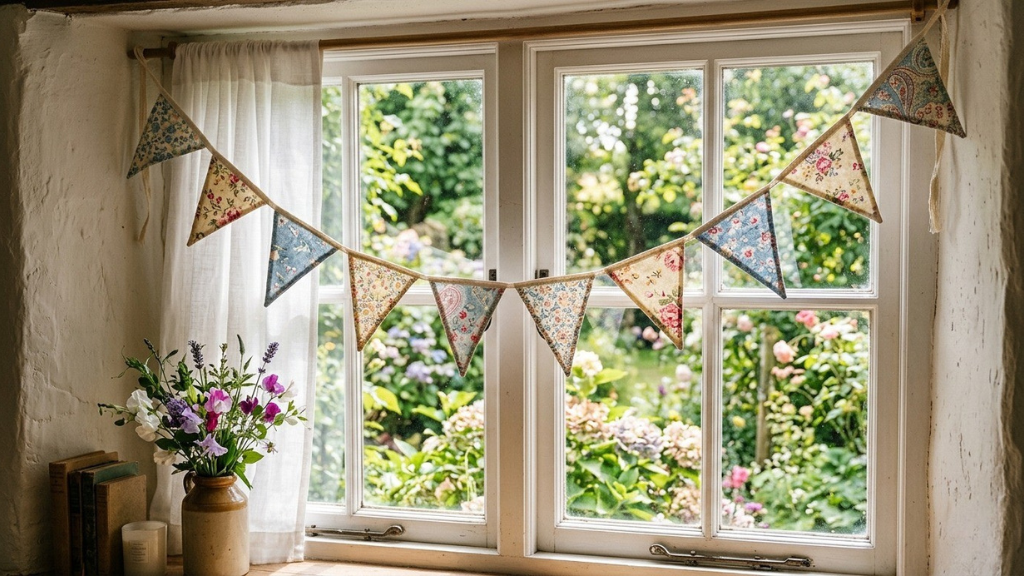
A scrap garland is made by cutting triangles or pennants from fabric scraps — no two the same — and sandwiching them along a length of bias tape or sturdy ribbon before stitching the tape closed. The finished garland drapes across a mantel, a window, or a child’s bedroom wall, and it turns leftover fabric into a piece of decor that genuinely looks curated. A ten-foot garland takes about forty pennants and an hour of work, making it one of the highest visual-impact scrap projects in this entire guide.
13. Hexie Flower Brooch
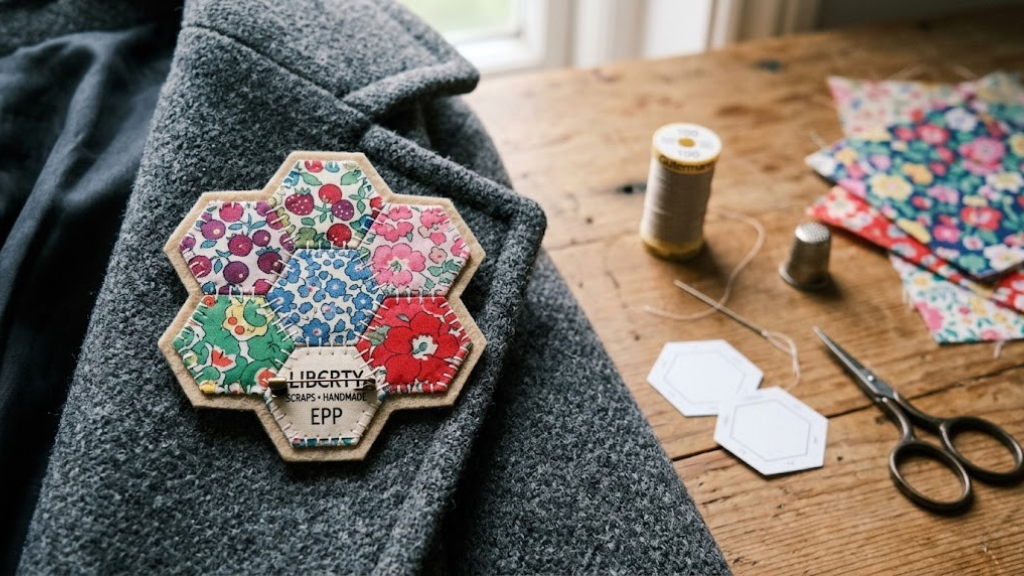
A hand-sewn hexie flower brooch is an entirely portable project you can work on during your commute or in waiting rooms. Seven small hexagons — one center and six petals — are basted around paper templates using English paper piecing, joined into a flower shape, then backed with felt and a pin finding. The hexagon technique is meditative in the best way, and the finished brooch is small enough to use truly precious scraps like Liberty prints that cost more per yard than a nice dinner.
14. Scrap-Strip Coiled Basket
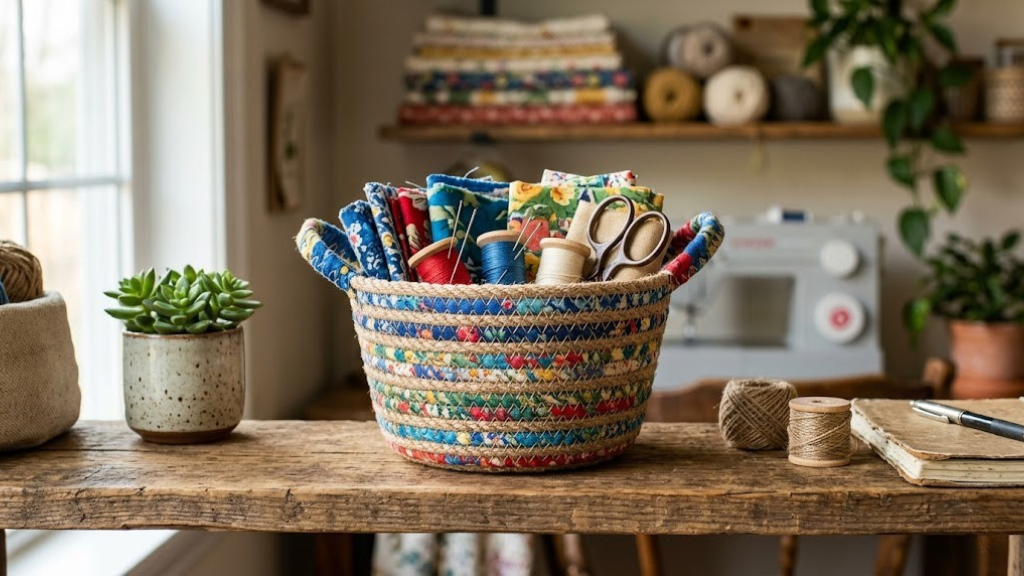
Coiled fabric baskets wrap long strips of scrap fabric around cotton clothesline and then coil the wrapped rope into a bowl shape, zigzag-stitching each coil to the previous one as you go. The technique is slow but forgiving, and the finished baskets are small sculptures of color. A medium bowl takes two hours and uses roughly three yards of half-inch-wide scrap strips. Set one on your dresser to hold earrings, one by the front door for keys, and one in the bathroom for cotton balls — a set that would cost seventy dollars at a boutique.
15. Rag Quilt Lap Blanket
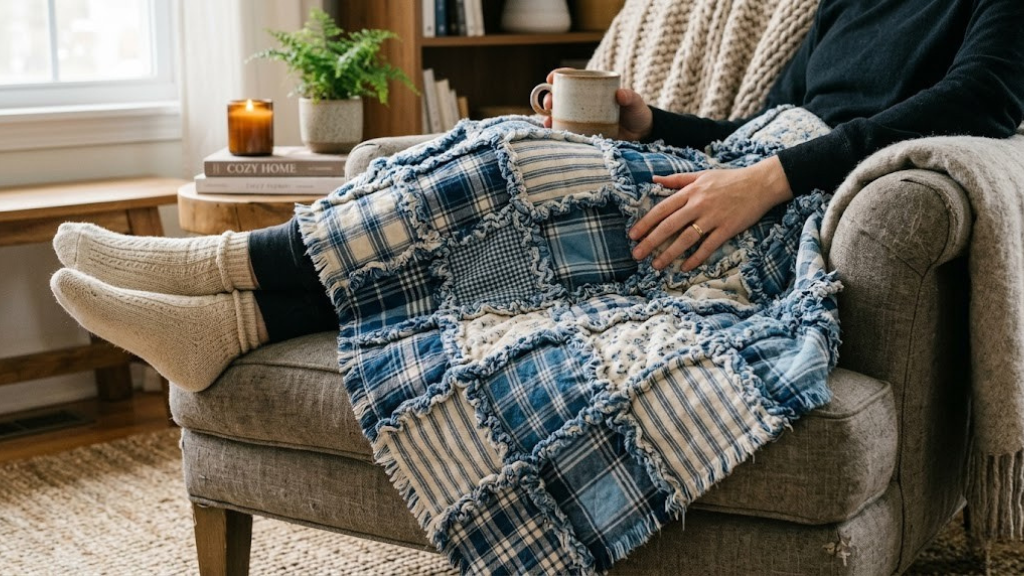
A rag quilt uses flannel scraps in six-inch squares, each backed with another square and filled with batting, then stitched in an X pattern and joined with seams that are intentionally left exposed on the right side. After washing, those seam allowances fluff up into soft fringes, giving the quilt a cozy, lived-in texture that’s the signature of this style. Rag quilts are the gateway drug to full quilting — they teach every core skill without demanding pristine precision, because the whole aesthetic relies on imperfect edges anyway.

Scrap-Sewing Deserves the Right Cutter
Clean strips and perfect squares make every scrap-busting project look intentional rather than improvised. Our top rotary cutter picks.
See Tools We Love →Scrap sewing is also the gateway to learning color theory in a hands-on way. When you’re working with tiny pieces, you see immediately what works and what fights — and those lessons stick with you in ways that no color-wheel tutorial ever could. After a few scrap projects, you’ll find yourself choosing fabrics differently at the shop, thinking in terms of how colors relate rather than which single print you like best.
Small Sewing Ideas That Make Perfect Gifts
There’s a difference between a handmade gift that feels thoughtful and one that feels apologetic. The sewing ideas in this section all land firmly in the first category — small, beautifully finished pieces that feel like they came from a boutique, not from obligation.
Handmade gifts hit differently when they look polished. The secret isn’t some advanced technique you haven’t learned yet; it’s choosing projects whose scale matches your skill level and then finishing them carefully. A small item sewn precisely will always read as more professional than a large item sewn rushed. That’s why the gifts in this section are all small — but each one carries the kind of careful detailing that makes a recipient ask where you bought it.
If you’re planning a year of handmade gifts, start now. Sew one gift per week and you’ll have fifty-two finished presents by December — enough for every birthday, every holiday, and a generous stack of “just because” gifts for the teachers, coworkers, and dog-sitters who make your year work. Keeping a small finished-gift drawer is one of those habits that transforms how you feel about the end-of-year gift rush.
16. Lavender Sachets (Set of Six)
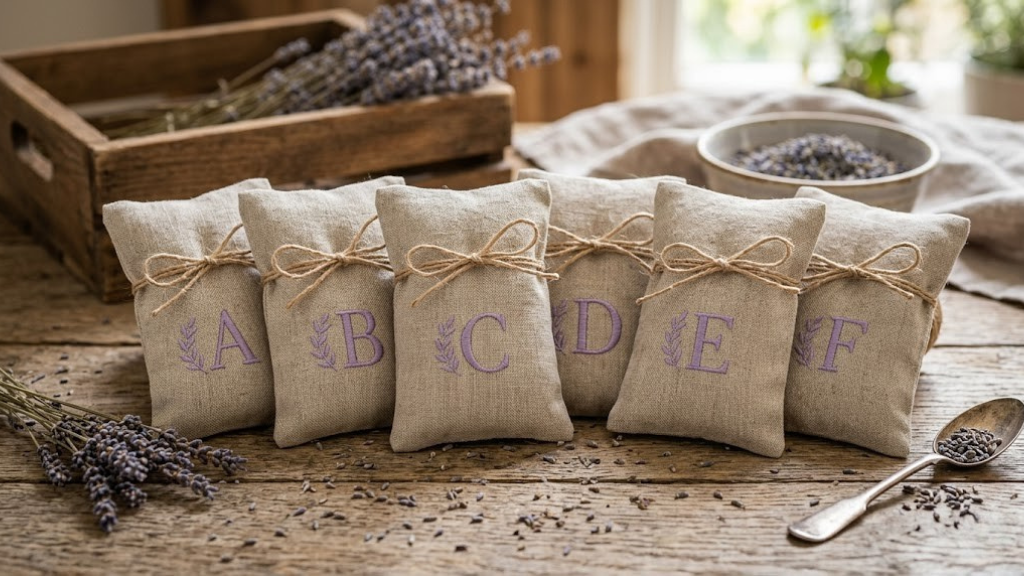
Lavender sachets are the gift I fall back on more than any other. Cut two four-inch squares of natural linen, stitch three sides, fill with dried culinary lavender (the only kind that smells right for years), and slip-stitch the opening closed. Tie each sachet with jute string and a small wooden tag. A set of six costs about six dollars to make, looks like a thirty-five-dollar boutique set, and lasts for two years of steady scent in a drawer or linen closet. Every friend with a dresser gets these from me; nobody has ever complained.
17. Personalized Monogrammed Hankie
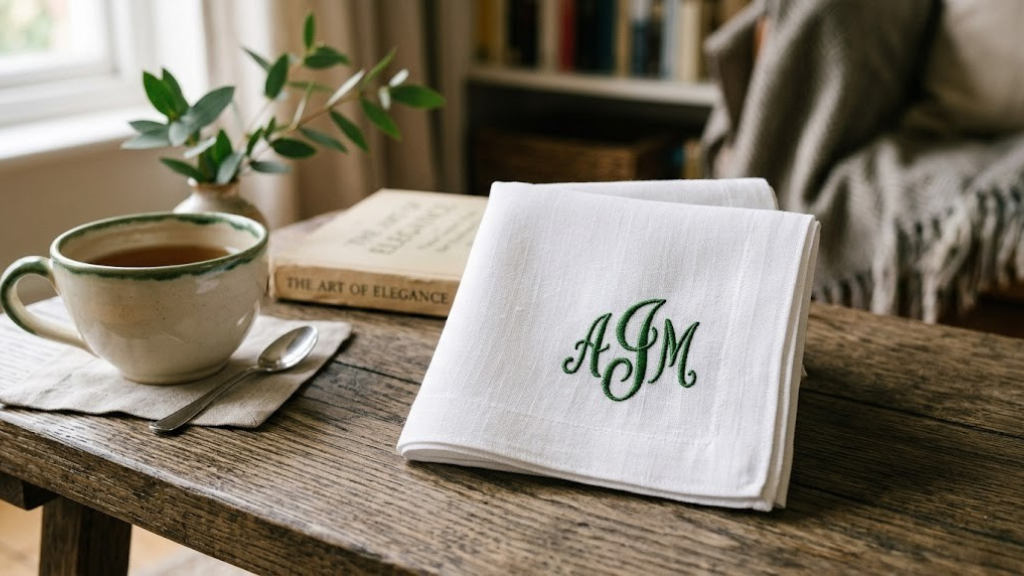
A hand-hemmed linen hankie with a small embroidered monogram is the quiet luxury of gifts. It costs almost nothing, weighs almost nothing, but feels genuinely special — the sort of thing your grandmother’s grandmother would have tucked into a sleeve. Cut a ten-inch linen square, hand-hem all four edges with a rolled hem (the fiddliest part, but worth the effort), and embroider a simple single-letter monogram in a corner. Wrap three in tissue paper. Perfect wedding gift, perfect host gift, perfect “I know you don’t expect anything but here’s something” gift.
18. Eye Mask with Lavender Insert
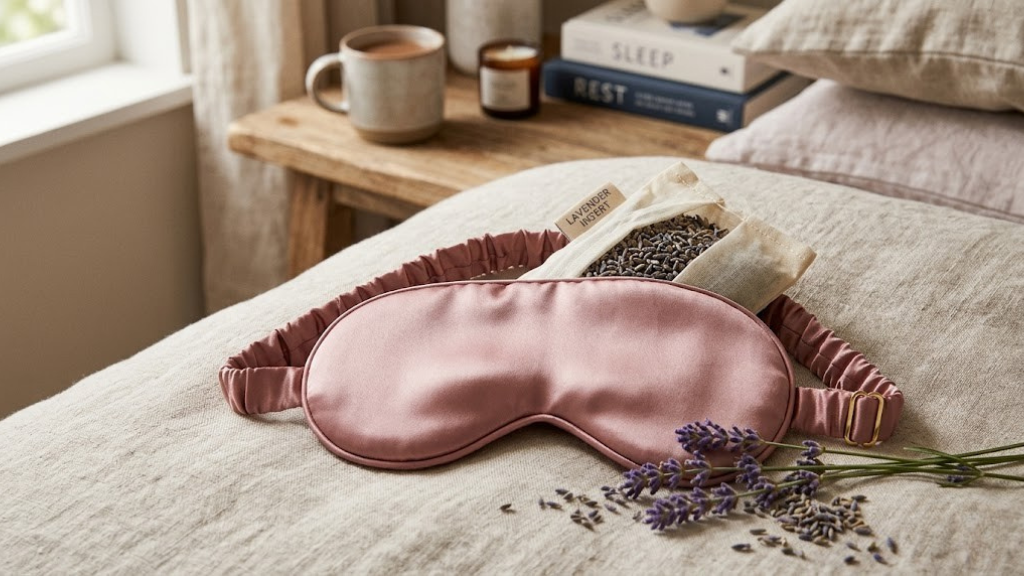
A silk or sateen eye mask with a removable lavender-flax insert is a gift that lives on the bedside table forever. The outer mask slides over a thin inner pouch filled with dried lavender and flaxseed — you can warm the insert in the microwave for ten seconds or chill it in the freezer for tension headaches. Use a silky fabric on the eye side for comfort, cotton on the outside for a washable finish, and a piece of thin elastic that’s replaceable if it stretches out over time. This one takes a little more planning but reads as a true spa-quality item.
19. Travel Jewelry Roll

A rolled travel jewelry organizer is the kind of gift that makes someone audibly gasp when they open it. It has three zippered compartments for earrings and necklaces, a padded ring holder that holds eight rings, and ties shut with a grosgrain ribbon. The construction is more involved — you’re working with a lining, multiple zippers, and some hand-finishing — but the result is an object that rivals a hundred-dollar department store version. Use silk or a nice rayon for the lining and cotton canvas for the outer; give it to any friend who travels more than twice a year.
20. Fabric-Covered Notebook

A fabric-covered notebook is a removable, washable sleeve that slides over a plain composition notebook or journal. The pattern is just two rectangles with pockets on the inside edges that grip the notebook’s front and back covers. You’re essentially making a book jacket in fabric. Add a built-in ribbon bookmark and you’ve turned a three-dollar notebook into a gift that looks like it came from a Kyoto stationery shop. Swap the sleeve to a new notebook when the first one is full, and the gift keeps going for years.
21. Embroidered Linen Tea Towel

Start with a plain natural linen tea towel (or cut one from a yard of linen and hem it yourself), then hand-embroider a small simple motif in one corner — a lemon, a sprig of rosemary, a tiny initial. The charm is in the restraint: one small embellishment on a beautifully plain field of fabric. This style of tea towel retails at specialty home shops for twenty-eight dollars and costs you under five. A set of three in coordinating motifs is a wedding gift that’ll be remembered.
22. Bread Cloth (Bread Warmer)

A bread cloth is an insulated napkin-sized square that keeps rolls or sliced bread warm at the dinner table. Use cotton fabric with insulated fleece interior (the same stuff used in casserole carriers), quilt straight lines across the square, and bind the edges. A stack of three tied with twine, paired with a local bakery gift card, is a housewarming gift that ranks above almost anything store-bought. And for anyone who hosts frequently, a good bread cloth is the kind of item they’ll actually use several times a month.
23. Needle Book (Sewist’s Gift)

A needle book is a tiny fabric booklet with soft wool or felt pages designed to hold hand-sewing needles. For a sewist friend, it’s a perfect gift because it solves a real problem (where are my needles?) with something beautiful. Make the covers from quilting cotton with interfacing for structure, add two or three wool-felt pages inside, and tie the whole thing shut with a ribbon. Pair with a pack of quality hand-sewing needles and a small pair of embroidery scissors for a full gift set.

Curated Sewing Patterns for Gift Projects
A good pattern turns a gift idea into a polished, boutique-quality finish. See the patterns we reach for every gifting season.
Browse Top Patterns →The best handmade gifts share a common quality: they look like the maker chose the project carefully, not randomly. Your recipient should be able to imagine you picking a fabric with them in mind. That small personal touch is what elevates a sewn gift from “thanks for making this” to “I can’t believe you made this.”
Useful Things to Sew for Everyday Home Life
The best sewing ideas aren’t the flashiest ones — they’re the ones that quietly earn their place in the daily rhythm of your household. These utility-first projects are the background workers of a well-sewn home.
There’s a particular dignity in projects that get used. A decorative pillow is lovely, but a well-made napkin that shows up at every meal, softens over years of washing, and slowly becomes the family’s standard — that’s sewing at its most quietly meaningful. Every project in this section is built for frequent use and long life. They all forgive imperfection because they’re meant to age gracefully, not stay pristine.
Utility projects also tend to be excellent teachers. Napkins and tea towels are basically hemming practice disguised as useful objects. Pillow covers teach you zippers. Cloth napkins teach you mitered corners. Aprons teach you bias tape, ties, and pockets. You’ll learn more real, practical sewing skills from one weekend of utility projects than from three months of decorative ones.
24. Everyday Linen Napkins

A set of everyday linen napkins is the first sewing project I recommend anyone tackle after they’ve mastered a straight seam. Cut eighteen-inch squares of washed linen, hem with either mitered corners (fancy) or simple double-fold hems (faster), and press. A set of six takes about ninety minutes and replaces paper napkins in your house for years. Linen gets softer and better-looking every wash, so these napkins genuinely improve over time — the opposite of most home goods that degrade with use.
25. Envelope-Back Throw Pillow Cover

The envelope-back pillow cover is a genius construction trick that lets you slip a pillow form in and out without dealing with a zipper. You sew two overlapping fabric panels on the back, creating an opening that naturally closes when the pillow form fills it out. For a standard eighteen-inch pillow, you need about three-quarters of a yard of fabric. This project is the foundation of seasonal decorating — you can swap four pillow covers in under a minute and completely change the mood of a room without investing in whole new pillows.
26. Reusable Makeup Remover Rounds

Reusable makeup remover rounds replace disposable cotton pads with a washable set you can reach for twice daily. Cut three-inch circles of bamboo terry cloth and backing cotton, stack them right-sides-together, and zigzag the edges. A set of twelve takes an hour and lasts two or three years with regular laundering. Toss used ones in a small mesh laundry bag and wash with towels. Over a single year, a set of twelve rounds displaces roughly seven hundred disposable cotton pads — real impact from a small sewing idea.
27. Linen Bread Bag

A linen bread bag keeps fresh bread at the perfect texture — crusty on the outside, soft inside — for two to three days longer than a plastic bag. The linen breathes just enough to prevent sogginess without drying the bread out. Use washed linen only (no synthetics), sew a simple drawstring tube shape, and leave the bag unlined for maximum breathability. If you buy bakery bread weekly or bake your own, this one sewing project saves real money over a year while massively cutting your plastic waste.
28. Bowl Cover Set (Beeswax-Free)

Fabric bowl covers with elastic edges cover mixing bowls and leftover containers in the fridge, replacing plastic wrap for about ninety percent of use cases. Cut a circle of food-safe cotton fabric two inches larger in diameter than your bowl, sew a casing around the edge, thread quarter-inch elastic through, and knot. Make a set of three in small, medium, and large sizes. These live in a drawer next to the oven mitts in most sewing households, and they get pulled out multiple times a day.
29. Roll-Up Placemats

A set of four simple quilted placemats elevates every dinner, even on Tuesday. Cut twelve-by-eighteen-inch rectangles of cotton fabric front and back, sandwich a piece of cotton batting between them, quilt a simple straight-line pattern, and bind the edges. Wash them, stain them, wash them again — cotton batting gets softer with every cycle, and the placemats develop a lived-in texture that looks better at year five than at month one. They are the opposite of a delicate decor item: the more you use them, the better they look.
30. Simple Half-Apron

A classic half-apron ties at the waist and covers from hip to mid-thigh, with two big pockets across the front. Use a heavy cotton or linen, about a yard for a standard adult size. The construction is straightforward — it’s basically three rectangles — but it teaches ties, pockets, and gathering all in one project. Wear yours when you cook, garden, or craft. After about a week you’ll wonder how you ever got by without one. And a second one in a prettier fabric becomes an excellent gift.
31. Clothespin Apron

If you still hang laundry on a clothesline — and more of us are coming back to this quiet practice — a clothespin apron changes the entire experience. It’s a small waist apron with one huge central pocket designed to hold fifty-ish wooden pegs. Made from a sturdy canvas or heavyweight cotton, it keeps pins at easy reach so you’re not constantly walking back to a basket. Takes less than an hour to make and turns a chore into something almost meditative.

New to the Machine? Start Here
Every home sewing project gets faster, cleaner, and more enjoyable with a well-set-up machine. Our step-by-step walk-through.
Machine Basics Guide →Over a year, a full set of utility sewing projects — napkins, pillow covers, bowl covers, bread bags, and aprons — quietly replaces twenty or thirty throwaway items in your household while improving your home aesthetically. That dual gain is what makes utility sewing so underrated. It’s practical, it’s pretty, and it pays off for a decade.
Cute Things to Sew for Kids & Babies
Kids’ sewing projects hit a uniquely sweet spot — small enough to finish quickly, forgiving of imperfection, and guaranteed to earn you the “best aunt ever” title at the next baby shower. These cute sewing ideas range from quick nursery decor to soft toys that’ll become memorable childhood companions.
The secret to sewing well for children is to lean into softness at every stage. Soft fabrics. Soft edges. Soft colors, unless you’re going for the vibrant primary palette kids themselves tend to love. Skip anything scratchy, anything with small parts that could come loose, and anything that can’t survive being thrown in the washing machine every three days. Kids’ sewing projects live harder lives than adult projects, so choose your materials accordingly — 100% cotton, minky, flannel, and fleece are your reliable friends.
Most of the ideas in this section are scaled down versions of adult projects, but children’s items come with their own small construction considerations. Seams should be enclosed or finished so they don’t irritate skin. Stuffed toys need secure, hidden closures. Anything worn should have flat seams that won’t chafe. Take the extra five minutes to finish edges properly and the project will survive many more years of use.
32. Soft Cotton Baby Bibs

A basic cotton-and-terry baby bib takes one printed cotton front, one absorbent terry cloth back, and a snap closure. Cut both layers using a simple curved bib template, stitch right-sides-together, turn, topstitch around the edge, and add a snap. A set of six in coordinating prints is the one baby gift new parents actually use heavily for months. Skip Velcro for bibs because it catches on everything in the wash and wears out; KAM plastic snaps last the full bibbing career of a child.
33. Stuffed Felt Animal

Wool felt is the magic material for small stuffed animals because it doesn’t fray, holds its shape, and reads as high-quality the moment you see it. A simple fox, bear, or bunny pattern uses a front, back, and a base gusset. Hand-sew with tiny whip stitches or a machine blanket stitch around the edge, embroider a simple face (French knots for eyes, satin stitch for the nose), and stuff firmly. These become named companions that survive generations — the polyester fill option keeps them washable, while a wool-fill option feels more organic.
34. Minky Baby Blanket with Satin Trim

A minky baby blanket with a glossy satin binding is the sensory gift babies actually drag around with them until it’s a beloved lump of threadbare fabric. Minky is the impossibly soft synthetic shag fabric babies love; the satin binding gives them a cooler, smoother edge to rub as a self-soothing habit. Cut a thirty-inch square of minky, bind the edges with satin ribbon using a double-fold technique, and you’ve made a blanket that’ll likely be in photos at the child’s tenth birthday.
35. Quiet Book (Fabric Activity Book)

A fabric quiet book is a small sewn book with felt pages, each of which has a different sensory or skill-building activity — buttons to button, zippers to zip, Velcro flaps to lift, shoelaces to tie. Quiet books are the kind of project that stretch across a weekend and deliver a Christmas-level gift. Make eight pages of activities, ring-bind them with grommets, and you’ve created something a toddler will play with for years. These sell at specialty baby boutiques for seventy to a hundred dollars — the ultimate handmade-gift value ratio.
36. Elastic Waist Kid’s Pants

Simple elastic-waist kids pants are easier to sew than adult pants because children’s bodies don’t require the tailoring that adults do. Use a free pattern (many sewing bloggers offer PDF downloads), cut from light cotton or cotton jersey, stitch the inseams and side seams, add a folded elastic casing at the top, and hem. A toddler-sized pair takes about an hour and uses maybe three-quarters of a yard of fabric. Make three pairs from one trip to the fabric store for significantly less than one pair from a children’s boutique.
37. Fabric Alphabet Letters

Soft stuffed alphabet letters spell out a child’s name across a nursery wall or a play corner. You can hand-stitch or machine-stitch two letter shapes together, stuff them lightly, and either hang them from a ribbon banner or simply prop them on a shelf. Use quilting cottons for a clean graphic look, or scraps for a patchwork vibe. A four-letter name takes about an hour and produces nursery decor that costs thirty dollars per letter at retail baby shops.
38. Play Mat (Padded Floor Mat)

A quilted play mat gives babies a soft spot for tummy time and toddlers a designated play zone without importing cheap foam tiles. Sew a front panel in a cheerful cotton print, a back panel in a neutral, and quilt it with a thick cotton batting. Finish the edges with binding and optional rings for attaching toys. A play mat is a legitimate weekend project but the resulting piece becomes the centerpiece of a nursery for two or three years. Pro tip: a good walking foot attachment is the game-changer for quilting through all three layers evenly — it’s what separates a homemade-looking mat from a boutique-quality one.
39. Hair Bow Set (Clip-On)

Clip-on fabric hair bows use scraps so small even the scrap bin feels generous. Cut two-inch by five-inch rectangles, fold and stitch into bow shapes, glue to alligator clips (a tiny spot of hot glue, reinforced with a little hand-sewn detail), and you’ve got a professional-looking bow. Make a set of twelve for under a dollar in materials — a set that sells at department stores for twenty dollars — and gift them to every little girl in your life. Easy to stash-bust the fanciest fabric scraps into.

Sewing Clips Beat Pins for Tiny Projects
Small, fiddly projects like bibs, bows, and kids’ pants are five times easier with good sewing clips. Here are the ones we reach for.
See Clip Picks →Sewing for children carries a second gift most adult projects don’t: the items you make often outlive the kids they were made for, becoming family heirlooms passed down to siblings, cousins, or eventually back to the original recipient’s own children. A handmade baby quilt or stuffed animal from a loving aunt is frequently the object that gets pulled from a box in the attic thirty years later and handed to the next generation.
Kitchen Sewing Ideas That Actually Get Used
Kitchens are secret sewing project incubators. Every cook uses towels, oven mitts, and aprons daily, and handmade kitchen textiles elevate everyday cooking in a way that’s easy to underestimate until your old faded store-bought ones get quietly retired.
There’s one rule that dictates almost every kitchen sewing project: 100% natural fibers only. Cotton, linen, and cotton-linen blends handle heat safely, wash at high temperatures, and absorb moisture the way synthetics never will. Polyester can melt from a hot pan, trap cooking smells, and repel water — exactly the opposite of what a kitchen textile needs to do. Start every kitchen project by checking the fabric bolt end for fiber content, and walk away from anything that says “polyester blend” unless it’s explicitly sold as flame-resistant.
The other consideration unique to kitchen projects is washability. Everything you sew for the kitchen will be washed weekly, sometimes daily, on hot. That means prewashing your fabric before you cut it is non-negotiable — otherwise the finished item will shrink unevenly the first time you launder it. Throw your kitchen fabrics in the wash on hot, tumble dry, and then iron before cutting. This extra thirty minutes at the start saves you from reshaping a warped apron later.
40. Oven Mitts (Full Kitchen Set)

A proper oven mitt is five layers thick: an outer cotton layer, insulated fleece, a layer of terry cloth (for water and shock absorption), another layer of insulated fleece, and a cotton lining. The construction feels fiddly because you’re sandwiching four pieces plus a binding, but once you make one mitt you realize it’s basically a flat shape sewn, folded, and bound. Standard-length retail mitts are stingy with coverage; a homemade pair extends higher up the forearm for real protection when reaching into a hot oven.
41. Tea Towel Set (Flour Sack)

Flour sack tea towels are the workhorse kitchen textile — lint-free, absorbent, and softer with every wash. Start with plain flour sack fabric (sold by the yard at most quilting shops), cut into twenty-eight by twenty-eight-inch squares, and hem all four sides. A stack of six takes about an hour from cutting to folding. Optional decorative bands of a contrasting fabric at one short end turn basic tea towels into what boutique kitchen shops sell as “farmhouse collection” towels for eighteen dollars each.
42. Casserole Carrier

An insulated casserole carrier transports a 9×13 dish safely between home and potluck, keeping it hot and catching drips. The construction uses an outer cotton layer, thermal insulated fleece (specifically designed for this purpose — not regular fleece), and a cotton lining, with sturdy webbing handles and a Velcro or button closure across the top. It’s a weekend project with a learning curve, but the result is a gift that gets used at every holiday and church potluck for years. A casserole carrier paired with a favorite recipe card is the ultimate new-neighbor gift.
43. Kitchen Towel with Loop

Adding a button-and-loop closure to the corner of a tea towel means it can hang from an oven handle without constantly slipping off — a tiny engineering improvement that turns out to matter a lot in a real working kitchen. Take any plain tea towel (store-bought or handmade), add a two-inch fabric loop and a button at the opposite corner, and you’ve solved the “where’s the towel?” problem permanently. Make a set of six in seasonal prints and rotate them through the year for a small jolt of visual newness every few months.
44. Pot Holder Set (Heavy Duty)

A proper heavy-duty pot holder is constructed the same way as an oven mitt — five layers of insulation — but in a flat square shape. An added detail that makes them more functional than anything you’ll find at retail is small pockets on opposite corners for your fingers, which give you a better grip when handling hot items. Make a matched set of three in coordinating fabrics, bind the edges with a contrasting fabric, and the set becomes a recurring wedding gift you can make in an afternoon.
45. Produce Bags (Mesh or Muslin)

Reusable produce bags replace the disposable plastic bags at the grocery store. Use unbleached muslin for the standard version — lightweight, breathable, and washable — with a drawstring top threaded through a casing. Make a set of six in three sizes (small for mushrooms, medium for apples, large for bread or greens) and keep them folded inside your shopping tote. They add almost no weight to your produce at the checkout so you’re not paying for the bag in your overall price.
46. Tiered Apron (Hostess Style)

A tiered hostess-style apron with a full bib and gathered skirt tiers is the showpiece of kitchen sewing. It takes serious yardage (about two and a half yards) and demands good construction — gathering, facings, crossover straps — but the finished apron is a wearable art piece. Vintage-inspired florals and ginghams look perfect in this silhouette, and the apron becomes part of your personal cooking ritual. This is the project that graduated me from “someone who sews” to “someone who makes things.”

100% Cotton Thread for Kitchen Projects
Kitchen textiles need natural fiber threads to handle hot washing cycles and direct heat. See the cotton threads we trust.
Browse Kitchen Patterns →For anything involving heat (oven mitts, pot holders, casserole carriers), use Insul-Bright thermal batting — not regular polyester batting, which can melt. Read the batting label before you buy, and test your finished mitts with a moderately hot pan before using them with something boiling or fresh out of a 450-degree oven.
Stock a kitchen with handmade textiles and something subtle happens over time: cooking starts to feel more like a craft and less like a chore. There’s a meaningful difference between reaching for a flour-sack towel you hemmed yourself and a limp department store one. Small details accumulate into a kitchen that feels genuinely like yours.
Sewing Patterns for Bags, Totes & Pouches
If there’s one category of sewing projects that gives you the biggest satisfaction-to-time ratio, it’s bags. Every bag is small enough to finish in a session or two, useful enough to reach for daily, and showy enough that non-sewing friends stop and ask where you got it.
Bags also tend to be great teacher projects. A simple tote teaches you box corners. A lined zipper pouch teaches you the fundamentals of professional finishing. A structured bag introduces interfacing. A backpack takes you into hardware, straps, and adjustable buckles. By the time you’ve made five or six different bag styles, you’ve essentially completed an informal sewing curriculum — and you have five new bags to show for it.
When choosing fabric for bag projects, lean heavier than you think you need. Quilting cotton works for pouches and gift bags, but totes and backpacks need canvas, duck cloth, or cotton-linen blends for the structure. The stiffness of the fabric is what separates a bag that holds its shape from a bag that sags into a sad lump when you put things inside it. If you’re working with a lighter fabric you love, fusible interfacing can add the body you need without hiding the print.
47. Classic Market Tote

The classic market tote is the bag every sewist should make first. Two rectangles of canvas or duck cloth, two straps, box corners at the bottom for structure, and a simple hem at the top opening. That’s it. Despite the simplicity, a well-made market tote holds its own against anything at Whole Foods or the farmers’ market, and it’ll carry forty pounds of groceries without straining. Make three in coordinating neutrals and keep them in the car — you’ll wonder how you lived without them.
48. Zipper Pouch Trio

A set of three nested zipper pouches — small, medium, and large — organizes the inside of any bag and makes travel ten times easier. The construction is identical at all three sizes: two panels of outer fabric, two panels of lining, one zipper. Learning the zipper pouch is a rite of passage that opens up hundreds of future project possibilities. After your second pouch, you’ll be making them in forty minutes flat, and a set of three uses under half a yard of fabric total.
49. Box-Pouch Makeup Bag

The box pouch is the zipper pouch’s stylish cousin — a three-dimensional pouch that stands up on its own because of boxed corners at both the top and bottom. The shape holds makeup brushes upright, small tools organized, or everything a kid needs for a sleepover. Learning to box the corners is a ten-minute skill once you see the technique, and suddenly you can make a dozen other bag styles that share the same construction. These make beautiful bridesmaid gifts in coordinating colors.
50. Crossbody Phone Bag

A small crossbody bag sized exactly for a phone, card case, and keys is the bag you’ll grab for every quick errand. Use waxed canvas or leather for durability, add a single long strap with an adjustable slide, and include a small front pocket for the phone itself. The design brief is minimalism — just enough bag to be useful, small enough to forget you’re wearing it. These are also the perfect travel companion because the hands-free design lets you focus on whatever’s around you.
51. Drawstring Backpack

The drawstring backpack — the one with rope straps that also pulls tight to close the top — is a wildly easy bag for beginners. The ropes that close the bag also form the shoulder straps, so you don’t need separate strap pieces. Use canvas or duck cloth for an adult version, printed cotton for a kid version. These are great for gym bags, dance class bags, or beach bags, and a bag-shaped kid gift takes an afternoon to make with fabric from any big box craft store.
52. Fold-Over Clutch

A fold-over clutch is that shape of small evening bag where you fold the top down to create the closure, secured with a magnetic snap inside. They read as elevated without demanding advanced skills — it’s essentially a padded rectangle with a fold — and they photograph beautifully, which means they sell well at craft fairs. Use a faux leather, a waxed canvas, or a dressy cotton for different occasions. Make a set of three in black, tan, and an accent color and you’ll reach for them instead of buying a new clutch for every event.
53. Rope Basket Tote

A rope basket tote has a coiled rope bottom sewn directly to a canvas upper, combining two fabric arts into one bag. The rope bottom gives the bag a natural structure that stands up on its own and adds an element most sewn bags don’t have — that woven-basket aesthetic. This one is a longer project because you’re learning a new technique (stitching coiled rope), but the resulting bag is a statement piece that looks like it came from a high-end home boutique. Great for beach trips, farmers’ markets, or as a plant holder at home.
54. Reversible Tote Bag

A reversible tote is effectively two bags in one, with a printed fabric on one side and a coordinating solid on the other, and seams hidden cleanly between them. The trick is making sure both sides look equally finished, which means topstitching both the top edge and any structural seams in coordinating thread. A reversible tote in a beautiful print and a neutral solid is perfect for any occasion — flip it for the grocery store, flip it again for a lunch meeting.
Bag Project Comparison
| Project | Skill Level | Time | Fabric Needed | Hardware |
|---|---|---|---|---|
| Market Tote | Beginner | 1 hour | 1 yard canvas | None |
| Zipper Pouch | Intermediate | 40 min | 1/4 yard | 1 zipper |
| Box Pouch | Intermediate | 1 hour | 1/2 yard | 1 zipper |
| Crossbody | Intermediate | 1.5 hours | 1/2 yard | Slide + D-rings |
| Drawstring Backpack | Beginner | 45 min | 1 yard | Rope/cord |
| Fold-Over Clutch | Intermediate | 1 hour | 1/2 yard | Magnetic snap |
| Rope Basket Tote | Advanced | 3 hours | 1/2 yard + rope | None |

Hardware & Supplies for Bag Projects
A good zipper and the right hardware separates homemade-looking bags from boutique-quality ones. Our supply recommendations.
See Bag Patterns →If you make only one kind of sewing project for a full year, let it be bags. You’ll learn more sewing skills, make more gift-worthy items, and never run out of excuses to try new fabrics. And by December, you’ll have a small rotation of bags that fit your life perfectly — because nobody knows what you need in a bag better than the person who carries it.
Seasonal & Holiday Sewing Ideas
Seasonal sewing projects are the slow pleasures — the ornament made in October that comes out every December, the Halloween banner that greets the first cool evening of fall, the Easter basket liner that your kids remember years after the candy is forgotten.
What makes seasonal sewing special is the anticipation. You make these projects once and they become part of the calendar. Pull out the bin, unwrap the familiar pieces, hang them in their usual spots, and suddenly the season feels properly underway. There’s a reason the phrase “holiday tradition” carries so much weight — and handmade textile decorations build traditions far more effectively than anything you pick up at a big-box store.
A good rule for seasonal sewing: make one signature project per season and rotate them year after year. Over a decade, you’ll accumulate a curated collection of holiday decor that feels rich and personal, rather than a pile of random items you made in one overwhelming December. Start small, stay consistent, and let the collection grow organically.
55. Christmas Stockings (Modern Style)

Modern Christmas stockings step away from the red-green-velvet tradition and into quieter palettes — buffalo check, natural linen, a single metallic thread detail — that actually feel Christmas-y while fitting a more curated aesthetic. Cut front and back pieces using a classic stocking shape, add a contrast cuff at the top, and include a loop for hanging. A set of four coordinated but not identical stockings (different fabrics, same silhouette) feels collected rather than matchy-matchy, and the whole set can be made in one focused weekend.
56. Felt Christmas Ornament Set

Wool felt ornaments are the Scandinavian-inspired decorations all over Pinterest every December. Stars, hearts, mittens, and small folk-art animals — cut two matching shapes, embroider a simple design on the front one, then whip-stitch them together with a few polyester fluff wisps of stuffing inside. Add a loop of twine for hanging. A set of ten takes an evening of hand-sewing while watching a movie, and they’ll become the tree’s most treasured ornaments within two or three years.
57. Holiday Table Runner

A holiday table runner is the piece that transforms a regular dining table into a holiday dining table in ten seconds. Make it reversible with a different print on each side for subtle versatility (one side cheerful, the other side more neutral), and size it to run about eighteen inches longer than your table so it drapes at both ends. Quilted runners with simple pieced blocks — stars, pine trees, or simple squares in holiday colors — are genuine heirlooms that come out every December for twenty years.
58. Easter Basket Liner

Fabric basket liners that slip into a plain wicker basket turn everyday baskets into holiday-ready ones. For Easter, use pastel florals and gingham; the same basket gets an orange-and-black liner for Halloween, a red buffalo check for Christmas, and a cream-and-gold liner for everyday use the rest of the year. One wicker basket plus four fabric liners becomes four completely different baskets across the seasons, stored in a drawer when not in use.
59. Halloween Treat Bags

Reusable Halloween trick-or-treat bags replace those plastic jack-o-lanterns kids lose every year. Make a simple drawstring bag in black or orange cotton, add a simple felt applique on the front (ghost, cat, pumpkin, witch hat), and use a bright cord as the drawstring handle. These can be embroidered with a child’s name for personalization, and they last for the full childhood trick-or-treating career — most kids use the same bag from preschool through early middle school.
60. Autumn Pumpkin Pillows

Fabric pumpkin pillows in autumn colors are the September-through-November decorating workhorses. Cut wedges (six to eight pieces) of fabric in a pumpkin shape, stitch them together around a central gathered core, stuff firmly, and top with a small twig or cinnamon-stick stem secured through the gathered top. Make a set of three in graduated sizes and varying rust and cream fabrics — they’ll be one of the most-photographed items in your autumn decor because Pinterest genuinely cannot get enough of handmade fabric pumpkins.
61. Thanksgiving Dinner Napkins

A dedicated set of Thanksgiving napkins in harvest colors — rust, mustard, sage, and cream — separates the big meal from regular Tuesday. Cut eighteen-inch linen squares, hem all sides, and either leave them plain or add a single embroidered initial or leaf motif in one corner. A set of twelve lives in a drawer and comes out once a year. Roll them with a sprig of rosemary tied with natural twine for a table setting detail that sets Instagram on fire every November.
62. Valentine’s Day Heart Garland

A fabric heart garland is the simple February decor that lifts everyone’s mood for the full month. Cut heart shapes in varied sizes from pink, red, and cream fabrics (or use a single fabric if you prefer consistency), stitch pairs together with a small piece of stuffing inside, and string them on a length of bakery twine with small spacers between each heart. Hang across a window, a doorway, or along a mantel. Roll it up and store in a labeled zipper bag for next February.

Holiday Sewing Patterns Worth Saving
The right pattern library means you can pull out a project for any holiday on short notice. See our curated holiday collection.
Holiday Patterns →Store all your seasonal projects in labeled clear bins — a bin per holiday — so the unpacking is effortless each year. That simple storage system is the difference between seasonal sewing that feels joyful (“Oh, I forgot about these!”) and seasonal sewing that feels like work (“Where did I put those?”). Organized storage is the silent partner of every beautiful seasonal decor rotation.
Pet-Friendly Sewing Ideas Your Furry Friend Will Love
Pet sewing projects are the secret love language of animal households. Dogs don’t care about your bias-tape technique, but they absolutely notice the difference between a scratchy synthetic bed and the soft cotton-covered one you made. Here are projects your pet will genuinely use.
The rules for pet sewing are worth thinking through at the start. First, safety: no small buttons, beads, or loose trim that could be chewed and swallowed. Second, washability: everything a pet uses will eventually need to be thrown in the washing machine, usually on hot to kill allergens and the faint smell of dog. Third, durability: if your pet is a chewer, a digger, or a puppy, you’re making consumables rather than heirlooms — plan your fabric and construction accordingly.
The upside of pet sewing is that pets are the most enthusiastic and forgiving recipients of handmade goods. A crooked seam, a slightly uneven binding, a fabric that’s technically the wrong weight for the project — your dog doesn’t care. They just care that the thing is soft, smells like you, and is now their thing. Pet sewing is a great place to use up fabric you love but aren’t sure what to do with.
63. Dog Bandana (Snap Closure)

A proper dog bandana uses a snap closure at the back of the neck rather than a tie — much safer for active dogs who might snag a tie on branches or fences. Cut a triangle of fabric (sized to your dog: small = 10 inches, medium = 14 inches, large = 18 inches at the long edge), hem all three sides, add extension tabs at the two top corners, and attach KAM snaps at appropriate spots. A set of bandanas in seasonal prints is the most affordable way to dress up a dog for holidays and family photos.
64. Dog Bed Cover (Removable)

A removable, zippered dog bed cover that slips over an existing pet bed or pillow insert is the most useful pet sewing project most owners never think to make. Retail dog bed covers cost forty to eighty dollars; you can make one for about twelve. Use a heavy canvas or duck cloth for durability, add a long zipper along one edge, and make it slightly stretchy for easy removal. Being able to machine-wash the cover weekly without replacing the whole bed extends the life of your dog bed by years.
65. Cat Mat (Quilted)

Cats claim surfaces. If you don’t give them a designated soft surface, they’ll claim whatever you’re currently using. A small quilted cat mat — twelve by eighteen inches, two layers of cotton and a layer of batting, quilted with simple straight lines — becomes their spot within a few days of placement. Keep it washable and plan for two of them so you can rotate through the laundry without losing the “my spot” designation. Cats notice everything, but they’re also creatures of habit.
66. Catnip Mouse Toy

Stuff a tiny fabric mouse with a mix of polyester fill and dried catnip, and you’ll have an instant cat favorite. Keep the mouse body simple — two matching body pieces, tiny felt ears, a string tail — but make sure every seam is strong because cats genuinely try to destroy these. Make a set of five at a time because they do eventually get destroyed or lost under furniture, and having spares on hand keeps the catnip-replacement rotation smooth.
67. Dog Tug Toy (Braided Fleece)

Technically this one uses minimal machine sewing — it’s really a braiding project — but it deserves its place here because it’s an excellent scrap-buster for leftover fleece fabric. Cut three strips of fleece, knot them at one end, braid them tightly, and knot the other end. That’s it. Dogs adore the texture of braided fleece for tug games, and unlike rubber toys, these can go in the washing machine when they get gross. A bigger braided tug can include four or five strips for extra heft; a small version is good for puppies.
68. Pet Collar Cover

A collar cover is a fabric tube that slides over your pet’s existing collar, giving it a fresh seasonal look without having to replace the buckle hardware. Measure your pet’s collar length and width, add seam allowance, and create a fabric tube slightly longer than the collar with openings at both ends for the buckle and D-ring. A collection of covers in seasonal prints means your dog can rotate through Halloween, Christmas, summer florals, and everyday plaids without you spending money on multiple full collars.
69. Cat Tent (Box Fort)

A fabric cat tent is that pyramid-shaped pet hideaway you see all over interior design accounts. Construction uses an old T-shirt stretched over a wire frame made from coat hangers, or a proper sewn version made from canvas over fabric-covered dowels. It looks like a tiny campground tent, fits on a side table or by a window, and gives a cat a private cave to retreat to. Cats use these more than almost any other pet toy because they satisfy the cave instinct without being confining.
70. Placemat for Pet Bowls

A placemat under your pet’s bowls catches spilled food and water — saving your floors from daily cleanup. Use a coated cotton (wipeable) or a heavy canvas backed with a waterproof laminate, and add a bound edge so it holds its shape. Measure your pet’s bowl spacing, cut accordingly, and your dog or cat instantly has a designated feeding spot. As an added bonus, pets seem to understand “their spot” better when there’s a visible boundary under their bowls.

Sewing Scissors That Handle Canvas
Heavy canvas and duck cloth need sharp, heavy-duty shears. Our top picks for the sturdy fabrics pet projects demand.
See Shear Picks →Pet projects also get tested in the most honest possible way: by animals who have zero politeness about what they like and what they don’t. If your dog keeps bringing back the fleece tug for one more round, you made a good toy. If your cat sleeps on the mat you stitched instead of the expensive bed she came with, you made the right thing. Pets are the most genuine reviewers a sewist will ever have.
Wearable Sewing Ideas: Simple Clothing Projects
Clothing sewing has a reputation for being intimidating, but it doesn’t have to be. The wearable projects in this section deliberately skip the hardest parts of garment construction — set-in sleeves, fitted bodices, precision tailoring — in favor of simple silhouettes that flatter without demanding perfection.
The secret to enjoying clothing sewing is to start with forgiving shapes. Anything that’s loose, flowy, or based on rectangles and simple curves will work on a range of bodies without aggressive fitting. Your first garment shouldn’t be a fitted blazer; it should be a simple elastic-waist skirt or a boxy linen top. Build your garment confidence on projects that forgive a half-inch here or there, then graduate to more fitted pieces once you trust your machine and your measurements.
Another tip that changes everything: make a muslin (a practice version in cheap fabric) before cutting into the good stuff. Muslin itself is under three dollars a yard at most fabric stores, and the thirty minutes you spend making a test version can save you a twenty-dollar piece of linen that would otherwise end up in the wrong size in the donate pile. Experienced sewists always muslin new patterns, and it’s a habit worth building early.
71. Elastic Waist Skirt (A-Line)

The elastic-waist A-line skirt is the first garment I recommend every new sewist tackle. No zipper, no waistband pattern fitting, no complex drape — just two rectangles (front and back), sewn at the side seams, with an elastic casing at the top and a simple hem at the bottom. A standard skirt uses about a yard and a half of fabric and takes under two hours. Make it in linen for summer, wool blend for winter, and you have a forever piece of your wardrobe that costs twelve dollars in materials.
72. Boxy Linen Top

A boxy linen top with dropped shoulders, straight side seams, and a simple crew neckline is the wardrobe staple that fits the current minimalist aesthetic perfectly. The loose fit means you don’t need to worry about exact measurements — if the pattern says size medium and your measurements fall between medium and large, size medium still works because the garment isn’t supposed to be fitted. Use two yards of a mid-weight linen in a neutral color, and you’ll have a piece you wear twice a week.
73. No-Pattern Kimono Cardigan

The no-pattern kimono cardigan is made from a single rectangle of fabric folded in half, with a slit cut up the front and the side seams sewn from the cuff to a point under the arm. No actual pattern pieces — just your own measurements and a ruler. The simplicity means you can make one in any drape-y fabric (rayon, lightweight cotton, soft linen) and it’ll work. Start with two yards of a fabric you love, follow any free YouTube tutorial, and you’ll have a layering piece worth forty dollars at retail.
74. Wrap Dress (Beginner Friendly)

A beginner-friendly wrap dress has the visual impact of a custom-fitted dress but the forgiving construction of an adjustable garment — because the wrap tie means you can adjust fit across a range of sizes and body changes. Use a light-medium weight rayon or challis for drape. This is a bigger time investment than most projects in this guide but remains one of the most rewarding because the finished dress genuinely fits, genuinely flatters, and genuinely looks like something you’d buy at a boutique.
75. Simple Knit T-Shirt

Making your own knit t-shirt sounds advanced, but a modern sewing machine with a stretch-stitch or zigzag handles jersey knit fine without needing a serger. You need a basic tee pattern, two yards of cotton jersey, and ballpoint needles (critical — regular needles will skip stitches on knits). Once you’ve made one tee that fits you perfectly, you can reuse the pattern indefinitely, and a wardrobe of ten solid-color tees in your exact size is the most satisfying garment collection you can build.
76. PJ Pants (Elastic Waist)

Pajama pants are the gateway garment for new sewists. The loose fit hides any construction imperfections, the elastic waist means no waistband fitting, and flannel is wildly forgiving to sew. Make a pair in traditional holiday flannel (buffalo check, stag prints, or simple snowflakes) and they become everyone’s favorite Christmas morning pants. Once you’ve made one pair, you’ll make six more because the pattern is reusable and the fabric is cheap. Matching family sets have become a modern holiday tradition.
77. Simple Shorts (Elastic Waist)

The same construction as PJ pants, just shorter and in summer-weight fabric. Make them in cotton lawn, seersucker, or light linen for hot-weather versions, or use performance fabric for quick gym shorts. Elastic-waist shorts are the one garment even non-sewists can finish on their first try, and they’re surprisingly useful — every household needs a few pairs of throw-on shorts for lounging, early morning dog walks, and throwing over swimsuits at the beach.
78. Bias-Cut Slip Dress

A bias-cut slip dress in silk, satin, or rayon is the most elegant garment in this guide and also the most technically demanding. “Bias cut” means the pattern is laid out at a 45-degree angle to the grain of the fabric, which gives the finished dress its signature liquid drape. Silk slip dresses at luxury retail go for two hundred and fifty dollars and up; you can make yours for forty, provided you’re willing to take your time. This is not a beginner project, but it’s an excellent reward for a sewist who’s been practicing for a year.
79. Easy Oversized Button-Down

The oversized button-down is the garment every sewist eventually tackles. It teaches you buttons, collar construction, proper plackets, and cuffs — essentially a full curriculum of woven-fabric garment techniques. Choose a pattern with relaxed fit so the sizing is forgiving, use a mid-weight cotton (shirting, oxford cloth, or chambray), and give yourself a full afternoon. The first one will have imperfections; the second will be genuinely wearable; the third will be something you reach for weekly.

Curated Garment Sewing Patterns
The right patterns turn clothing sewing from frustrating to fun. See the patterns we’ve tested and reach for again and again.
Top Garment Patterns →Pros of Sewing Your Own Clothes
- Perfect fit for your actual body
- Fabric quality you can’t find at fast fashion prices
- One-of-a-kind pieces nobody else owns
- Substantial cost savings on quality garments
- Genuine sense of accomplishment
- Long-term wardrobe sustainability
Honest Trade-Offs to Know
- Bigger time investment than small projects
- Initial pattern purchases add up
- First garments rarely fit perfectly
- Fabric costs can exceed fast fashion
- Storage of patterns and muslin pieces
- Learning curve with complex construction
Garment sewing rewards patience in a way that small projects don’t. The first dress or shirt you make might not be your favorite, but by your third attempt at the same pattern, you’ll have a garment that fits better than anything you’ve bought off a rack. That’s the quiet promise of clothing sewing — a wardrobe that actually fits the person you are.
Sewing Storage & Organization Ideas for Your Craft Space
Here’s a truth every sewist eventually faces: the craft space becomes the project. These storage and organization sewing ideas turn your sewing room itself into something beautiful, while solving the real problems of pin management, thread sorting, and tool access that slow every project down.
A well-organized sewing space isn’t just about aesthetics — it genuinely speeds up your work. When your pins, clips, bobbins, and scissors all have designated homes, you spend less time hunting and more time sewing. The projects in this section are all small, quick, and self-serving in the best way: you make them for your own sewing room, and they pay you back every time you sit down to work.
Start with your single most frustrating organization problem and tackle it first. If you constantly lose pins, make a pincushion. If your thread collection is chaos, make a thread catcher. If your rotary cutter is always under something else, make a designated caddy. One targeted solution at a time beats a full craft-room overhaul, and each small organizer becomes a satisfying mini-project rather than an overwhelming renovation.
80. Thread Catcher with Pincushion Top

A weighted thread catcher is a small fabric bag that hangs from the edge of your sewing table with a built-in pincushion on top. Thread snips, small scraps, and stray pins all land in the bag instead of your lap or the floor. The secret to the design is a weighted base — usually filled with crushed walnut shells or aquarium gravel — that keeps the bag anchored while you sew. This is hands-down the most useful accessory most sewists don’t know they need, and once you have one you’ll wonder how you ever sewed without it.
81. Roll-Up Sewing Tool Organizer

A roll-up tool organizer is a long fabric rectangle with multiple sized pockets across its length, designed to hold scissors, seam rippers, measuring tapes, rulers, and other small tools in a single tidy roll. Unroll it at your workspace, roll it back up and tie it closed when you’re done. The compact storage is perfect for sewists who share a dining table with their craft work, and the organizer makes traveling to sewing retreats or classes genuinely civilized instead of the usual scramble through a tote bag.
82. Fabric Bolt Covers

Not strictly sewing, but a close cousin: fabric stored on small comic-book boards wrapped like mini fabric bolts organizes a fabric stash beautifully on open shelving. Cut your fabric into fat quarters or half yards, fold neatly around a comic board, and secure with a pin or small fabric band. Color-sort them on open shelves and your fabric collection suddenly looks like a tiny fabric shop. Searching for a specific fabric takes ten seconds instead of ten minutes of digging through a tangled bin.
83. Bobbin Storage Ring

A bobbin storage ring is a small fabric donut threaded with a ribbon or cord that holds bobbins matched to their thread spools. The fabric center is a simple stuffed ring, the cord runs through the bobbin centers, and the whole thing loops together so bobbins stay with their coordinating thread colors. This solves the universal sewist problem of finding a wound bobbin in the drawer with zero idea which color it holds.
84. Wall-Hanging Thread Organizer

A wall-hanging thread organizer with sewn loops or elastic rows displays your thread collection as a rainbow-sorted piece of functional art. Use a stiff backing fabric, add rows of small elastic loops in a grid, and hang the whole panel on a dowel. A hundred thread spools arranged by color takes up one wall rather than a drawer, and the visual of all that color at eye level makes thread selection for projects genuinely inspiring rather than stressful.
85. Sewing Machine Dust Cover

A custom dust cover for your sewing machine does two important things: keeps the mechanism clean between sewing sessions, and lets you hide the machine aesthetically when it lives in a shared space like a dining room. Measure your specific machine (width, height, depth), cut three panels plus a top, and bind the edges. A quilted cover adds a little extra protection and looks more polished. Choose a fabric that coordinates with the rest of your decor and your sewing machine transforms into a design element.
86. Scrap Bin with Drawstring Top

A dedicated fabric scrap bin with a drawstring top keeps your growing collection of scraps contained but accessible. The drawstring lets you pull it closed and hide the chaos when guests are over, but open quickly when you’re hunting for a specific piece. Use a heavy canvas for the outer shell and a coated lining for structure, and size it generously — scraps multiply faster than you expect. A sixteen-inch diameter, twenty-inch tall bin fits under most sewing tables and holds a staggering amount before it starts overflowing.
87. Pattern Envelope Organizer

If you’ve accumulated a pattern collection bigger than ten or fifteen envelopes, you need a system. A fabric-covered three-ring binder with clear sleeves holds patterns like a photo album, letting you flip through envelope fronts visually to find exactly the pattern you want. Sew a fabric cover for the binder in a pretty sewing-themed print, and your pattern collection becomes an object you actually want on your shelf rather than a stack of paper envelopes you always mean to organize “someday.”

Essential Clips for Every Organized Sewing Room
Sewing clips aren’t just for projects — they’re the secret weapon for organizing fabric stacks, pattern pieces, and work-in-progress bundles.
See Clip Picks →A sewing room that’s organized well feels like a studio. A sewing room that’s disorganized feels like a problem. The projects in this section bridge the two, turning everyday frustrations into small handmade solutions that all add up to a workspace you’re genuinely glad to sit down in. The best part: every organizer is also a sewing project, which means you practice while you build the space that supports your practice.
Advanced Sewing Patterns for When You’re Ready to Level Up
When the beginner projects have started to feel too easy and you’re hungry for something that’ll stretch you, these are the next-level patterns worth tackling. They’re harder, they take longer, and they deliver the kind of finished pieces that make people stop and ask if you bought them from a high-end shop.
The shift from beginner to advanced sewing isn’t about speed or volume — it’s about taking on projects with construction details you’ve never done before. Linings you have to match perfectly. Zippers that have to close smoothly. Tailored shapes that require fitting. Hardware that demands precision. Every advanced project teaches a specific set of new techniques, and the skills stack on each other in ways that make future projects exponentially easier.
Don’t rush into advanced projects. The sign that you’re ready isn’t boredom with simple projects — it’s comfort with them. When you can make a market tote without referring to instructions, you’re ready to try a zippered backpack. When you can sew a zipper pouch in your sleep, you’re ready to try a structured handbag. Let competence build before complexity does.
88. Structured Handbag with Leather Handles

A structured handbag with leather handles, interior pockets, a proper zippered closure, and a magnetic snap elevates bag-making into a whole new category. You’ll use heavy interfacing (fusible foam or Peltex) to give the bag its structure, real leather or vinyl handles with rivet attachments, and multiple interior compartments. The completed bag looks and functions like a two-hundred-dollar department store bag, and the skills you learn — working with leather, installing rivets, managing heavy structural interfacing — transfer to every future advanced project.
89. Tailored Blazer (Beginner Advanced)

A lined blazer is the Mount Everest of beginner-advanced sewing. You’re working with tailoring techniques — shoulder shaping, set-in sleeves, lined construction — that require patience and precision. The payoff is a blazer that fits your body perfectly, costs a fraction of the retail equivalent, and teaches construction techniques you’ll use on coats, jackets, and structured dresses forever after. Start with a relaxed-fit pattern rather than a fully tailored one, use a mid-weight wool blend, and give yourself a full uninterrupted weekend to work through each step.
90. Full-Size Queen Quilt
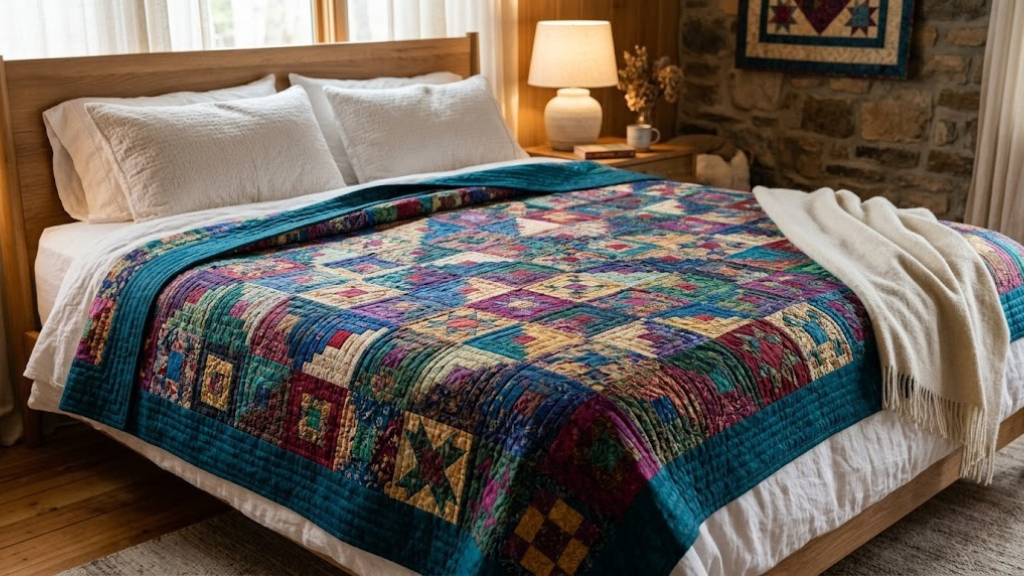
A full queen-size quilt is the long-horizon project every quilter tackles eventually. Choose a pattern you genuinely love because you’ll be looking at it for months — simple blocks (four-patches, half-square triangles, or plain squares) work just as well as complex ones for a first full quilt. Plan for months of work: piecing the top over several weekends, quilting it on your machine or sending it out to a longarm quilter, and binding it in a focused final session. The finished quilt will outlive you, literally. This is heirloom work.
91. Formal Dress with Zipper and Lining
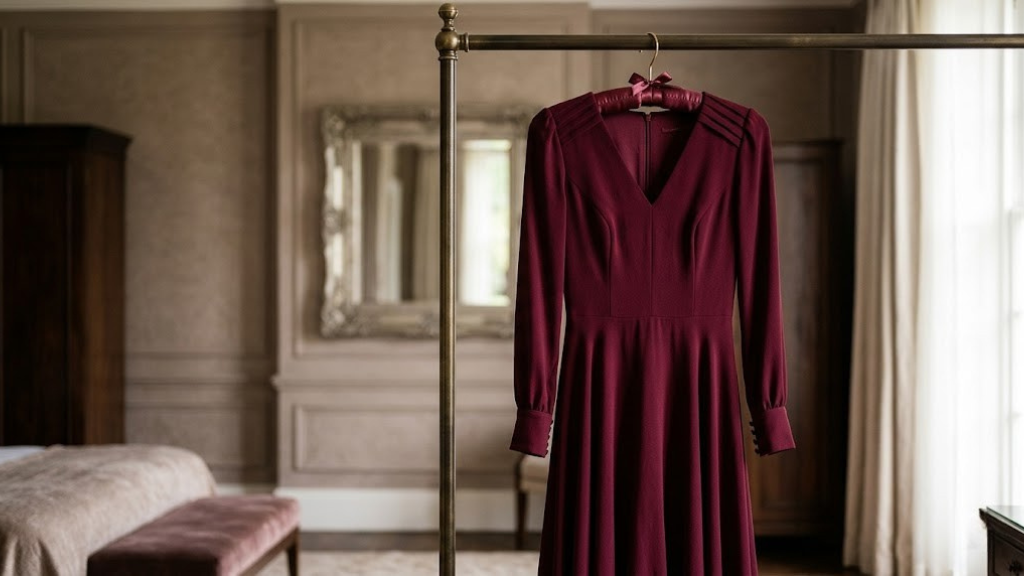
A lined formal dress with an invisible zipper combines the hardest elements of garment sewing — precise fitting, clean lining construction, and a perfectly installed invisible zipper — into a single showpiece project. Use a mid-weight dress fabric (crepe, twill, ponte knit) for your first formal dress, and choose a silhouette that’s flattering to your body type rather than trendy. A well-made formal dress sewn to your measurements costs a quarter of a retail equivalent, fits perfectly, and comes out for every significant event for the next decade.
92. Duvet Cover (King Size)
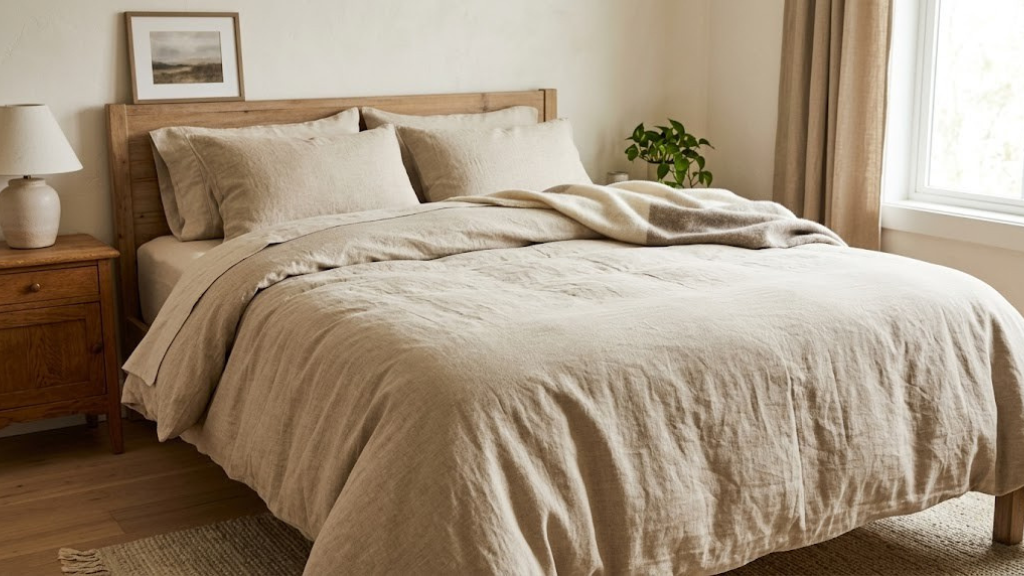
A king-size linen duvet cover sounds intimidating but it’s essentially one enormous pillowcase with buttons or a zipper closure at the bottom. The challenge isn’t complexity — it’s scale. You’re maneuvering a massive amount of fabric through your machine, which demands a clear sewing surface and patience. Linen bedding at retail costs hundreds of dollars; you can make your own for roughly a third of the price, in the exact shade and weight you want, and it’ll soften gorgeously over years of washing.
93. Kids’ Backpack (With Lining)
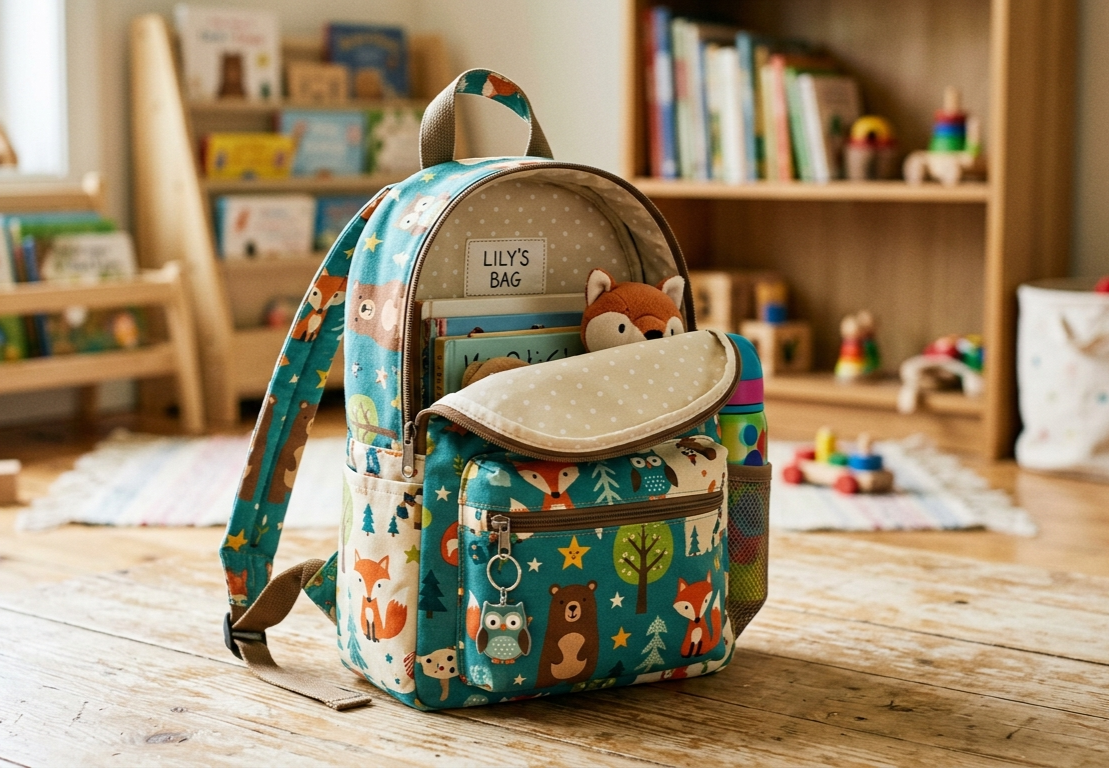
A properly constructed kids’ backpack with padded shoulder straps, a lined interior, a front pocket, and an adjustable chest strap is the kind of project that turns up at preschool pickup and draws compliments from every other parent. Use heavyweight canvas or duck cloth for durability, soft quilting cotton for the lining, and adjustable hardware for the straps. The finished backpack rivals thirty-five-dollar retail versions and can be customized to the child’s favorite characters or colors in a way store-bought bags never can.
94. Upholstered Bench Cushion
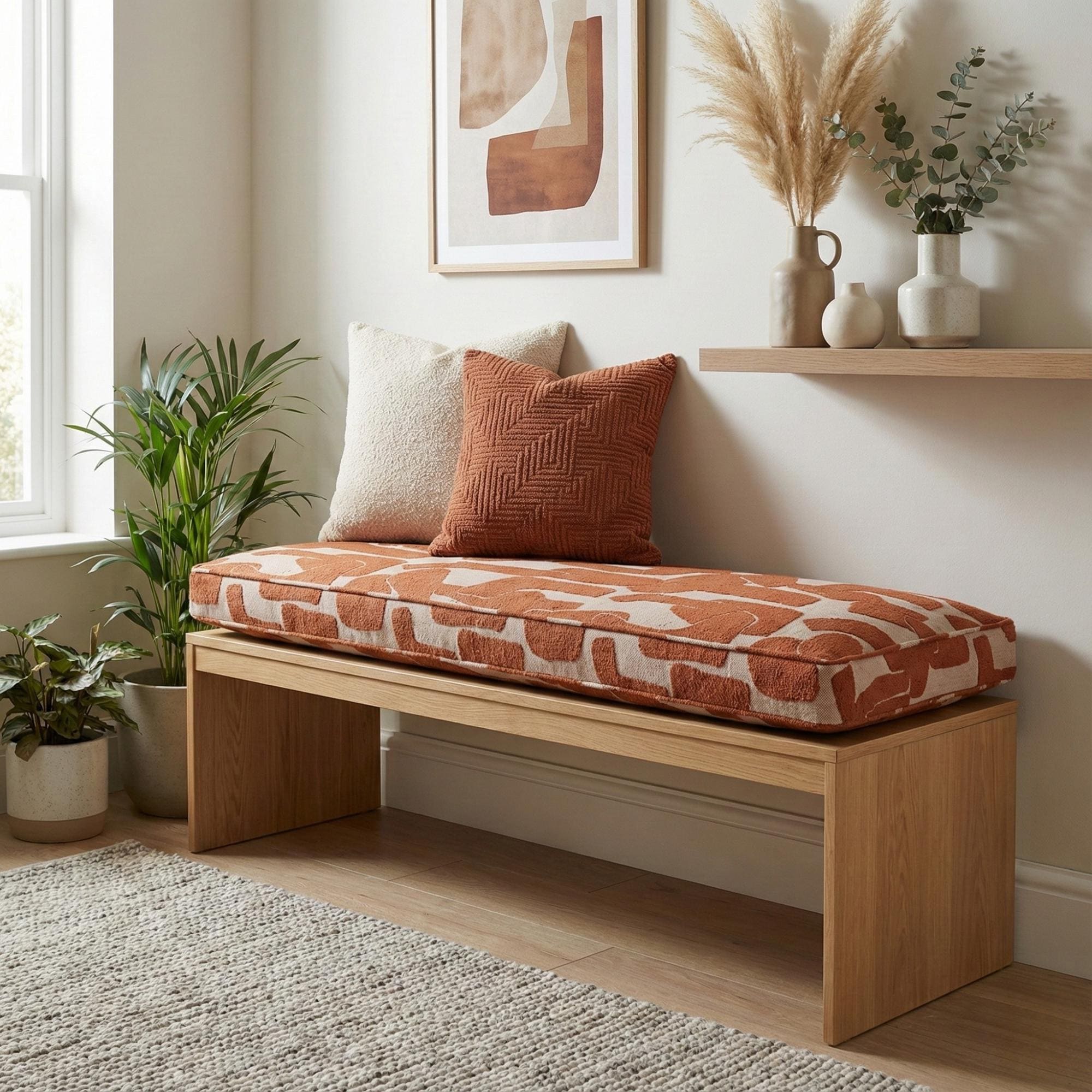
A professional-quality bench cushion with piped edges, a zippered back for cleaning, and a proper foam insert is one of those projects that separates a pretty home from a magazine-worthy one. You’ll need upholstery fabric, a dense foam insert cut to size, piping cord, and a long zipper. The skills — making and attaching piping, fitting a zipper into a cushion cover, working with upholstery-weight fabric — carry into every future home decor project. A custom bench cushion makes a window seat, a mudroom bench, or a banquette instantly look finished.
95. Full-Length Hooded Robe
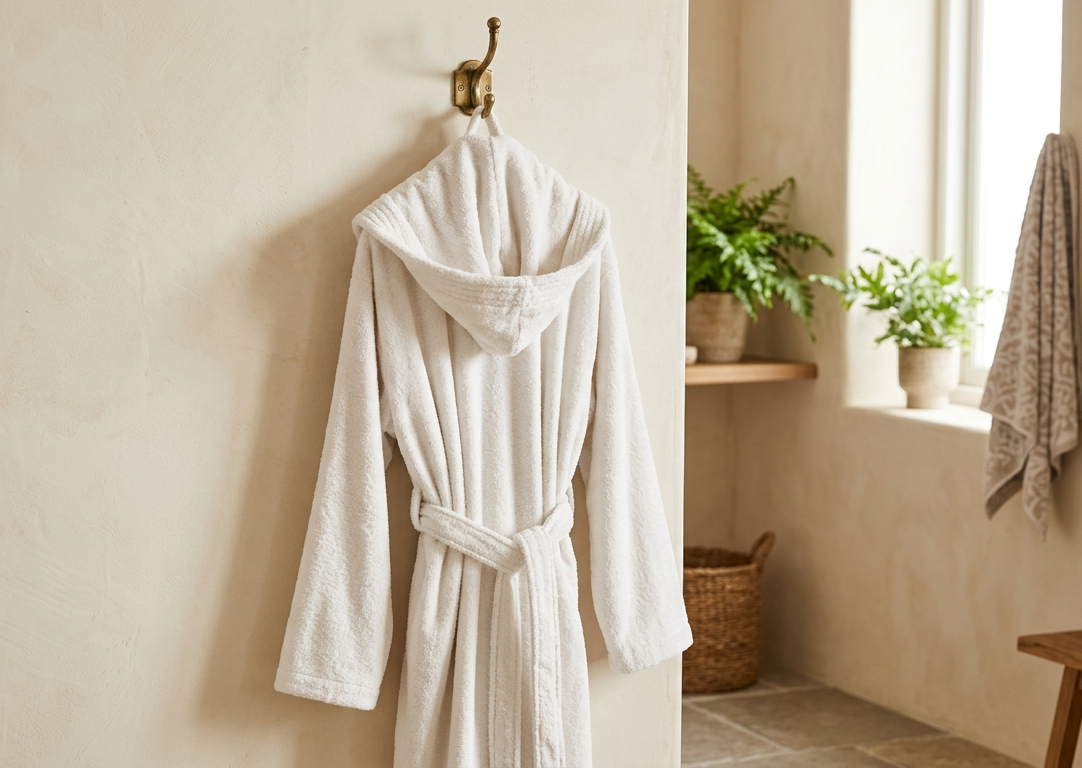
A full-length hooded robe is the luxurious finish to an advanced sewing rotation. Use plush terry cloth, bamboo French terry, or heavy cotton gauze for the outer layer. The construction involves hood shaping, a tie belt with belt loops, patch pockets, and proper hemming around curves — all techniques that reward careful execution. The finished robe costs maybe forty dollars in materials to make, feels identical to what you’d find at a spa hotel gift shop for one hundred and fifty, and becomes the thing you reach for every morning for the next five winters.

Advanced Sewing Patterns Worth the Investment
When you’re ready for more challenging builds, the right pattern makes all the difference. See the advanced patterns we recommend.
See Advanced Patterns →Every one of these advanced patterns will humble you a little and then reward you enormously. The projects take longer, the learning curve is real, and the first attempts won’t be your cleanest work. But the finished pieces are what separate someone who sews from someone who makes things. Tackle one advanced project per quarter, and within two years you’ll have a completely new set of skills — and a handful of items that will be treasured for decades.
Frequently Asked Questions About Sewing Ideas
The questions that come up most often when sewists are planning projects — from first-timers trying to pick a starter project to experienced makers wondering about selling their work.
What are the easiest sewing projects for absolute beginners?
The three easiest sewing projects for true beginners are a simple lined drawstring bag, a set of fabric bookmarks, and a basic pillowcase. All three use only straight seams, no zippers, no curves, and no complex construction. They also teach you three reusable skills you’ll use in dozens of future projects: turning a tube right-side-out, topstitching, and working with two pieces of fabric at once. Most new sewists can finish all three in a single afternoon, which builds confidence quickly.
Before your first project, spend twenty minutes practicing straight stitching on scrap fabric. Draw straight lines and curves with a washable marker, then try to stitch exactly on those lines. This is the only “drill” that actually matters for beginners, and thirty minutes of it will dramatically improve your first real project.
What can I sew in 30 minutes or less?
In thirty minutes, a practiced sewist can finish a lavender sachet, a fabric bookmark, a simple key fob wristlet, a single fabric coaster, a basic hair bow, or a lined drawstring pouch for a small item. The secret to fast projects is choosing designs with no more than four pattern pieces and only straight seams. Anything involving zippers, curves, or multiple layers will take longer on a first attempt.
If you want a stock of thirty-minute projects ready to grab for last-minute gifts, make small items in batches. Cut ten lavender sachets at once, then stitch them all in sequence. The setup time is fixed regardless of quantity, so batch-cutting turns ten thirty-minute projects into a two-hour afternoon.
What is the best fabric for small sewing projects?
For small projects, quilting cotton is the most forgiving fabric you can buy. It doesn’t fray excessively, presses crisply, holds its shape, and comes in thousands of prints at accessible prices. A good-quality quilting cotton costs around twelve to fifteen dollars per yard and yields many small projects from a single yard. Starting with quilting cotton means you’ll have fewer technical frustrations while you’re still learning basic construction.
Once you’re comfortable with quilting cotton, branch into linen (beautiful but frays more), cotton-linen blends (drape better than pure cotton), and flannel (perfect for pajamas and baby items). Avoid slippery fabrics like rayon, silk, and polyester satin until you’ve made at least ten or fifteen projects in stable woven cotton.
What sewing supplies do beginners actually need?
The genuinely essential beginner kit is smaller than most buying guides suggest: a sewing machine (any modern starter model), sharp fabric scissors used only on fabric, a seam ripper, a measuring tape, pins or sewing clips, an iron and ironing surface, and all-purpose polyester thread. Skip the rotary cutter, expensive rulers, and specialty feet until you’ve completed a few projects and know what you actually need.
The two supplies most beginners underinvest in are good scissors and a quality iron. Cheap fabric scissors fray edges and make cutting tiring. A weak iron leaves fabric too relaxed and makes seams fight you. Spending a bit more on these two tools pays back on every future project you’ll ever make.
Can I sew without using a pattern?
Absolutely, and many of the best projects in this guide don’t require a purchased pattern. Simple rectangular items like napkins, pillowcases, tote bags, and basic scarves can be made using just measurements and a ruler. The no-pattern kimono cardigan is a perfect example — you draft it from your own body measurements in ten minutes, cut a single fabric rectangle, and sew it up in under two hours.
Patterns become important for fitted garments, complex bags with multiple pattern pieces, and anything with curved seams. But for your first year of sewing, a mix of free online tutorials and measurement-based projects can keep you busy without spending a dime on commercial patterns.
What are good sewing projects to sell at craft fairs?
The projects that consistently sell well at craft fairs are small, useful items with broad appeal: zippered pouches in a variety of sizes, coffee cup cozies, lavender sachets, fabric bookmarks, keychain wristlets, and reusable bowl covers. These items hit the sweet spot of being affordable (most people will drop ten to twenty dollars on a craft fair impulse), portable (fair-goers don’t want to carry something bulky), and useful (buyers have to justify the purchase).
More expensive items — totes, market bags, aprons — do sell, but usually to buyers who came looking specifically for handmade versions of these items. If you’re new to selling, start with small items priced accessibly, and use a single larger statement piece as your booth’s focal point to draw people in.
How do I choose the right sewing pattern for my skill level?
Most commercial sewing patterns include a skill-level indicator on the envelope — beginner, intermediate, or advanced. But these labels can be inconsistent between brands, so also check the number of pattern pieces and the techniques listed. A beginner pattern typically has fewer than eight pattern pieces and avoids zippers, buttonholes, and set-in sleeves. An intermediate pattern introduces these details one or two at a time. Advanced patterns combine multiple challenging techniques in one garment.
When trying a new pattern brand for the first time, size down one level from what you normally choose. If you’d normally pick an intermediate pattern, try a beginner one first. Unfamiliar pattern instructions can add complexity even when the garment itself is simple, and a first success with a new brand helps you trust their skill ratings in the future.
Are sewing patterns reusable after I cut them out?
Yes, with proper care. Tissue paper patterns can be reused multiple times if you fold them carefully along their original creases, store them flat or gently rolled, and handle them at the seams rather than the middle of each piece. Many sewists trace their patterns onto sturdier materials — pattern tracing paper, freezer paper, or even interfacing — before cutting, which preserves the original pattern indefinitely.
For patterns you plan to use repeatedly or across multiple sizes, trace each size you need onto separate sheets and label them clearly. PDF patterns are even more reusable because you can reprint them anytime. One trick: store each pattern in a large resealable plastic bag with its envelope, any notes you took the first time, and a fabric swatch of whatever you made from it.
What should I sew first as a total beginner?
Make a simple pillowcase. Seriously. It’s the most educational first project because it teaches you every core skill (straight seams, hemming, finishing edges) without any of the frustrations (zippers, buttonholes, fitting) that derail new sewists. A standard pillowcase uses about a yard of cotton, takes under an hour once you’re set up, and produces something genuinely useful that your family will actually use.
If a pillowcase feels too utilitarian, the second-best first project is a lined drawstring bag. It adds one new skill — inserting a drawstring casing — while staying fully beginner-friendly. Both projects are better first choices than anything involving buttons, zippers, or fitted construction, no matter how simple the instructions make those techniques sound.
Where can I find free sewing patterns?
Many sewing bloggers and indie pattern designers offer free PDF patterns through their websites as a way to introduce new sewists to their brand. Searching “free PDF sewing pattern” plus the project type (tote bag, zipper pouch, kids’ dress) will surface dozens of options for any common project. Pinterest is also an excellent discovery tool because pattern creators pin visual previews of their free patterns.
Libraries frequently lend sewing pattern books and even individual commercial patterns — check your local library’s catalog before buying. And major pattern companies like Simplicity and McCall’s run twice-yearly pattern sales where patterns that normally cost fifteen to twenty dollars drop to two or three dollars each. Timing your purchases around these sales can build a substantial pattern library for very little money.
How long does it take to learn to sew well?
Most new sewists can confidently finish simple projects within about a month of regular practice (maybe five to ten small projects completed). Intermediate skills — zippers, working with knits, basic garments — come together over the first year. Advanced techniques like tailoring, pattern drafting, and fine garment fitting genuinely take several years to feel natural.
The most important predictor of sewing progress isn’t talent or time spent reading — it’s consistent project completion. Finishing a project, even imperfectly, teaches more than starting five perfect projects you never complete. A sewist who finishes two small projects per month for a year will be dramatically more skilled than one who plans elaborate projects but rarely completes anything.
What’s the difference between small and large sewing ideas?
Small sewing ideas are typically projects that can be completed in one or two sessions, use under a yard of fabric, and produce items you can hold in one hand — pouches, pincushions, bookmarks, coasters, and similar pieces. Large sewing ideas involve multiple sessions, yards of fabric, and finished items that occupy furniture — quilts, duvet covers, curtains, upholstered cushions.
Both categories have their place in a sewist’s rotation. Small projects recharge your creative energy and produce quick results. Large projects deliver deeper satisfaction and more dramatic transformations of your home. A balanced mix — one large project in progress, with small projects filling the gaps — tends to produce the most consistent sewing output across a year.
Start With One Stitch
Every experienced sewist you admire started with a wonky first seam and a machine they didn’t fully understand. The only real secret is to begin, and then to keep beginning. Pick one idea from this guide — the smallest, simplest one that caught your eye — and make it this weekend. That single project will teach you more than ten more hours of reading ever could.
The ninety-five ideas above are a working library, not a to-do list. Pin them, bookmark them, come back whenever you need a new project. And when you finish something you’re proud of, share it — the sewing community exists to cheer each other on, imperfect stitches and all.
Browse Our Top Patterns →