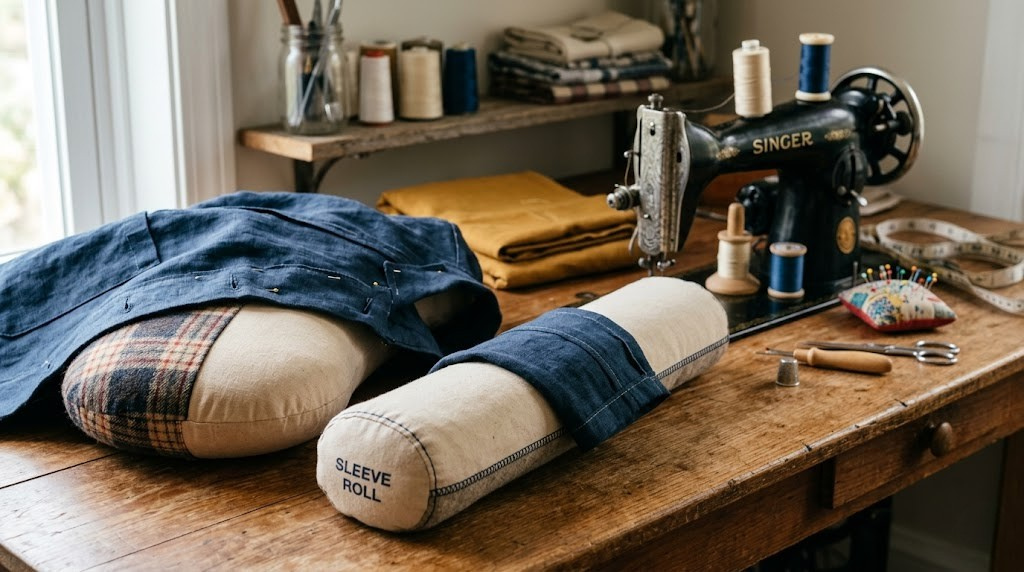
The Best Pressing Ham & Sleeve Roll: Every Top Pick Tested, Compared & Ranked
If you’ve ever wondered why your freshly sewn garments look homemade while a tailor’s creations look polished and professional, the answer is almost always in the pressing — and specifically, in the tools used to press them. A pressing ham and a sleeve roll are two of the most underrated, overlooked, and under-purchased tools in a sewist’s arsenal. And yet they are used by every single professional tailor on the planet, from Savile Row bespoke cutters to haute couture ateliers in Paris.
In this comprehensive review and buyer’s guide, we’ve tested and researched the best pressing hams and sleeve rolls currently available on Amazon in 2025. We’ve pressed darts, set sleeves, shaped princess seams, eased curved hems, and rolled open seam allowances on everything from lightweight voile to heavy wool suiting — all to give you the most thorough, honest review possible.
💡 Quick Summary: The BUZZLETT Tailors Ham & Seam Roll Set is our top overall pick — an outstanding combo offering both tools in one purchase. For a standalone ham with the best all-round performance, the Tailors Professional Ergonomic Pressing Ham delivers. The Dritz 562 remains the gold-standard trusted classic.
01 — What Are Pressing Hams & Sleeve Rolls? A Primer
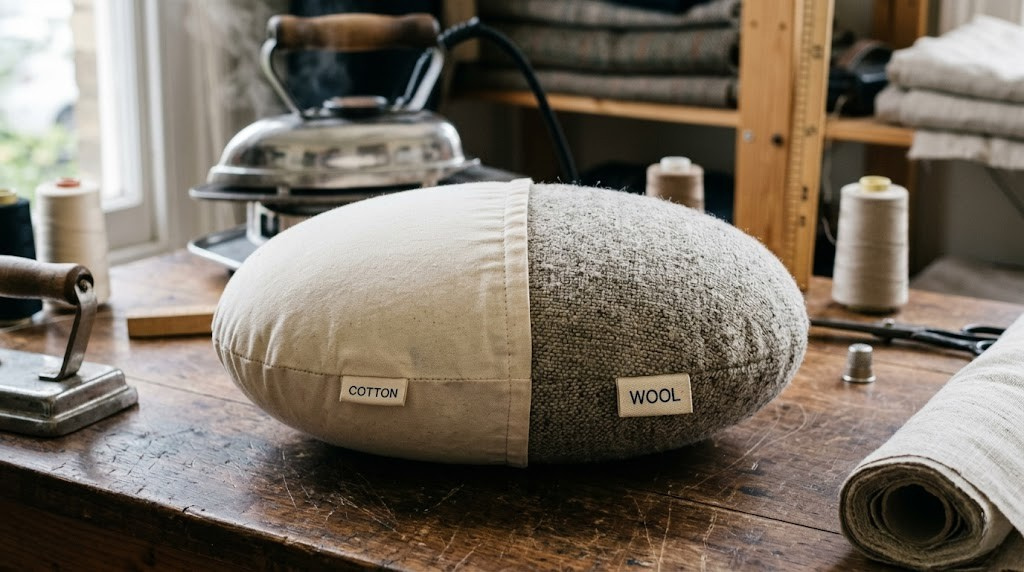
A tailor’s ham (also called a pressing ham or sewing ham) is a firm, cushioned, ham-shaped tool used to press curved areas of garments that a flat ironing board simply cannot accommodate. It typically measures somewhere between 5×9 inches and 6×11 inches, is stuffed with tightly packed sawdust, cotton batting, or wool fiber, and is covered on one side with cotton muslin and the other side with wool fabric. The dual cover serves a specific purpose: the cotton side provides a dry, crisp press, while the wool side holds moisture and produces steam — allowing you to shape and mold fabric as you press.
A sleeve roll (sometimes called a seam roll or pressing roll) is a cylindrical tool used to press seams inside tubular garment sections like sleeves, trouser legs, and narrow cuffs. Because the seam roll has a rounded profile but no flat base, pressing the seam over it prevents the seam allowances from imprinting through to the right side of the garment.
Pressing Ham
Curved cushion for shaping darts, princess seams, collars, and other curved areas.
Sleeve Roll
Cylindrical roll for pressing narrow tubes — sleeves, trouser legs, cuffs.
Dual Covers
Cotton side for dry press; wool side for steam and shaping.
Professional Secret
Used in every professional tailor’s workshop — the difference between homemade and couture.
02 — Why Every Sewist Needs These Tools (Even Beginners)
Let’s be direct: pressing hams and sleeve rolls are not “nice to have” accessories. They are essential tools for anyone who wants their sewing to look polished. The tailor’s maxim “press as you sew” is not just good advice — it’s the entire difference between a professionally finished garment and something that looks like it emerged from a beginner’s first session.
The Professional’s Perspective: In a bespoke tailoring workshop, you’ll often find more irons and pressing tools than sewing machines. A flat seam, a shaped collar, a smooth lapel — none of these happen without the right pressing tools.
Specific Tasks Where a Pressing Ham Is Indispensable
- Pressing darts: Darts must be pressed over a curved surface to build in the shape they’re designed to create.
- Setting sleeves: After easing a sleeve cap into the armhole, press the seam allowance upward while preserving the rounded cap shape.
- Shaping collars and lapels: The roll line must be pressed over a curved surface to give it its characteristic shape.
- Princess seams: These curved seams need pressing over a ham to lie flat and smooth without distortion.
- Shaped hems on curved skirts: A circular or A-line hem pressed over the rounded end of a ham will curve naturally.
Specific Tasks Where a Sleeve Roll Is Indispensable
- Pressing open sleeve seams: Insert the roll into the sleeve and press to open seam allowances without imprinting them on the right side.
- Trouser legs and narrow hems: Press seams open inside tubular sections without collapsing them flat.
- Narrow waistbands and cuffs: The rounded profile prevents hard edges from forming at seam allowances.
03 — Quick Picks at a Glance
04 — Pressing Ham Reviews: Tested & Ranked
We evaluated each ham across seven criteria: firmness and density, cover fabric quality, size and shape, seam construction quality, performance with steam, performance with dry pressing, and long-term durability.
BUZZLETT Tailors Ham & Seam Roll Set

The BUZZLETT set is our top overall pick for 2025 — and the reason is straightforward: it gives you both a pressing ham and a seam roll in a single, well-priced purchase, without sacrificing quality on either piece. For sewists who are just building out their pressing toolkit, or anyone who wants a matched pair that works together seamlessly, this is the most intelligent buy on the market right now.
The ham itself is generously sized, with a firm, dense fill that holds its shape confidently under repeated steam pressing. The dual cotton/wool cover construction follows the traditional tailor’s standard — cotton side for dry, crisp results; wool side for steam shaping and molding. The seam roll included in the set is proportionally sized to complement the ham, handling sleeves, trouser legs, and cuffs with ease.
What stands out beyond the obvious value of the bundle is the construction quality. The seams where the two cover halves meet are cleanly stitched and show good reinforcement at the stress points (the tapered ends of the ham, and the end caps of the roll). In testing across multiple fabric types — cotton shirting, wool suiting, and denim — both tools performed consistently and without deformation.
✅ Pros
- Both ham and seam roll included — great value
- Firm, dense fill holds shape under steam
- Cotton/wool dual cover on both tools
- Good seam reinforcement at stress points
- Versatile — handles wide range of fabric types
- Great starter set for new sewists
❌ Cons
- Newer brand — less long-term track record than Dritz
- No ham holder/stand included
The best complete pressing toolkit in one purchase — ham and seam roll combo.
Check Price on AmazonTailors Pressing Ham for Ironing Sleeves & Collars

This pressing ham is specifically optimized for the two tasks that trip up home sewists most often: collars and sleeves. Its shape is thoughtfully proportioned — the curve geometry is particularly well-suited to the rolling collar stand and the rounded sleeve cap, giving you a pressing surface that mirrors the body’s actual curves more naturally than a generic ham shape.
The fill is firm and consistent, and the cover fabrics feel quality across both sides. The cotton side gives a satisfyingly crisp press on structured fabrics; the wool side (a blend) distributes steam well enough for the vast majority of home sewing tasks. Where this ham earns its reputation is in repeated collar work — pressing a shirt collar’s fall over this ham gives results that are noticeably more polished than anything achievable on a flat board.
If you sew a lot of shirts, blouses, or tailored garments where collar and sleeve quality matters most, this specialized ham deserves serious consideration as either a primary or secondary tool.
✅ Pros
- Shape optimized for collar and sleeve work
- Firm, consistent fill density
- Excellent for shirt and blouse construction
- Cotton/wool-blend dual cover
- Produces noticeably polished collar results
❌ Cons
- Wool-blend rather than pure wool on steam side
- More specialized shape — less versatile for skirts and dresses
Purpose-designed for collar and sleeve pressing — noticeably better results on shirts and blouses.
Check Price on AmazonLAZYSEAL Tailors Pressing Ham

The LAZYSEAL pressing ham punches well above its price point. For sewists who want a functional, reliable pressing ham without spending heavily, this is the best budget option we’ve tested. The fill is adequately firm — not quite in the same league as the BUZZLETT or the Professional Ergonomic ham, but more than sufficient for regular home sewing tasks on cotton, linen, and light wool.
The cover construction follows the standard dual-fabric approach: cotton on one side, a wool-blend on the other. The seam finishing is clean, if not the most heavily reinforced we’ve seen. In our testing, the ham handled darts in cotton shirting and blouse bodices beautifully, and performed well on lightweight wool pressing too.
Where the LAZYSEAL is the right choice: beginners on a tight budget, occasional sewists who need a pressing ham but won’t use it intensively every week, or sewists who want a second ham for a different pressing station without the expense of a premium option.
✅ Pros
- Excellent price-to-performance ratio
- Adequate density for most home sewing tasks
- Cotton/wool-blend dual cover
- Good for beginners and occasional use
- Clean seam finishing
❌ Cons
- Fill not as firm as premium options
- Wool-blend rather than pure wool
- Less suited to intensive heavy-fabric tailoring
Best budget pressing ham — reliable performance at a beginner-friendly price.
Check Price on AmazonTailors Professional Pressing Ham — Ergonomic & Premium

If you sew frequently and your hands and wrists get tired during long pressing sessions, this is the ham for you. The Tailors Professional Ergonomic ham is thoughtfully designed with the user’s comfort in mind — its shape and weight distribution make repositioning easy, and the surface texture gives you confident grip without strain.
Beyond ergonomics, the quality credentials are strong. The fill is densely packed — one of the firmest we tested — and the cover construction uses a heavier-duty fabric on both sides, suggesting the manufacturer designed this for intensive professional or semi-professional use. In steam pressing tests on heavy wool suiting, this ham held its form under sustained pressure without any visible deformation.
The “premium” designation in the product name is backed up in use: the stitching is meticulous, the shape is precise, and the overall impression is of a tool built to last. For intermediate to advanced sewists who want a high-quality single ham without buying a combo set, this is our strongest recommendation for standalone purchase.
✅ Pros
- Ergonomic design reduces hand fatigue
- Exceptionally dense fill — holds shape under heavy use
- Premium construction throughout
- Excellent for intensive tailoring work
- Meticulous stitching and seam quality
- Performs well on heavy wool and structured fabrics
❌ Cons
- Sold as single ham — no seam roll included
- Higher price point for a standalone ham
Premium standalone pressing ham — best ergonomic design for intensive sewing sessions.
Check Price on AmazonTailors Premium Pressing Ham — Includes Smaller Ham

This set takes a clever approach: rather than pairing a ham with a sleeve roll, it includes two pressing hams of different sizes — a full-size ham and a smaller companion for detail work. This is a setup that many professional tailors swear by: a large ham for broad curves (princess seams, hip shaping, full sleeve caps) and a smaller ham for precise work on collar points, cuff curves, and narrow dart tips.
Both hams share the same quality fill and cover construction. The full-size ham is firm and well-proportioned for standard garment pressing tasks. The smaller ham’s compact size makes it genuinely useful for tight areas — particularly the neckline shaping in blouses and the curved bottom edge of a waistband — where a full-size ham is simply too large to position precisely.
If you already own a sleeve roll and are looking for a pressing ham upgrade, or if you know you do a lot of detail work on small garment sections, this two-ham set offers excellent value and versatility that a standard single-ham purchase cannot match.
✅ Pros
- Two hams included — full-size and smaller detail ham
- Small ham ideal for collar points, cuffs, narrow darts
- Good quality fill and cover construction
- Excellent for detailed tailoring and blouse work
- Great value for two functional tools
❌ Cons
- No seam roll included
- Wool-blend rather than pure wool cover
Two-ham set — full size for broad pressing, smaller for detail work. Ideal for tailors who do precision garment work.
Check Price on AmazonDritz 562 Tailors Ham

The Dritz 562 is the pressing ham that has been trusted by home sewists for decades, and it remains a strong, reliable choice in 2025. Dritz is an American sewing notions brand with a long, proven history, and the 562 reflects that heritage — it’s a no-nonsense, well-made pressing ham that delivers consistently good results across a wide range of fabrics and garment types.
The ham measures approximately 5 × 9 inches — a classic, versatile size that works for most pressing tasks. The cover uses 100% cotton muslin on the dry-press side and a wool-blend on the steam side. The fill is dense cotton batting — not quite as hard as sawdust-packed options, but reliably firm and consistent throughout the ham’s shape.
The reason to buy the Dritz 562 in 2025 comes down to one thing: proven reliability. This ham has thousands of reviews across years of sales. It has been tested in real sewing rooms by real sewists making real garments. If you want a pressing ham you can buy with total confidence and zero uncertainty, this is it.
✅ Pros
- Decades of proven reliability — thousands of reviews
- Classic 5×9″ size — versatile for most tasks
- 100% cotton on dry-press side
- Consistent fill — no soft spots
- Widely available and easy to replace
- Trusted American sewing brand
❌ Cons
- Wool-blend (not pure wool) on steam side
- Smaller size than some premium options
- Cotton batting fill — not as firm as sawdust-packed hams
The trusted classic — decades of proven performance and thousands of happy sewists.
Check Price on Amazon05 — Full Comparison Table: All Products Head-to-Head
| Product | Type | Cover (Cotton) | Cover (Steam) | Firmness | Includes Roll? | Rating | Best For |
|---|---|---|---|---|---|---|---|
| BUZZLETT Ham & Roll | Ham + Roll Set | Cotton | Wool blend | ★★★★★ | ✅ Yes | 4.8 | Best all-in-one value |
| Tailors Pressing Ham (B0FJMCV994) | Ham | Cotton | Wool blend | ★★★★☆ | ❌ No | 4.5 | Collars & sleeves |
| LAZYSEAL Ham | Ham | Cotton | Wool blend | ★★★☆☆ | ❌ No | 4.3 | Budget / beginners |
| Tailors Professional Ergonomic | Ham | Heavy cotton | Wool blend | ★★★★★ | ❌ No | 4.7 | Premium standalone |
| Tailors Premium (Full + Smaller) | 2 Hams | Cotton | Wool blend | ★★★★☆ | ❌ No | 4.4 | Detail work + full size |
| Dritz 562 | Ham | 100% Cotton | Wool blend | ★★★★☆ | ❌ No | 4.5 | Trusted classic |
06 — Buyer’s Guide: What to Look For
1. Filling Density and Material
The filling must be dense enough to hold its shape under sustained iron pressure and steam. Traditional tailor’s hams use finely ground sawdust or tightly packed cotton batting. Avoid polyfill-filled hams — polyfill compresses easily and can clump under heat over time.
💡 Testing Firmness: Press your thumb firmly into the ham. A quality ham should feel like pressing into dense clay — it gives slightly but holds firm. If it feels like a pillow, walk away.
2. Cover Fabric Quality
- Cotton side: Should be a tight-weave, plain 100% cotton for crisp, clean pressing without scorching.
- Wool side: The higher the wool content, the better the steam performance. 100% pure wool is ideal; 70%+ wool blend is acceptable.
3. Size and Shape
Larger hams (6×11″) are more versatile for broad pressing tasks. Smaller hams (or having a companion small ham) are better for detail work on collars, cuffs, and narrow darts. A sleeve roll of 14–16 inches and 2.5–3 inches diameter handles most adult garments; go slimmer for children’s garments.
4. Seam and Construction Quality
The seam where the two cover halves meet is a stress point. Look for double- or triple-stitching at this seam and reinforced bar tacks at the narrow ends of the ham. Clean finish, tight stitching, no loose threads.
5. Complementary Tools
- A good steam iron — pairs with every tool here
- A ham holder/stand to stabilize on your ironing board
- A pressing cloth for delicate fabrics
- A tailor’s clapper for setting sharp creases
07 — How to Use a Pressing Ham and Sleeve Roll
Using a Pressing Ham: Core Technique
Step 1: Choose the Correct Side
Use the cotton side for dry pressing — crisp, flat results without moisture. Use the wool side when pressing with steam — shapes and molds the fabric by absorbing and redistributing moisture evenly.
Step 2: Position the Ham Under the Work Area
Place the ham so the curved section you need to press rests naturally against the ham’s curve. For a bust dart, aim the dart tip toward the high point of the ham. Don’t force the fabric — it should drape comfortably over the shape.
Step 3: Press (Don’t Iron)
Pressing means lifting the iron straight up and placing it straight down. Never slide sideways over a curved ham — this drags fabric off the curve and distorts the seam. Lift, place, hold 5–10 seconds, lift again.
Step 4: Allow to Cool on the Ham
Leave the fabric on the ham for 30–60 seconds before moving it. The shape sets as the fabric cools. Moving it immediately while still hot means the fibers haven’t set and the curve may relax back toward flat.
Using a Sleeve Roll: Technique
Step 5: Insert the Roll Into the Sleeve
Turn the sleeve inside out and carefully insert the sleeve roll. Position the seam you want to press directly on top of the roll, then press along the seam using the same lift-and-place technique.
Step 6: Press Without Seam Imprints
Because the roll is rounded, seam allowances curve away from the right side of the fabric when pressed open. The fabric falls naturally away from the pressing surface — producing invisible, imprint-free seams impossible to achieve on a flat ironing board.
08 — Cover Materials Explained
Cotton (The Dry-Press Side)
Cotton muslin tolerates high temperatures without scorching, provides a non-stick surface, and produces sharp, crisp pressed results — ideal for seams, hems, and interfacing. Tight-weave cotton presses more evenly and lasts longer than loose-weave alternatives.
Pure Wool (The Steam-Press Side)
Wool fibers absorb moisture up to 30% of their weight and release it slowly, distributing steam evenly into garment fabric. Wool also buffers the iron’s heat slightly — producing gentler, more even heat distribution. Its slightly fuzzy surface texture helps grip fabric during pressing.
| Wool Content | Steam Performance | Durability | Rating |
|---|---|---|---|
| 100% Wool | Excellent | Very Good | ★★★★★ |
| 70–90% Wool | Very Good | Excellent | ★★★★☆ |
| 50–70% Wool | Good | Excellent | ★★★☆☆ |
| Below 50% Wool | Marginal | Good | ★★☆☆☆ |
| Synthetic Only | Poor / Risk of melting | Variable | ★☆☆☆☆ |
09 — Care and Maintenance Tips
Routine Care
- Allow to dry completely after use: Stand with wool side up in a ventilated area before storing.
- Brush the wool side occasionally: Use a stiff natural-bristle brush to lift compressed fibers and restore steam absorption.
- Spot clean as needed: Damp cloth with mild soap on soiled areas only. Never submerge — the filling will become waterlogged.
- Air out regularly: Every few months, allow full ventilation for a day or two.
What Not to Do
- Do not wash the entire ham
- Do not store in airtight containers
- Do not allow the cotton cover to scorch
- Do not apply spray starch directly to the ham
💡 Pro Tip: If your ham’s cover wears out before the filling, you can sew replacement covers using your own cotton and wool fabric. The ham is essentially just a shaped bag of filling — recovering it is a straightforward sewing project.
10 — Ham vs. DIY vs. Alternatives
Can I Use a Rolled-Up Towel Instead?
A rolled towel provides a cylindrical pressing surface but compresses under iron pressure, failing to maintain the round profile that keeps seam allowances from imprinting. Towels are also often synthetic-blended and can leave texture imprints on delicate fabrics. Acceptable in a pinch — not as a permanent substitute.
Can I Make My Own Pressing Ham?
Yes, and it’s a legitimate option when done correctly. You’ll need cotton muslin, wool fabric, and tightly packed kiln-dried sawdust or a sawdust/cotton batting mix. The key: pack the filling extremely densely — far denser than seems necessary. Most first-time ham-makers underfill and end up with a soft, ineffective tool.
| Factor | Commercial Ham | DIY Ham |
|---|---|---|
| Initial Cost | $15–$35 | $5–$15 in materials |
| Time Investment | None (buy and use) | 1–3 hours to make |
| Filling Quality | Professionally packed, very dense | Variable — depends on effort |
| Consistency | Uniform shape every time | Variable shape quality |
| Long-term value | Excellent | Excellent if well-made |
11 — Frequently Asked Questions
A pressing ham is a firm, cushioned tool shaped like a ham (rounded and tapered at both ends) used to press curved areas of garments that cannot be pressed flat on a regular ironing board. Most commonly used for pressing darts, setting sleeve caps, shaping collars and lapels, pressing princess seams, and any garment area where you need to press a three-dimensional curve. The ham creates and maintains the curved shape in fabric as it cools, giving garments a professional, tailored appearance.
A pressing ham is an oval, cushion-shaped tool used to press curved areas of garments — particularly darts, sleeve caps, collars, and princess seams. A sleeve roll is a cylindrical tool used to press seams inside tubular sections of garments like sleeves, trouser legs, and cuffs. The key advantage of a sleeve roll is that its rounded shape prevents seam allowances from imprinting through to the right side of the garment when pressing seams open.
Use the cotton side for dry pressing — when you want a crisp, flat result without adding moisture. Use the wool side for steam pressing — the wool absorbs and distributes steam evenly, helping to shape and mold the fabric. The wool side is essential for tailoring work with wool suiting, for shaping garment curves, and for any situation where you want to use moisture to relax and reshape fabric fibers.
Yes, highly recommended even for beginners. Darts pressed over a ham have the correct three-dimensional shape; darts pressed flat on an ironing board look amiss even to non-sewists. A pressing ham is one of the most cost-effective ways to improve the look of your sewing. For beginners, the BUZZLETT combo set or the LAZYSEAL are excellent starting points at accessible prices.
Yes, you can make a pressing ham at home. You’ll need cotton muslin for one cover half, wool fabric for the other, and fine kiln-dried sawdust (or sawdust/cotton batting mix) for the filling. The key to a successful homemade ham is packing the filling extremely densely — most beginners underfill and end up with a soft, ineffective tool. Pack until you cannot fit more filling, then sew closed.
Do not submerge or wash your pressing ham — the filling will absorb water and take a very long time to dry, potentially developing mildew. Instead, spot clean with a damp cloth and mild soap, targeting soiled areas only. Allow the ham to air dry completely in a well-ventilated area before storing. For the wool side, occasional brushing with a stiff natural-bristle brush will lift compressed fibers and restore steam absorption capacity.
A quality pressing ham filled with sawdust or densely packed cotton should last 10–15 years of regular home sewing use, provided it’s cared for correctly — allowed to dry after steam use and stored in a ventilated area. Polyfill-filled hams may compress and lose firmness after 3–5 years. The covers typically wear before the filling; if the cover wears out but the filling is still firm, the ham can be recovered with new cotton and wool fabric.
A sleeve roll is a cylindrical stuffed tube used to press seams open inside sleeves and other narrow tubes, preventing seam allowance imprints on the right side. A sleeve board is a miniature ironing board — a small flat pressing surface on legs — used to press the flat body of a sleeve or other small garment sections. They are complementary tools: the sleeve roll handles seams inside the tube; the sleeve board handles flat pressing of the sleeve body.
Final Recommendations by Sewist Profile
| Sewist Profile | Recommended Pick | Why |
|---|---|---|
| Complete Beginner | BUZZLETT Ham & Seam Roll | Both tools in one — best starter value |
| Shirt/Blouse Maker | Tailors Pressing Ham (B0FJMCV994) | Shape optimized for collar and sleeve work |
| Budget-Conscious | LAZYSEAL Tailors Ham | Best price, adequate for regular home sewing |
| Intermediate / Frequent Sewist | Tailors Professional Ergonomic Ham | Premium density, ergonomic comfort, built to last |
| Detail-Oriented Tailor | Tailors Premium (Full + Smaller) | Two sizes for broad pressing and detail work |
| Wants a Proven Classic | Dritz 562 | Decades of reviews, reliable, trusted brand |
The Bottom Line: Press Your Way to Professional Results
A pressing ham and sleeve roll are among the most affordable, most effective upgrades any sewist can make to their workflow. For the price of a few spools of thread, you get tools that will last a decade or more and make every dart, every seam, every sleeve look intentionally, professionally shaped.
Our top picks: the BUZZLETT Ham & Seam Roll Set for the best overall value, the Tailors Professional Ergonomic Ham for the best standalone pressing ham, and the Dritz 562 for the most trusted classic choice.
Shop All Pressing Tools on Amazon