The Best Thread Organizers for Your Sewing Room
Why Thread Organization Is the Secret Weapon of Serious Sewists
There’s a particular kind of frustration that every sewist knows: you’re mid-project, your machine is threaded, the fabric is pinned — and then you spend twenty minutes hunting for a spool of coordinating thread you’re almost certain you own. You eventually find a half-used cone wedged behind a stack of fabric, but the color is slightly off, and now you’re second-guessing the whole project. Sound familiar?
Thread chaos is one of the most universal problems in sewing rooms of every size and skill level. It doesn’t matter whether you’re working on a mid-range home machine or a professional-grade setup — if your thread isn’t organized, your workflow suffers. Tangled spools catch on each other, thread degrades faster when stored improperly, and color-matching by memory alone is a fool’s errand.
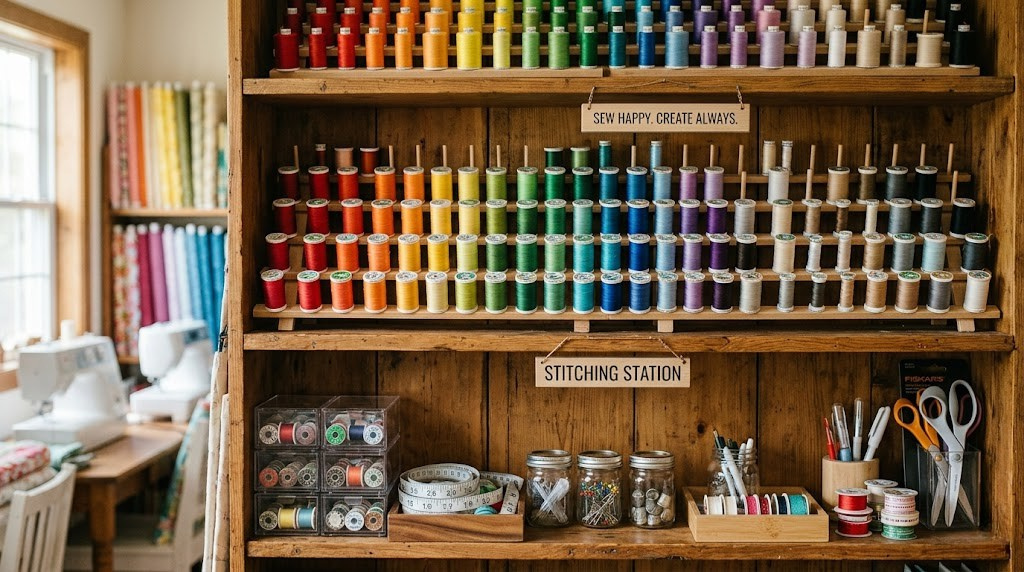
But a well-chosen thread organizer does something deeper than just tidying up. It gives your sewing room a visual inventory system. You can see at a glance what you have, what you’re running low on, and which colors live in what neighborhood. For quilters who maintain dozens of coordinated palettes, this isn’t a luxury — it’s the entire infrastructure of the craft.
In this guide, we’ve tested and evaluated thirteen of the top thread organizers on the market — from wall-mounted racks to rotating towers, bobbin holders to portable cases — so you can find the exact solution that fits your space, your thread collection size, and the way you actually work. We’ve also included a detailed buying guide, a full comparison table, DIY alternatives, and thread care tips that most organizer reviews skip entirely.
Whether you’re organizing 24 spools or 2,400, there’s a system in here that will change how you feel about sitting down to sew.
🧵 Quick Picks: Best Thread Organizers at a Glance
- Best Overall Wall Rack: New Brothread 120-Spool Thread Organizer Rack (large capacity, sturdy metal construction)
- Best Wooden Rack: Hardwood Freestanding Thread Rack (120 spools, premium wood finish)
- Best for Quilters: Sew Tech Wall Mounted Thread Rack (60-spool, compact design)
- Best Budget Pick: New Brothread 60-Compartments Thread Box (portable, affordable)
- Best for Bobbins: JODOUEEIR Thread Organizer with Bobbin Storage (dual-purpose design)
- Best Portable: ARTINRACK 3D Filament Rack (versatile, can be used for thread spools)
- Best DIY-Style: Pegboard + Hook System (infinitely customizable, low cost)
- Best for Small Spaces: NW 12-Spools Hanging Embroidery Organizer (compact, hanging design)
Wall-Mounted Thread Racks: Maximum Visibility, Minimum Footprint
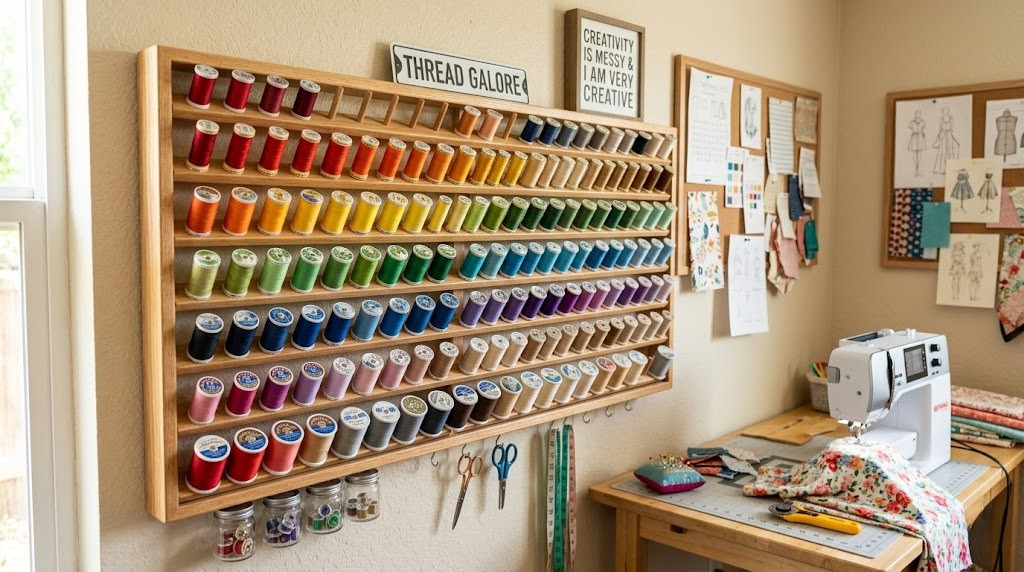
Wall-mounted thread racks are the gold standard for serious sewists with a dedicated sewing room. They keep your entire collection visible at once, treat your thread as a color palette rather than a pile of supplies, and transform a functional necessity into a genuinely beautiful display. If you’ve ever seen a sewing room photograph where a rainbow wall of thread takes your breath away, that’s wall-mounted organization at its best.
The practical case for wall-mounted racks is equally strong. When thread is at eye level and fully visible, you stop buying duplicates of colors you already own. You can color-coordinate your collection, group threads by weight (all polyester together, all cotton, all silk), or arrange by brand. And because the spools aren’t stacked or crammed into a drawer, they don’t tangle, fray at the ends, or develop the annoying flat spots that come from long-term stacking.
Before buying, measure your wall space carefully and consider how the rack will interact with your overall room layout. You’ll want it accessible from your sewing table without requiring you to cross the room, ideally within arm’s reach or a short swivel. Check out our guide on best sewing tables for complementary workspace ideas.

New Brothread 120-Spool Thread Organizer Rack
The New Brothread 120-Spool Thread Organizer Rack is our top pick for wall-mounted storage in 2025. With an impressive 120-spool capacity across multiple tiers, this rack provides ample room for growing thread collections while maintaining a compact wall footprint. The metal construction feels substantial and durable — this is a rack built to last through years of daily use.
What sets this rack apart is the thoughtful peg design. Each peg is angled slightly upward to keep spools securely in place, even if the wall gets bumped. The spacing between pegs allows you to grab individual spools without disturbing neighboring threads — a detail that matters tremendously when you’re mid-project and need to swap colors quickly. The open design also means you can see every spool label at a glance, making color matching nearly instantaneous.
Installation is straightforward with the included mounting hardware. The rack comes with drywall anchors and screws, and the pre-drilled mounting holes are spaced to hit standard wall studs. At roughly 24 inches wide by 18 inches tall when mounted, it fits comfortably on most sewing room walls without dominating the space.
This rack accommodates standard home sewing machine spools perfectly. For embroiderers and quilters who work with a wide color palette, the 120-spool capacity covers most intermediate to advanced collections. The metal finish resists rust and looks clean in any sewing room aesthetic — it’s functional without being industrial-looking.
✓ Pros
- Large 120-spool capacity
- Sturdy metal construction
- Angled pegs keep spools secure
- Includes all mounting hardware
- Excellent spool visibility
✗ Cons
- Wall mounting required (not for renters)
- Not suitable for large cones
- Assembly takes about 20-30 minutes
Best overall wall rack. 120-spool capacity with sturdy metal pegs and secure angled design.
Check Price on Amazon →
Hardwood Freestanding Thread Rack — 120 Spools
For sewists who want their thread storage to double as furniture-quality decor, the Hardwood Freestanding Thread Rack is the standout choice. Holding 120 spools in a beautifully finished wood frame, this organizer brings warmth and craftsmanship to your sewing room that metal racks simply can’t match. The freestanding design means no wall mounting is required — it sits on a tabletop, shelf, or counter with a stable base.
The hardwood construction is genuinely impressive. The finish is smooth and sealed, with no rough edges that could snag thread. Wooden pegs are gentle on spool centers and won’t create the friction wear that metal pegs occasionally cause on plastic spools. The natural wood grain varies slightly from piece to piece, giving each rack a unique character.
The peg arrangement is optimized for visibility — rows are staggered so spools on the back row sit slightly higher than those in front, creating a theater-seating effect that keeps every label visible. This is particularly useful for sewists who organize by color gradient, as the full spectrum remains visible at all times.
✓ Pros
- Beautiful hardwood construction
- Freestanding — no wall mounting needed
- 120-spool capacity
- Staggered rows for full visibility
- Wooden pegs gentle on spools
✗ Cons
- Higher price point
- Requires tabletop or shelf space
- Wood can warp in very humid environments
Best premium wooden rack. Freestanding design with furniture-quality hardwood construction.
Check Price on Amazon →
Sew Tech Wall Mounted Thread Rack — 60 Spools
The Sew Tech Wall Mounted Thread Rack is ideal for sewists who want a quality wall rack but don’t need the massive capacity of a 120-spool system. At 60 spools, it covers most home sewist collections perfectly, and the compact dimensions mean it fits on smaller wall sections where larger racks would overwhelm the space.
This rack is particularly popular in the quilting community because of its efficient design. The peg arrangement is optimized for standard quilting thread spools, and the rack includes dedicated spaces for embroidery and braiding threads. The metal construction feels solid, and the white finish blends cleanly into most sewing room walls.
Mounting is simple with the included hardware, and the rack is light enough that a single wall stud (or two drywall anchors) provides adequate support even when fully loaded. For sewists who rent or move frequently, the minimal wall impact is a significant plus — two small screw holes are easy to patch.
✓ Pros
- Compact — fits smaller wall spaces
- Affordable price point
- Clean white finish
- Lightweight, easy to mount
- Good for embroidery and quilting threads
✗ Cons
- 60-spool limit (outgrown quickly)
- White finish can show dust
- Pegs are closer together than larger racks
Best compact wall rack. Perfect for quilters and sewists with moderate thread collections.
Check Price on Amazon →Rotating Thread Towers: The Countertop All-Stars
Rotating thread towers are the best solution for sewists who want maximum access without wall mounting — and without the chaos of just stacking spools in a drawer. They sit on your sewing table or a nearby shelf, spin 360 degrees so every spool is accessible, and keep your most-used thread within arm’s reach at all times.
For quilters in particular, rotating towers are transformative. When you’re working through a complex quilt that uses 12 different thread colors across multiple sessions, being able to spin the tower and grab the next color without leaving your chair is a genuine quality-of-life upgrade. Many quilters pair a rotating tower at their sewing table with a larger wall-mounted rack for their full collection — the tower holds the “active” threads for the current project while the wall rack serves as the archive.

New Brothread 60-Compartments Thread Storage Box
The New Brothread 60-Compartments Thread Storage Box offers a clever hybrid approach — part portable case, part desktop organizer. With 60 individual compartments sized perfectly for standard sewing machine spools, this box keeps threads separated, tangle-free, and organized in a compact format that’s easy to store on a shelf or carry to sewing classes.
The transparent lid is the standout feature here. You can see every spool color without opening the box, making it a de facto display case as well as a storage solution. The compartments are deep enough to hold spools upright, and the dividers keep threads from rolling into each other during transport.
This box is especially practical for sewists who work with embroidery thread collections, as the individual compartments can be labeled by thread number for manufacturer-specific organization systems. The box stacks neatly with additional units if your collection expands beyond 60 spools. For the price, it’s one of the best value thread storage solutions available.
✓ Pros
- 60 individual compartments
- Transparent lid — full visibility
- Portable and lightweight
- Stackable with additional units
- Very affordable
✗ Cons
- Plastic construction (less premium feel)
- Compartments not adjustable
- Lid can pop open if dropped
Best budget portable box. 60 compartments with transparent lid for easy visibility.
Check Price on Amazon →
ARTINRACK Multi-Purpose Thread & Filament Storage Rack
The ARTINRACK is an interesting entry in the thread storage category — originally designed as a 3D printing filament rack, it’s been enthusiastically adopted by the sewing community for thread spool storage. The rack’s design accommodates spools of various sizes, making it particularly useful for sewists who work with mixed thread types including larger cones and specialty spools.
What makes this rack valuable is its capacity for non-standard spool sizes. If you have a collection that includes everything from tiny embroidery spools to large serger cones, this rack’s adjustable design can accommodate them all without requiring separate storage solutions. The metal construction is sturdy, and the rack can be wall-mounted or used as a freestanding unit.
✓ Pros
- Accommodates mixed spool sizes
- Sturdy metal construction
- Wall-mount or freestanding
- Works for cones and large spools
- Unique industrial aesthetic
✗ Cons
- Not purpose-built for thread (originally for filament)
- Industrial look may not suit all rooms
- Peg spacing not optimized for standard spools
Best for mixed spool sizes. Versatile design accommodates everything from embroidery spools to serger cones.
Check Price on Amazon →Bobbin Organizers: The Often-Overlooked Half of Thread Storage
Here’s a confession most thread organizer guides skip: organizing your spools without organizing your bobbins is solving only half the problem. Bobbins are small, numerous, easily confused, and infuriating when tangled. And because a bobbin is only useful when it matches the top thread on your machine — in both color and fiber type — a good bobbin organization system is the difference between a smooth sewing session and fifteen minutes of digging through a jumbled bobbin case.
The most functional approach is paired storage: keeping each bobbin physically associated with its matching spool. Some products do this elegantly, others require a bit of DIY creativity. Understanding thread nesting under fabric issues will help you realize that bobbin tension and matching thread weight are critical — and a clear bobbin organization system helps you always use the right combination.
JODOUEEIR Thread Organizer with Bobbin Storage — Black
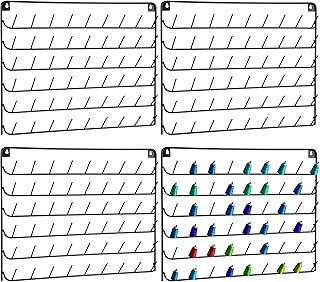
The JODOUEEIR Thread Organizer solves the paired storage problem elegantly. This organizer features dedicated slots for both thread spools and their matching bobbins, keeping each pair together so you never have to hunt for the right bobbin. The black finish looks sleek on any sewing table, and the compact design fits neatly into most sewing room setups.
What makes this organizer particularly useful is the thoughtful layout. Thread spools sit on individual pegs while corresponding bobbins slot into adjacent holders. When you grab a spool, its bobbin is right there — no separate bobbin case to search through. For sewists who maintain multiple bobbins per color (common for quilters and garment sewists), this paired approach eliminates the most common source of bobbin-related frustration.
The organizer is made from durable plastic with a stable base. It holds approximately 30-40 thread spools with matching bobbins, making it ideal as a primary active-thread organizer at your sewing station. For larger collections, multiple units can be arranged side by side.
✓ Pros
- Paired thread + bobbin storage
- Compact footprint
- Sleek black finish
- No assembly required
- Affordable price point
✗ Cons
- Limited capacity (~30-40 spools)
- Plastic construction (less premium)
- Not wall-mountable
Best paired storage solution. Keeps thread and matching bobbins together in one compact organizer.
Check Price on Amazon →Portable & Small Space Thread Organizers: Organization That Fits Anywhere
Not all sewing happens at home. Guild meetings, classes, retreats, sewing circles — plenty of sewists spend meaningful time working on projects away from their dedicated room. And even within the home, moving between a sewing room and, say, a living room hand-sewing setup means you need thread that travels conveniently without tangling or spilling. For sewists in small spaces — apartments, shared rooms, craft corners — compact organizers that maximize limited space are essential.

NW 12-Spools Hanging Embroidery Thread Organizer
The NW 12-Spools Hanging Embroidery Thread Organizer is the ultimate small-space solution. At just 12 spools, it’s not designed for large collections — but for sewists working in tiny spaces, dorm rooms, or craft corners, this hanging organizer makes brilliant use of vertical space without requiring any shelf or counter real estate. Hang it on a hook, a doorknob, a closet rod, or the side of a shelving unit.
Each of the 12 compartments is sized for standard embroidery thread spools, and the transparent pockets let you see thread colors at a glance. The hanging design is particularly clever for sewists who work with hand embroidery or small mending projects — keep your most-used colors hanging within arm’s reach and tuck the rest away in a drawer or box.
This organizer also works well as a secondary storage solution. Use it for the 12 colors you’re currently using on an active project, and rotate threads in and out as your project palette changes. For the very low price, it’s an easy impulse addition to any sewing room.
✓ Pros
- Zero footprint — hangs in unused vertical space
- Transparent pockets for visibility
- Very affordable
- Portable and lightweight
- Great for active project threads
✗ Cons
- Very limited capacity (12 spools only)
- Fabric construction less durable
- Pockets can stretch over time
Best small space solution. Hanging design uses zero shelf space. Perfect for active project threads.
Check Price on Amazon →
BambooMN Thread Spool Holder Rack
The BambooMN Thread Spool Holder Rack brings a natural, eco-friendly aesthetic to thread storage. Made from sustainable bamboo rather than plastic or metal, this rack appeals to sewists who prioritize natural materials in their creative spaces. The warm bamboo tone complements wooden sewing tables and natural-light sewing rooms beautifully.
Beyond aesthetics, the bamboo construction offers practical benefits. Bamboo is naturally moisture-resistant and won’t rust like metal racks in humid environments. The pegs are smooth and splinter-free, protecting thread spools from snags. The rack holds multiple spools in a compact footprint and can sit on a tabletop, shelf, or counter.
✓ Pros
- Eco-friendly bamboo construction
- Moisture-resistant and rust-proof
- Warm natural aesthetic
- Smooth pegs protect thread
- Sustainable material choice
✗ Cons
- Lower capacity than metal racks
- Bamboo can crack in very dry environments
- More expensive than plastic alternatives
Best eco-friendly option. Sustainable bamboo construction with a warm, natural aesthetic.
Check Price on Amazon →Creative DIY Thread Storage: Maximum Customization on a Budget
Some of the most impressive thread storage solutions you’ll see in sewing room tours aren’t products at all — they’re custom-built systems made from pegboard, wooden dowels, repurposed hardware, or IKEA components. DIY thread organization isn’t just for the budget-conscious (though it certainly is budget-friendly). It’s for sewists who have very specific space dimensions, thread collection sizes, or aesthetic requirements that no off-the-shelf product can match.
The Pegboard System: The Ultimate Customizable Wall Solution
A 4×8 sheet of standard pegboard from any hardware store costs under $30 and, fitted with metal peg hooks, can hold hundreds of thread spools in whatever configuration you prefer. You can arrange pegs by color, by fiber type, by brand, or by any organization system that makes sense to you — and when your organization logic changes, you just move the pegs. No screws, no permanent changes.
The visual impact of a large pegboard thread display is also hard to overstate. When arranged by color family, hundreds of thread spools arranged on a pegboard look genuinely stunning — equal parts functional storage and art installation. Many sewists add small shelves (also pegboard-compatible) for scissors, rulers, and other tools, creating an all-in-one sewing wall.
PVC Pipe Spool Holder: The Cheapest DIY Option
A length of PVC pipe (3/4-inch diameter fits standard spool holes) mounted horizontally on any surface becomes an instant thread holder. Mount two brackets on a wall, drop a length of pipe through 20 spools, and rest it in the brackets — total cost under $10. You won’t win any design awards, but it’s functional and space-efficient.
IKEA RÅSKOG Cart: The Quilter’s Favorite Hack
The IKEA RÅSKOG rolling cart (three-tier wire basket cart) has become something of an unofficial sewing community icon. Its three baskets accommodate shallow layers of thread spools arranged by color family, the whole cart rolls to wherever you’re working, and it costs about $40. Thread spools are visible from above and the sides, it moves effortlessly, and it provides secondary storage for rulers, batting samples, and project bags.
For quilters who use quilting rulers and rotary cutters alongside many threads, the RÅSKOG creates a mobile workstation that follows you from cutting table to sewing machine to ironing board without ever losing your supplies.
Complete Buying Guide: How to Choose the Right Thread Organizer
With so many options available, choosing the right thread organizer comes down to six key variables. Work through this framework before purchasing and you’ll make a decision you won’t second-guess.
1. Collection Size: How Many Spools Do You Actually Own?
Before anything else, count your spools. Seriously — take ten minutes and count them. Most sewists significantly underestimate their collection size, and buying a 60-spool rack when you have 120 spools means starting from failure. Add 20-30% to your current count to account for future growth. If you have 80 spools today, buy a 120-spool system.
2. Space Type: Wall, Countertop, Drawer, or Portable?
Your space dictates your options more than any other variable. A dedicated sewing room with available wall space opens up wall racks and cabinet options. A shared space or rental situation points toward door mounts, portable cases, or countertop towers. Measure the available space (height × width for walls, length × depth for counters) before browsing products.
3. Thread Types: Standard Spools, Large Cones, or Mixed?
Standard home sewing machine spools fit almost all standard racks. Large industrial cones (for sergers and high-volume sewing) need specialized storage — the ARTINRACK or dedicated cone stands work best. If you have both types, you need two separate storage systems, which is completely normal for intermediate and advanced sewists.
Embroidery thread presents a third category — the small spools are shorter and slimmer than standard spools, and some pegs are too widely spaced to hold them securely. The New Brothread 60-Compartments Box works well for embroidery threads because of its individual compartment design. Related: if you’re wondering whether embroidery thread can be used for regular sewing, the short answer is sometimes — but dedicated thread types stored clearly make choosing much easier.
4. Visibility vs. Protection
Open wall racks and rotating towers maximize visibility — you can see your entire collection at once and color-match by eye. Closed boxes and cases maximize protection from UV, dust, and humidity. The right balance depends on how quickly you cycle through your thread and how important room aesthetics are to you.
5. Access Frequency
Think about how you actually reach for thread. If you’re sitting at your sewing table and frequently switching threads mid-project, you want your storage within arm’s reach. If you’re a garment sewist who sets up one thread color per session, access convenience matters less.
6. Budget
Thread organizers range from under $15 (NW Hanging Organizer) to $100+ (Hardwood Freestanding Rack). The sweet spot for most home sewists is $25-$60, which gets you a quality wall rack or comprehensive storage box. Don’t over-invest in organization if your thread collection is still growing — start with a mid-range option and upgrade when you know exactly what your collection needs.
- Count current spools + 30% for growth = minimum capacity needed
- Measure available wall, counter, or drawer space before purchasing
- Identify thread types (standard, cone, embroidery) separately
- Decide: visibility priority or protection priority?
- Consider access frequency and workflow
- Set budget range before browsing (avoid over-investing early)
Best Thread Organizer by Room Size & Situation
Dedicated Sewing Room (Full Control Over Space)
You have the most options here. Consider a large wall rack (New Brothread 120-Spool or Hardwood Freestanding) as your primary storage, supplemented by a JODOUEEIR organizer at your sewing table for active project threads with paired bobbin storage. This two-component system gives you full collection visibility and easy access — essentially the professional sewist’s ideal setup.
If aesthetics are paramount, the Hardwood Freestanding Thread Rack gives a beautiful, furniture-integrated look while protecting your thread. Check out our comprehensive sewing chair guide and sewing lamp recommendations for the full ergonomic room setup.
Shared Space or Studio Apartment
Prioritize the NW 12-Spools Hanging Organizer for active threads and the New Brothread 60-Compartments Box for the rest of your collection. The hanging organizer uses zero shelf space, and the box tucks neatly into a drawer or closet when sewing is done. The JODOUEEIR organizer also works well on a small tabletop.
Growing Collection / Expanding Hobby
Start with the New Brothread 60-Compartments Box or Sew Tech 60-Spool Wall Rack. Both manage moderate collections well and can be supplemented with additional units as your collection grows. Avoid committing to a built-in solution until you know your collection’s final size and your preferred organization logic.
Best Thread Organizer by Budget
| Budget | Best Option | Capacity | Best For |
|---|---|---|---|
| Under $15 | NW 12-Spools Hanging Organizer | 12 spools | Small spaces, active project threads |
| $15–$30 | New Brothread 60-Compartments Box | 60 spools | Budget-conscious, portable needs |
| $30–$60 | Sew Tech 60-Spool Wall Rack or JODOUEEIR Organizer | 60 spools + bobbins | Active sewists, good accessibility |
| $60–$100 | New Brothread 120-Spool Rack | 120 spools | Serious sewists, large collections |
| $100+ | Hardwood Freestanding Thread Rack | 120 spools | Premium rooms, furniture-quality look |
Full Comparison Table: All Organizers Side by Side
| Product | Type | Capacity | Wall Mount | Portable | Bobbin Storage | Material | Price Range | Rating |
|---|---|---|---|---|---|---|---|---|
| New Brothread 120-Spool Rack | Wall Mount | 120 spools | ✔ | ✘ | ✘ | Metal | $$ | ⭐ 4.7 |
| Hardwood Freestanding Rack | Freestanding | 120 spools | ✘ | ✘ | ✘ | Hardwood | $$$ | ⭐ 4.8 |
| Sew Tech 60-Spool Rack | Wall Mount | 60 spools | ✔ | ✘ | ✘ | Metal | $ | ⭐ 4.6 |
| New Brothread 60-Compartments Box | Portable Box | 60 spools | ✘ | ✔ | ✘ | Plastic | $ | ⭐ 4.5 |
| ARTINRACK Multi-Purpose Rack | Wall/Freestanding | Variable | ✔ | ✘ | ✘ | Metal | $$ | ⭐ 4.4 |
| JODOUEEIR Organizer | Tabletop | 30-40 spools | ✘ | ✔ | ✔ (paired) | Plastic | $ | ⭐ 4.6 |
| NW 12-Spools Hanging Organizer | Hanging | 12 spools | ✘ | ✔ | ✘ | Fabric | $ | ⭐ 4.3 |
| BambooMN Thread Spool Rack | Tabletop | Variable | ✘ | ✘ | ✘ | Bamboo | $$ | ⭐ 4.5 |
Thread Care & Storage: Making Your Thread Last Longer
The best thread organizer in the world can’t save thread that’s already been damaged by improper storage. Thread degradation is slow and invisible — your thread looks fine right up until the moment it breaks under tension mid-seam, leaving you with a frustrating troubleshooting session. Understanding how thread degrades helps you make smarter storage decisions.
The Four Enemies of Thread Longevity
UV Light is the biggest threat to both natural and synthetic threads. Direct sunlight will weaken most threads noticeably within 6-12 months of open storage. Even indirect light causes cumulative damage. For threads you plan to store for more than a year, closed storage (a box or covered organizer) is worth the visibility tradeoff.
Humidity is particularly damaging to natural fiber threads — cotton, silk, and wool absorb moisture and can develop mildew, weak spots, or a sticky feel that causes feeding problems. If you sew in a humid climate or basement space, consider silica gel packets in closed storage containers. Synthetic threads (polyester, rayon) are less vulnerable to humidity but not immune.
Dust accumulates in thread fibers over time, causing additional friction during feeding that can lead to breakage and tension problems. Open rack storage in a dusty environment should be paired with regular cleaning. A light cover cloth over open rack storage when you’re not sewing for extended periods is an easy protective measure.
Heat weakens synthetic fibers and can cause the lubricant in polyester threads to break down, resulting in a waxy residue that accumulates on your machine’s tension discs. Keep threads away from heat sources — never store thread directly above a pressing station, near a radiator, or in a car trunk in summer. If you’ve been dealing with sewing machine needle problems, old or heat-damaged thread is sometimes the cause rather than the needle itself.
Which Thread Types Last Longest?
| Thread Type | Expected Shelf Life (Good Storage) | Biggest Vulnerability | Storage Priority |
|---|---|---|---|
| Polyester | 10–50 years | UV, heat | Medium |
| Cotton | 3–20 years | UV, humidity, mildew | High |
| Silk | 5–15 years | UV, humidity, insects | Very High |
| Rayon/Viscose | 3–10 years | UV, humidity | High |
| Nylon | 5–15 years | UV, heat | Medium |
| Metallic | 2–5 years | Humidity, UV, tarnishing | Very High |
For a deep dive on thread types and their properties for different projects, our comparison of polyester vs cotton thread is essential reading, and if you use embroidery threads, our rayon vs polyester embroidery thread comparison covers storage implications in detail.
Practical Thread Care Rules
- Always store thread away from direct sunlight and artificial UV light sources
- Maintain room temperature and humidity: 65–75°F and 30–50% relative humidity is ideal
- Keep thread on its peg/spool with the thread end tucked into the notch or secured with a small rubber band — free ends fray and tangle more quickly
- Test old thread before using it on a project: hold a 12-inch length taut and snap it. If it breaks easily with light force, discard it
- Don’t mix very old thread with new on the same project — tension differences between old and new thread can cause thread nesting and feed issues
- For long-term archival storage, wrap individual spools in acid-free tissue and place in airtight containers with silica gel
Sewing Room Setup: Integrating Thread Storage Into a Functional Workspace
Thread storage doesn’t exist in isolation — it’s one component of a sewing room that should work as a unified, efficient system. The most beautifully organized thread wall is still frustrating if your cutting mat is on the wrong side of the room or your iron is buried under fabric. Here’s how to think about thread storage in the context of your overall workspace.
The Work Triangle for Sewing Rooms
Professional kitchens use a “work triangle” concept — refrigerator, sink, and stove positioned so you can move between them with minimum steps. A sewing room has an equivalent: sewing machine, ironing station, and cutting surface. Your thread should be accessible from the sewing machine station specifically, since that’s where you’ll reach for it most often. Don’t let thread storage end up near your cutting table if your sewing machine is on the opposite wall.
Lighting and Thread Color Matching
One critically underappreciated aspect of thread storage is the role of lighting. Matching thread color to fabric under incandescent light and then discovering the match is wrong in natural daylight is a common sewing frustration. Positioning your thread storage near a natural light source — or investing in a color-accurate daylight LED for your thread rack area — eliminates this problem. Our guide to best sewing lamps covers CRI (color rendering index) ratings that are especially relevant for thread color matching.
Organizing Logic: Color vs. Weight vs. Brand
Once you have your physical storage in place, you need an organization logic. The three most common approaches each have real merits:
Color organization is the most visually satisfying and the best for visual color-matching. Arrange by the spectrum — reds, oranges, yellows, greens, blues, purples, neutrals, blacks/whites — and you can find any color in seconds. The limitation is that it doesn’t account for thread weight, so your 50-weight quilting cotton and 12-weight decorative thread might sit next to each other in the same color family.
Weight/type organization — all cotton together, all polyester together, all embroidery thread together, all serger thread together — is more logical from a technical standpoint. You always know where to look based on what you’re making, and you never accidentally grab a 40-weight embroidery thread for a garment seam. The limitation is that you need to remember which color lives in which section.
Brand organization makes sense primarily for sewists who mix brands with different quality tiers — premium competition sewing thread in one section, everyday construction thread in another. Most home sewists find this less intuitive than the other two approaches.
Our recommendation: use color organization as the primary logic, with visual separators (a small card or divider) between thread weight categories within each color group. The visual beauty of a color-arranged wall motivates you to keep it organized, and the weight separators add just enough technical logic to prevent the most common material mix-ups.
For a complete room setup resource, see our guides on best sewing tables, ergonomic sewing chairs, ironing boards for quilters, and steam irons for sewing.
Frequently Asked Questions
For small sewing rooms, the best options are the NW 12-Spools Hanging Embroidery Organizer (zero shelf space — hangs on a hook or doorknob), the New Brothread 60-Compartments Thread Box (compact and stackable), or the JODOUEEIR Thread Organizer (small tabletop footprint with paired bobbin storage). The hanging organizer is particularly smart because it uses vertical space that’s otherwise wasted.
To prevent thread tangling, always store spools with the thread end tucked into the spool’s notch or secured with a small elastic. Use individual peg-based storage (wall racks like the New Brothread 120-Spool or Sew Tech rack) rather than dumping spools loose in a bin. The New Brothread 60-Compartments Box keeps each spool in its own compartment for maximum tangle prevention.
A beginning sewist typically has 20–40 spools covering basic colors. An intermediate sewist who sews regularly tends to accumulate 60–120 spools. Serious quilters and garment sewists often maintain 150–300+ spools. Embroiderers can easily exceed 500 spools. Most sewists underestimate their count — do an actual count before buying an organizer.
Most sewists find color organization the most intuitive and visually useful — you can match thread to fabric at a glance. A practical hybrid approach is to organize primarily by color while using small dividers to separate major weight categories within each color family. The New Brothread 60-Compartments Box works well for type-based organization since compartments can be labeled individually.
Yes, thread absolutely degrades over time. Polyester thread, stored properly, can last 50+ years. Cotton thread may become brittle within 10–20 years in poor conditions. Rayon and metallic threads are most fragile, typically lasting 3–10 years in open storage. Test old thread by snapping a short length between your fingers — if it breaks easily, discard it.
The best bobbin storage approach is paired storage — keeping each bobbin directly associated with its matching thread spool. The JODOUEEIR Thread Organizer is designed specifically for this, with dedicated slots for both thread spools and their matching bobbins. Never store bobbins loosely in a bag where they can tangle with each other.
Strongly recommended. Embroidery thread spools are smaller than standard spools and can fall through pegs designed for larger sizes. The New Brothread 60-Compartments Box is ideal for embroidery threads because compartments can be labeled by thread number rather than color, matching the manufacturer-specific numbering systems used by embroidery thread brands.
They serve different purposes and many sewists use both. A wall rack is better for large collections where seeing everything at once matters, and for permanent installations. A portable box is better for sewists who travel to classes, work in shared spaces, or need to store thread away between sessions. The ideal setup is often a wall rack for your full collection plus a portable box for active project threads.
Make your entire collection visible at once — a wall rack or transparent-lid box is much more effective than closed storage. Some sewists photograph their thread wall or box contents and keep the photo on their phone for shopping reference. Organizing by color makes gaps (and duplicates) visually obvious. A simple inventory log also helps for large collections.
Large thread cones for sergers require specialized storage — standard thread racks don’t fit them. The ARTINRACK Multi-Purpose Rack accommodates various spool sizes including cones. Dedicated cone stands with horizontal spindles on a weighted base also work well. Store serger cones near the machine rather than with your general thread collection.
Professionals consistently recommend: always secure thread ends on the spool; use paired spool+bobbin storage (like the JODOUEEIR organizer); organize visually — visible = usable; avoid direct sunlight; test old thread before important projects; buy storage slightly larger than your current collection; and clean thread storage regularly since dust in thread fibers causes friction and breakage at the machine.
Find Your Perfect Thread Organization System
Whether you’re a beginner with 30 spools in a shoebox or an experienced sewist with 300 colors begging for a proper home, there’s a thread organization solution here that will transform your sewing experience. The right system doesn’t just look beautiful — it saves time, protects your investment in quality thread, and removes the low-grade friction that makes you less likely to sit down and sew.
Start with the product that fits your current space and collection size. The New Brothread 120-Spool Rack is our top overall pick for dedicated sewing rooms, while the New Brothread 60-Compartments Box offers excellent versatility for portable and budget-conscious setups. Add to your system as your collection grows — and remember: the best organization system is the one you’ll actually maintain.
Shop All Thread Organizers on Amazon →For more sewing room organization ideas, explore our guides on best sewing scissors, best sewing clips, sewing tables, and our complete sewing patterns guide. And if you’re looking to upgrade your machine at the same time you organize your workspace, our sewing machine buying guide is an excellent starting point.
Have a thread storage solution we didn’t cover? Found the perfect DIY hack for your specific situation? The sewist community learns best from each other — share your setup in the comments below.